
Detailed Guide to Debt Management
Why Debt Management Matters More Than Ever
Debt management is the process of organizing, reducing, and repaying what you owe — through budgeting, structured repayment plans, or professional help — so you can regain control of your finances.
Here’s what you need to know at a glance:
- What it is: A set of strategies to handle debt more effectively, from DIY budgeting to formal repayment programs
- Who it’s for: Anyone struggling with credit card debt, medical bills, personal loans, or multiple monthly payments
- Key options: Debt management plans (DMPs), debt consolidation, debt settlement, or bankruptcy
- Fastest structured path: A DMP through a nonprofit credit counseling agency — typically completed in 3 to 5 years
- Credit impact: Done right, debt management can improve your credit score over time
If you’ve ever ended the month with more bills than money, you’re not alone.
Nearly half of Americans were living paycheck to paycheck in late 2024. The average American carries around $6,434 in credit card debt, and more than one in four people struggled to pay for basic medical care in 2025. That financial pressure doesn’t just hurt your bank account — it affects your sleep, your focus, and your relationships.
The good news? Debt doesn’t have to be permanent. With the right strategy — whether that’s a simple budget adjustment or a structured repayment plan — getting out of debt is achievable.
This guide walks you through everything: how debt management works, your options, your rights, and how to choose a path that fits your life.
The Essentials of Debt Management Strategies

When we talk about debt management, we are looking at a holistic approach to your financial health. It isn’t just about paying a bill; it’s about changing the way you interact with money. At its core, this strategy focuses on managing “unsecured debt.” These are debts not backed by collateral, such as credit cards, personal loans, and those pesky medical bills that can pile up after an unexpected clinic visit.
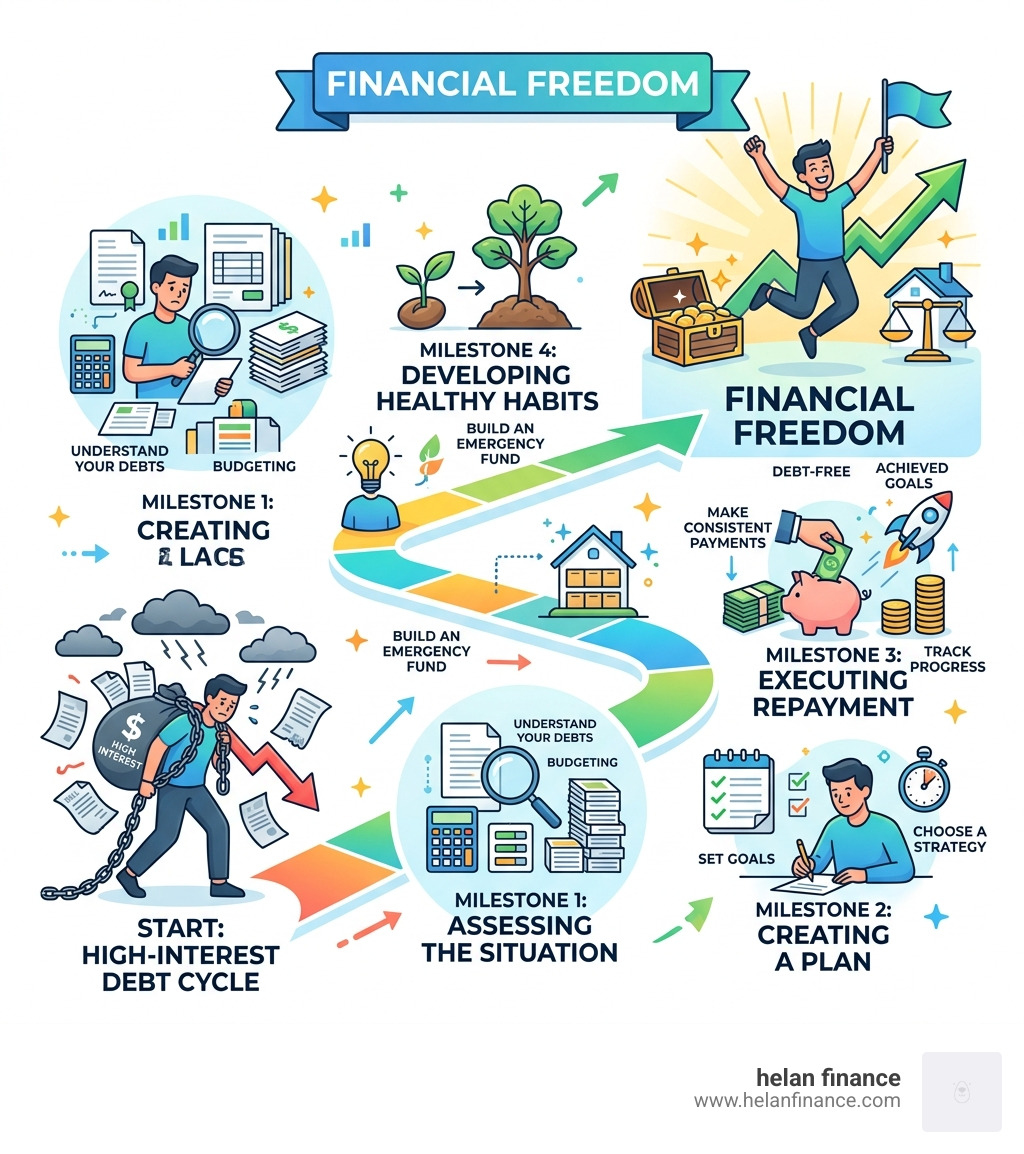
A structured repayment strategy acts as a bridge between your current financial stress and a debt-free future. Instead of throwing money at different creditors and hoping for the best, you follow a roadmap. One of the most powerful tools in this journey is the role of creditor concessions. When you work through professional channels, creditors may agree to lower your interest rates or waive late fees. This ensures that more of your hard-earned money goes toward the principal balance rather than just treading water against high interest.
Identifying the Need for a Strategy
How do you know when it’s time to move beyond simple “bill paying” and into a formal strategy? There are several red flags we often see:
- You are only making minimum payments, and the balances aren’t budging.
- You are juggling multiple high-interest accounts and losing track of due dates.
- You’ve been denied new credit or a loan because your debt-to-income ratio is too high.
- Creditors have started calling you, or you’re receiving collection notices for “non-priority” debts like old utility bills.
If you find yourself in these situations, seeking professional financial guidance—like that offered by a Non Profit Credit Counseling Agency—can be a game-changer.
Benefits and Risks of Structured Debt Management
Enrolling in a structured program, specifically a Debt Management Plan (DMP), offers several “pros.” First, the potential for interest rate reduction is significant. While the average credit card might charge 20% to 30% interest, a DMP can often negotiate this down to mid-single digits. This accelerates your payoff timeline, often helping you become debt-free seven times faster than doing it alone.
However, there are risks to consider. Most DMPs require you to close your credit card accounts. This is a “tough love” approach to prevent further debt, but it can cause a temporary dip in your credit score because your total available credit decreases. Additionally, while these programs are often run by nonprofits, there are usually modest monthly service fees involved to cover the administration of your payments.
Comparing Debt Relief Options
Choosing a path can feel like looking at a map where every road is labeled “This Way to Freedom.” To help you navigate, let’s look at how the main options stack up.
| Feature | Debt Management Plan (DMP) | Debt Consolidation Loan | Debt Settlement | Bankruptcy |
|---|---|---|---|---|
| Strategy | Structured repayment via nonprofit | New loan to pay off old ones | Negotiating to pay less than owed | Legal discharge of debt |
| Credit Impact | Temporary dip, long-term gain | Can improve if payments are on time | Severe damage (lasts 7 years) | Most severe (lasts 7-10 years) |
| Interest | Negotiated lower rates | Fixed rate of new loan | N/A (payments stop) | N/A |
| Cost | Small monthly fees | Interest and loan fees | 15% – 25% of debt amount | Legal and filing fees |
Strategic Repayment vs. Debt Settlement
It is vital to distinguish between mission-aligned nonprofit approaches and for-profit debt settlement. Debt settlement companies often tell you to stop making payments to your creditors so they can “negotiate” once you are in default. This is incredibly risky. It leads to late fees, potential lawsuits, and a trashed credit score.
Furthermore, the IRS may view settled debt as taxable income. If you owe $10,000 and settle for $5,000, that “forgiven” $5,000 might be taxed as if you earned it. In contrast, a Debt Management Plan focuses on paying back the full principal at a lower interest rate, which is much friendlier to your credit health and tax situation.
Bankruptcy as a Final Option
Bankruptcy should always be viewed as a last resort. It is a legal process that can discharge most of your debts, but the cost is high.
- Chapter 7: Involves liquidating non-exempt assets to pay creditors. It stays on your credit report for 10 years.
- Chapter 13: A 3-to-5-year court-mandated repayment plan. It stays on your report for 7 years.
Before filing, you are required by law to undergo pre-filing credit counseling. While it provides a fresh start, the long-term impact on your ability to buy a home or get a job can be significant.
Navigating Your Legal Rights and Federal Guidelines

When you are in debt, it can feel like you have no power. That couldn’t be further from the truth. You have robust protections under the law.
The Fair Debt Collection Practices Act (FDCPA) and the 2021 Debt Collection Rule clarify what collectors can and cannot do. For instance, they cannot call you before 8:00 AM or after 9:00 PM, they cannot use profane language, and they cannot lie about how much you owe. If you tell a collector in writing to stop contacting you, they must comply (though they can still sue you for the debt).
Federal Debt Collection and Oversight
If you owe money to the government—such as delinquent student loans or tax debt—the rules are slightly different. The Bureau of the Fiscal Service handles these via several programs:
- Treasury Offset Program (TOP): If you owe a delinquent federal debt, the government can intercept your tax refund or other federal payments to satisfy that debt.
- Administrative Wage Garnishment: Federal agencies can withhold up to 15% of your disposable pay without a court order to collect delinquent nontax debt.
- Cross-Servicing: This is the process where delinquent debts are referred to the Bureau for centralized collection efforts, which might include private collection agencies.
For more on how the government handles these processes, you can review the Debt Management Guidance provided by the Treasury.
Consumer Protections and Scam Avoidance
Knowledge is your best defense against predatory companies. Always look for “Debt Validation Notices.” Within five days of contacting you, a collector must send you a written notice telling you how much you owe and the name of the creditor.
Be wary of “time-barred” debt. Every state has a statute of limitations on how long a creditor has to sue you for a debt. Once that time passes, the debt is “time-barred.” However, be careful—making even a small payment on an old debt can “reset the clock,” giving the collector a fresh window to sue you.
Red Flags of a Scam:
- They demand upfront fees before providing any services.
- They promise to “guarantee” your debt will disappear.
- They tell you to stop all communication with your creditors.
- They claim they can remove accurate negative information from your credit report (spoiler: they can’t).
If you encounter a scam, report it to the FTC Consumer Advice portal.
Practical DIY Strategies and Financial Planning
You don’t always need a professional to start your debt management journey. There are two popular “DIY” methods that we love for their simplicity:
- The Debt Snowball: You pay off your smallest balance first while making minimum payments on everything else. The “win” of crossing off a debt gives you the psychological momentum to tackle the next one.
- The Debt Avalanche: You focus all extra payments on the debt with the highest interest rate. This is mathematically the fastest way to save money on interest, though it might take longer to see a balance disappear completely.
Creating a Sustainable Budget with Helan Finance
At Helan Finance, we believe that a budget isn’t a cage—it’s a roadmap. Start by tracking every single cent that comes in and goes out for 30 days.
- Prioritize Essentials: Housing, utilities, and groceries come first.
- The Starter Emergency Fund: Before going “all in” on debt, try to save $1,000. This prevents you from reaching for a credit card the next time your car needs a repair.
- Use our Tools: Check out our Sobre Nós page to see how our simplified financial planning tools can help you build these routines.
Managing Specific Categories of Debt
Different debts require different tactics:
- Mortgages: If you’re struggling, contact your lender immediately to ask about “forbearance” or loan modification. You can also seek HUD-approved housing counseling.
- Student Loans: Look into Income-Driven Repayment (IDR) plans which can lower your monthly payment based on your earnings.
- Car Loans: If your interest rate is high, look into refinancing with a local credit union once your credit score has improved slightly.
Frequently Asked Questions about Debt Relief
How long does it typically take to become debt-free?
Most structured debt management plans are designed to be completed in 3 to 5 years. Your specific timeline depends on the total amount of debt, the interest rates negotiated, and how much extra you can contribute each month. Some people with smaller balances may finish in as little as 24 months.
Will managing my debt through a program hurt my credit score?
Initially, you might see a small drop (often because accounts are being closed). However, the long-term impact is overwhelmingly positive. On average, clients who complete a DMP see an 82-point improvement in their credit score. This is because the program helps you build a consistent history of on-time payments and reduces your overall debt-to-income ratio.
What are the typical costs associated with professional guidance?
Legitimate nonprofit agencies are transparent about their fees. Typically, you might see:
- Setup Fee: Average of $37 (usually capped around $75).
- Monthly Fee: Average of $26 (usually capped around $69). These fees are often waived or reduced if you can demonstrate significant financial hardship. The amount you save in interest usually far outweighs these administrative costs.
Conclusion
Managing debt can feel like an uphill battle, but you don’t have to climb alone. Whether you choose to use the Debt Avalanche method on your own or enroll in a structured plan through a nonprofit, the first step is simply deciding to start.
At Helan Finance, we are dedicated to making financial planning easy and efficient. We believe that financial stability is a key pillar of your overall wellness. By establishing healthy routines and utilizing the right tools, you can move from a state of stress to a state of security.
Ready to take control? Start your journey to financial health today and discover how simplified planning can change your life. For more information on our mission and how we help, visit our Sobre Nós page. Your debt-free future is waiting!

