
A Guide to Reducing Medical Debt and Finding Financial Relief
Why Debt and Health Are More Connected Than You Think
Debt free health tips aren’t just about money — they’re about protecting your body and mind too.
Here are the core steps to reduce debt-related stress and support your health:
- Name your financial fear — write down exactly what’s stressing you
- List all your debts — amounts, interest rates, minimum payments
- Pick a repayment method — debt snowball or debt avalanche
- Build a small emergency fund — even $500 changes everything
- Use preventive healthcare — active patients have medical costs up to 21% lower
- Automate payments and savings — remove the daily mental load
- Seek support early — nonprofit credit counseling if things feel unmanageable
Most people think of debt as a money problem. It is — but it’s also a health problem.
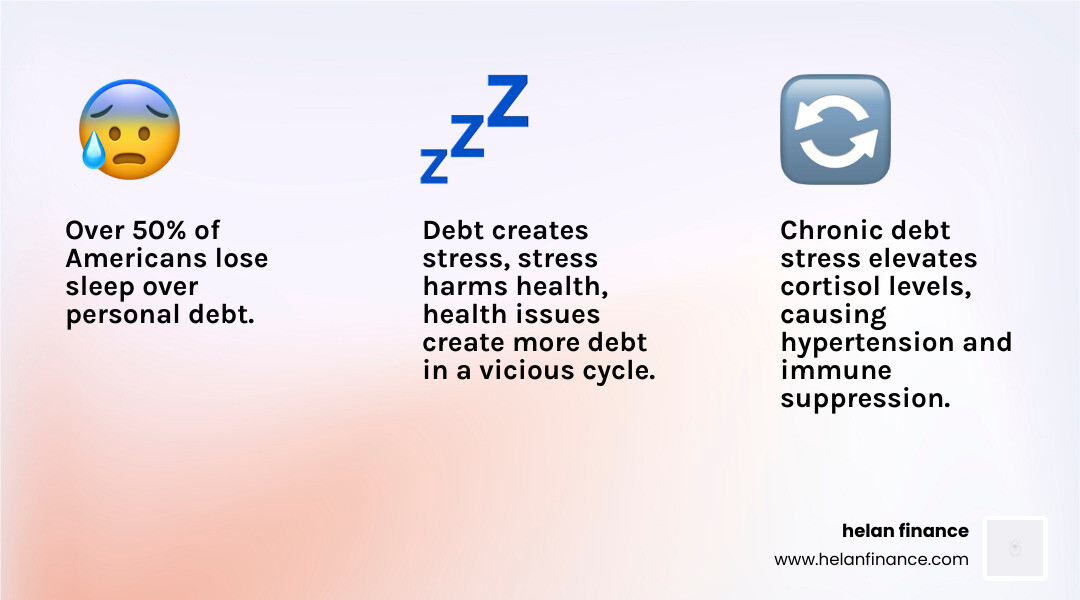
Right now, over half of Americans lose sleep over personal debt. Nearly half say their debt feels completely unmanageable. And around 40 million Americans experience anxiety, with money worries being one of the most common triggers.
That’s not just stressful. It’s physically damaging.
Chronic financial stress raises cortisol levels, disrupts sleep, suppresses your immune system, and can contribute to high blood pressure. The cycle is brutal: debt causes stress, stress harms your health, health problems create new costs, and those costs create more debt.
The good news? Breaking one part of that cycle helps break the whole thing.
This guide gives you practical, realistic steps — whether you’re dealing with medical bills, credit card debt, or just the constant low-level anxiety of owing more than you’d like.
The Hidden Connection Between Financial Debt and Physical Well-being
We often talk about “carrying” debt, and that language is more accurate than we realize. When we carry high balances, our bodies react as if we are carrying a heavy physical weight. This phenomenon is often referred to as “debt stress syndrome.” It isn’t just a feeling of being “bummed out” about a bank statement; it is a cumulative, long-term physiological response to financial pressure.
When we are in debt, our bodies stay in a state of high alert. This constant “fight or flight” mode keeps our cortisol levels—the body’s primary stress hormone—elevated. Over time, high cortisol leads to a laundry list of physical ailments. We see increased rates of hypertension (high blood pressure), a compromised immune system that makes us more susceptible to every cold going around the office, and chronic muscle tension.
Sleep deprivation is perhaps the most immediate health impact. In fact, 52% of Americans report losing sleep over personal debt. When we don’t sleep, our brains can’t process emotions or repair tissues effectively, leading to a downward spiral of both mental and physical exhaustion.
However, there is a silver lining. Research shows that patients who take an active, knowledgeable role in their own care—essentially practicing Five Tips to Reduce Your Health Care Costs—can see medical costs up to 21% lower than those who are less engaged. By becoming confident in self-care and preventive measures, we don’t just feel better; we actually reduce the financial burden that started the stress in the first place.
Identifying Symptoms of Debt-Related Health Strain
How do you know if your debt is crossing the line from “annoying” to “health hazard”? We look for several key behavioral and physical red flags:
- Rumination: This is when you can’t stop thinking about your debt. You’re at dinner with friends, but in the back of your mind, you’re calculating how many hours of work it takes to pay for that appetizer.
- Avoidance Behavior: You stop opening the mail. You stop checking your banking app. You pretend the problem doesn’t exist, which only spikes your anxiety when you finally have to face it.
- Analysis Paralysis: Making even small decisions—like which brand of toothpaste to buy—becomes overwhelming because you are so worried about “getting it wrong” financially.
- Physical Fatigue and Weight Fluctuations: Debt stress often leads to “stress eating” or, conversely, losing your appetite entirely. Combined with poor sleep, this leads to a permanent state of exhaustion.
With around 40 million Americans experiencing anxiety often triggered by money, it is vital to recognize these symptoms early. Naming the fear—saying out loud, “I feel stuck because of this credit card balance”—can actually reduce the power that anxiety holds over you.
Essential Debt Free Health Tips for a Balanced Lifestyle
Living a debt-free life isn’t about deprivation; it’s about building a system that gives you room to breathe. We like to think of it as a “debt diet.” Just like you wouldn’t expect to lose 50 pounds by starving yourself for two days, you can’t fix your finances with a one-time “no-spend” weekend. It requires consistency.
One of the most effective debt free health tips we recommend is the 50/30/20 rule. This simple framework suggests allocating 50% of your income to “needs” (housing, utilities, groceries), 30% to “wants,” and 20% to financial goals (paying off debt and saving). If your debt feels heavy, you might temporarily flip those percentages, putting 30% toward debt and 20% toward “wants.”
To kickstart this journey, consider a “Debt Detox.” This involves a seven-day period where you track every single cent you spend in a journal. Much like a food journal helps you realize you’re eating more sugar than you thought, a spending journal reveals the “leaks” in your budget.

We also suggest adopting Practical Tips For Living Debt Free by using the “substitution vs. deprivation” mindset. Instead of saying “I can never have coffee again,” try “I will make delicious coffee at home on weekdays and enjoy one high-quality shop coffee on Saturdays.” This makes the lifestyle sustainable. Another great tool is the 24-hour purchase rule: if you want a non-essential item, you must wait 24 hours before buying it. Often, the impulse fades, and your bank account stays intact.
Implementing Debt Free Health Tips Through Preventive Care
The most expensive medical bill is the one you didn’t see coming because you skipped your check-ups. Preventive care is a cornerstone of staying debt-free. When we invest time in routine exercise, balanced nutrition, and stress management, we are essentially “pre-paying” for our future health.
Consider the following cost comparison:
| Service | Preventive/Early Action Cost | Emergency/Late Intervention Cost |
|---|---|---|
| Dental Health | $150 (Cleaning/Exam) | $1,500+ (Root Canal/Crown) |
| Cardiovascular | $0-$20 (Co-pay for BP check) | $50,000+ (Heart Attack treatment) |
| Physical Fitness | $0 (Walking/Home workouts) | $Hundreds/mo (Diabetes medication) |
| Mental Health | $0 (Mindfulness/Walking) | $Thousands (Crisis intervention) |
By focusing on preventive screenings and reducing bad habits (like smoking or excessive alcohol consumption), we protect our most valuable asset: our ability to earn an income.
Financial Habits That Support Physical Health
To make these debt free health tips stick, we need to turn them into automatic habits. We recommend:
- Automated Savings: Set up your bank account to automatically move a small amount into an emergency fund every payday. If you don’t see it, you won’t spend it.
- No-Spend Days: Commit to two days a week where you spend zero dollars outside of your pre-planned bills. It builds “financial discipline muscles.”
- Meal Prepping: This is the ultimate “health and wealth” hack. Spending Sunday afternoon prepping lunches for the week saves an average of $10-$15 per day and ensures you aren’t grabbing greasy fast food when you’re tired.
- Knowledgeable Self-Care: As mentioned earlier, being an involved patient can lead to 21% lower medical costs. Read your labels, understand your family history, and don’t be afraid to ask your doctor, “Is there a lower-cost alternative for this treatment?”
Strategic Steps to Manage and Reduce Medical Debt
If you’re already facing a mountain of medical bills, don’t panic. There are 7 Steps to Consider for a No-Debt Lifestyle that specifically target existing burdens.
First, always ask for an itemized bill. Hospitals often make coding errors. When you see every single charge listed out, you can dispute things you didn’t receive or double-charges for the same service.
Next, talk to the billing department. Many people don’t realize that medical bills are often negotiable. Ask about “charity care” or “hardship programs.” If you offer to pay a lump sum, they might discount the total by 20% or more. If you can’t pay a lump sum, ask for a zero-interest payment plan.
When it comes to the actual repayment, we generally recommend two main strategies:
- The Debt Snowball: You pay off your smallest debt first while making minimum payments on the others. This gives you a quick “win” and builds psychological momentum.
- The Debt Avalanche: You focus all extra cash on the debt with the highest interest rate. This is the mathematically “correct” way to save the most money over time.
With 48% of Americans currently saying their debt is unmanageable, you are not alone, and these systems work if you stay consistent.
Using Debt Free Health Tips to Navigate Insurance Costs
Insurance is confusing—intentionally so, it sometimes feels. A CreditCards.com report once found that credit card agreements were unreadable to 80% of Americans; insurance policies aren’t much better. However, mastering your policy is a key part of a Healthy Debt Diet.
We suggest bundling policies (home, auto, life) to get discounts. Furthermore, if you are relatively healthy, consider a High Deductible Health Plan (HDHP) paired with a Health Savings Account (HSA). The money you put into an HSA is tax-deductible, grows tax-free, and can be used for medical expenses at any time. It’s essentially a “health emergency fund” with massive tax perks.
Always review your Explanation of Benefits (EOB) statements. It’s not a bill—it’s a summary of what insurance covered. Cross-reference this with your provider’s bill to ensure you aren’t being overcharged.
Building Financial Buffers to Protect Your Future Health
The median U.S. household debt is over $80,000. When we live that close to the edge, a single “check engine” light or a broken tooth can send us into a tailspin. This is why building buffers is essential.
We recommend a two-tier emergency fund system:
- The Starter Fund: Save $500 to $1,000 as fast as possible. This covers the “small” emergencies (a popped tire or a co-pay) so you don’t have to reach for a credit card.
- The Full Buffer: Once your high-interest debt is gone, build this up to cover 3-6 months of essential living expenses.
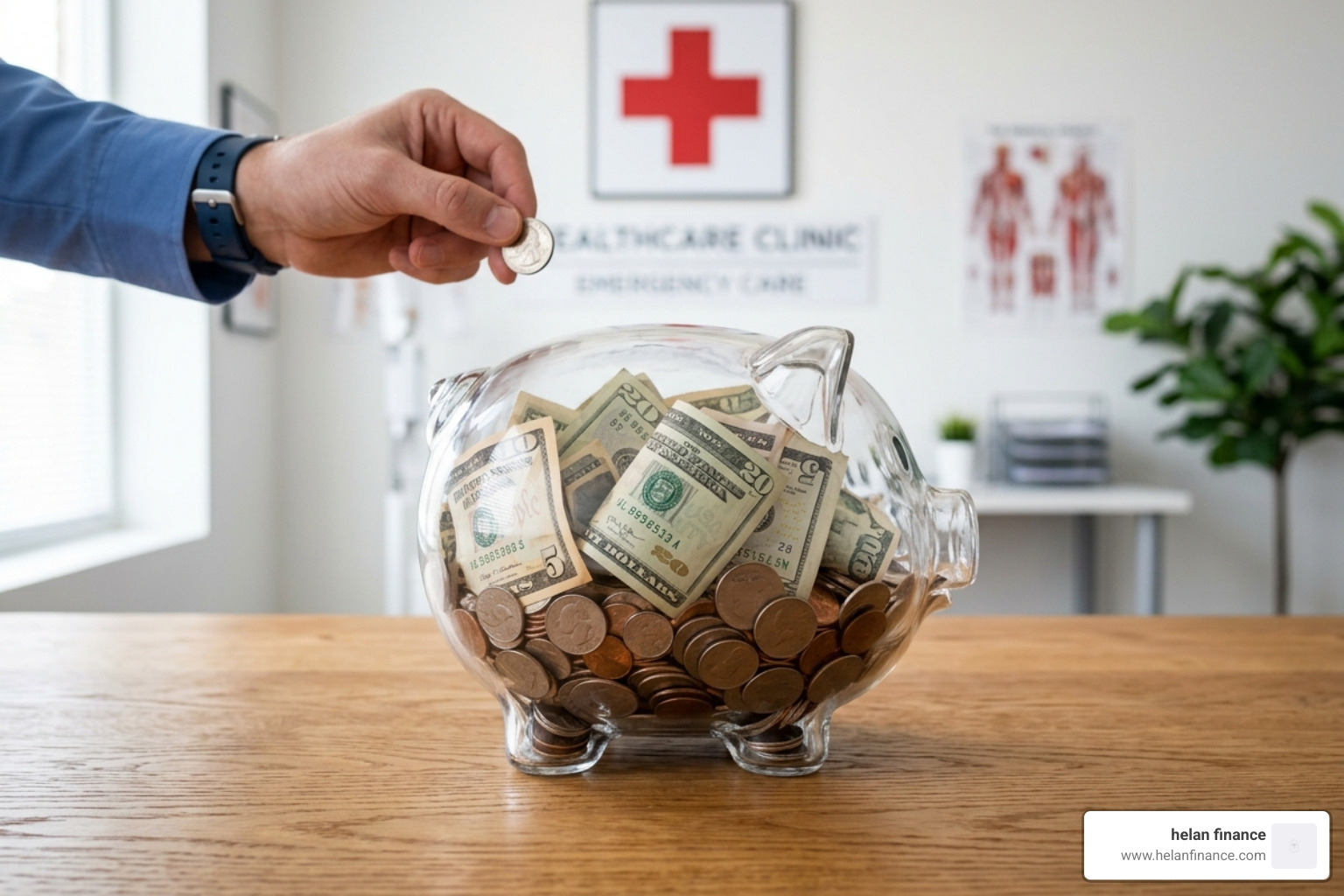
Another powerful tool is the Sinking Fund. Unlike a general emergency fund, a sinking fund is for predictable expenses. You know you’ll need a dental cleaning twice a year. You know your kids will need new shoes for sports. By setting aside $20 a month specifically for “Health Co-pays,” you remove the stress of that expense when it arrives.
Planning for Health Surprises Without New Debt
To protect your cash flow from major disruptions, we suggest the “Income Split Rule” for any extra money you receive (like a tax refund or a bonus). Put 70% toward debt or your emergency fund, 20% toward a future goal, and 10% toward something that improves your current quality of life.
Additionally, consider basic preparedness. Having a well-stocked first aid kit and a basic understanding of home care can prevent expensive, unnecessary trips to the Urgent Care for minor scrapes or colds. As we move through 2026, being “resourceful” is just as important as being “rich.”
Frequently Asked Questions about Debt and Health
How does debt negatively impact my physical health?
Chronic stress from debt increases blood pressure and heart rate while weakening the immune system. As of April 2026, data shows nearly half of Americans report money worries negatively impacting their mental health, leading to depression and sleep loss. This creates a cycle where poor health leads to more debt, which in turn further degrades your physical well-being.
What is the fastest way to pay off medical debt?
The most effective strategy is often the “Debt Snowball” for psychological wins or the “Debt Avalanche” to save on interest. Always request an itemized bill first to check for errors, as this can often reduce the total balance before you begin repayment. Don’t be afraid to negotiate with the hospital’s billing department for a settlement or a zero-interest payment plan.
When should I seek professional help for debt-related stress?
You should seek help if you are losing sleep, experiencing “debt stress syndrome” symptoms for more than a few weeks, or if your debt-to-income ratio exceeds 43%. If you find yourself using one credit card to pay another, or if you are avoiding your mail out of fear, nonprofit credit counseling can provide a structured roadmap to relief and help you regain your peace of mind.
Conclusion
At the end of the day, becoming debt-free is a journey of progress over perfection. You didn’t get into debt overnight, and you won’t get out of it overnight either. But every small choice—choosing to meal prep, questioning a medical bill, or putting $50 into a starter emergency fund—is a vote for your future health and happiness.
Financial peace of mind is one of the best medicines available. When you aren’t lying awake at night worrying about interest rates, your body has the chance to heal, your mind has the space to create, and you can focus on what truly matters.
At Helan Finance, we believe that financial planning should be simple and supportive of your whole life—not just your bank balance. By integrating these debt free health tips into your daily routine, you are building a foundation of holistic wellness that will serve you for decades to come.
Start your simplified financial planning journey with us today and take the first step toward a healthier, wealthier you.

