
Debt-Free Living 101 and Why Your Wallet Will Thank You
The Real Cost of Debt (and Why So Many People Are Done With It)
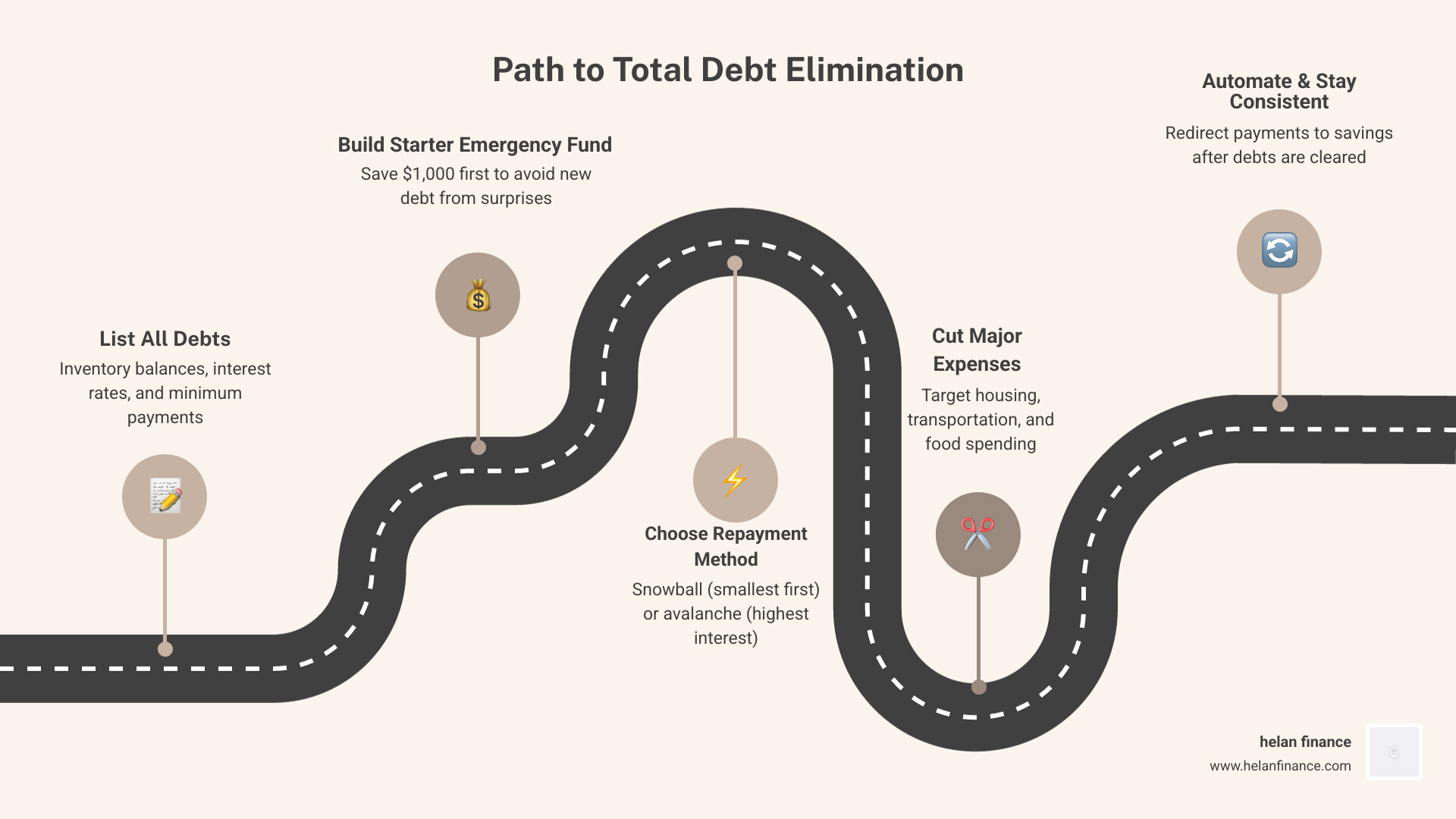
Debt free living advice is more in demand than ever — and for good reason. Here’s a quick-start summary of the core strategies if you need them right now:
Quick-Start Debt-Free Living Advice:
- List every debt — balances, interest rates, and minimum payments
- Build a small emergency fund first — aim for $1,000 to start
- Pick a repayment method — snowball (smallest balance first) or avalanche (highest interest first)
- Cut the biggest expenses — housing, transportation, and food
- Stop adding new debt — no financing consumer items, no buy-now-pay-later
- Automate payments — consistency beats willpower every time
- Redirect freed-up money — into savings and investments once debts are gone
As of April 2026, the average American carries over $6,492 in credit card debt alone — at interest rates hovering around 24%. Add in mortgage debt, car loans, and personal loans, and the average household is sitting under more than $300,000 in total debt.
That weight is real. As one person who paid off all their debt described it, it felt like carrying a boulder on their shoulders — limiting career choices, causing constant background stress, and making every unexpected bill feel like a crisis.
And it’s not just a money problem. Research shows that 46% of people with debt report dealing with mental health challenges linked directly to their financial situation. Debt and anxiety tend to feed each other.
The good news? Getting out of debt is not just for high earners or people with perfect financial discipline. People at every income level have done it — including a woman who paid off all her debt and bought a second home in cash by age 36, and another who retired at 44 by following consistent principles over decades.
This guide will show you exactly how they did it — and how you can too.
Defining the Debt-Free Lifestyle and Its Realism in 2026
When we talk about living debt-free, we aren’t just talking about a zero balance on a screen. We are talking about financial control. A debt-free lifestyle means you no longer spend your future earnings to pay for your past decisions. You only spend what you have available, and you own your assets outright.
In April 2026, the economic landscape remains challenging. According to consumer research from Equitable, 80% of Americans are concerned about affordability, regardless of their income level. We see “lifestyle creep” everywhere—the tendency to increase spending as soon as income rises—which often leads people right back into the credit cycle.
However, Debt-Free Living: Is It Possible & How to Limit Your Debt suggests that while the dollar may not go as far as it used to due to inflation, the core principles of debt-free living remain the most effective shield against financial anxiety. It’s about intentional decisions rather than perfection.

Is Becoming Debt-Free Realistic for Most People?
You might be wondering if this is even possible when 24% of US households are living paycheck to paycheck. The short answer is yes, but it requires a shift in strategy. For many of us, debt has become a “math problem” we try to solve with more math, when it’s actually a “behavior problem.”
Becoming debt-free is realistic when you stop viewing credit as a safety net and start viewing it as a weight. It doesn’t happen overnight—some debt management plans can take 48 months or more—but by making consistent, sustainable choices, even those on a modest income can break the cycle.
The Psychological Benefits of Living Without Debt
The most underrated part of debt free living advice isn’t the interest saved; it’s the mental space gained. When you don’t owe anyone a dime, your “debt-free why” becomes clear:
- Reduced Stress: No more panic when the phone rings or the mail arrives.
- Career Flexibility: You can leave a toxic job or take a lower-paying role you love because your “nut” (monthly expenses) is so small.
- Wealth Accumulation: Instead of paying 24% interest to a bank, you could be earning 7-10% in the market.
Essential Debt Free Living Advice: Taking Stock and Budgeting
Before we can run, we have to know exactly where we’re standing. This means conducting a ruthless debt inventory. We need to list every single creditor, the total balance, the minimum payment, and—most importantly—the interest rate.
With average credit card interest rates at 24.04%, ignoring these numbers is expensive. A $10,000 balance at 18% APR (lower than today’s average!) would take 16 years to pay off if you only made minimum payments. You would end up paying $9,300 in interest alone.
Following the Four Steps to Living Debt Free – 1st United Credit Union guide, we recommend ranking your debts to see which ones are costing you the most in both dollars and peace of mind.

The Role of an Emergency Fund in Staying Debt-Free
The reason most people fail to stay debt-free is that they don’t have a buffer. Life happens: tires pop, water heaters leak, and medical co-pays appear. Without cash on hand, these “surprises” go straight back onto a credit card, undoing months of progress.
We recommend a two-step approach:
- The Starter Fund: Save $1,000 as fast as possible. This covers the “nuisance” emergencies.
- The Full Fund: Once your high-interest debt is gone, build this up to 3-6 months of essential living expenses. Keep this in a high-yield savings account so it’s accessible but separate from your spending money.
Creating a Sustainable Debt Free Living Advice Budget
A budget shouldn’t feel like a straightjacket; it should feel like a plan. We like the 50/30/20 rule as a baseline: 50% for needs, 30% for wants, and 20% for debt repayment or savings.
If you want to move faster, try zero-based budgeting. This means every single dollar you earn is assigned a “job” before the month begins. If you have $100 left over, its job is “Credit Card Payoff.”
To keep this sustainable, we suggest:
- Weekly Money Meetings: Spend 15 minutes every Sunday reviewing your spending.
- Sinking Funds: Set aside $25–$50 per paycheck for predictable but non-monthly costs like car maintenance or holiday gifts.
Proven Repayment Strategies: Snowball vs. Avalanche
There are two primary ways to attack your debt. Both work, but they appeal to different parts of your brain.
| Feature | Debt Snowball | Debt Avalanche |
|---|---|---|
| Strategy | Pay smallest balance first | Pay highest interest rate first |
| Primary Benefit | Psychological wins & momentum | Saves the most money in interest |
| Best For | People who need motivation | People driven by pure math |
| Speed | Feels faster initially | Mathematically faster total time |
Choosing the Right Debt Free Living Advice Strategy for You
Which one should we choose? If you’ve been struggling for years, the Snowball method is often better because those quick wins—crossing a small $400 medical bill off the list—keep you going. However, if you have a massive high-interest credit card balance, the Avalanche method will save you thousands in interest.
Some people prefer a hybrid approach: pay off one or two small “nuisance” debts for the win, then pivot to the highest interest rate. Whichever you choose, automation is your best friend. Set your minimum payments to happen automatically so you never hit a late fee.
Common Mistakes to Avoid While Paying Down Debt
We’ve seen many well-intentioned people stall out because of these common traps:
- Ignoring Buffers: Trying to pay off debt with $0 in the bank. One flat tire sends you back to the credit card.
- Lifestyle Inflation: Getting a raise and immediately moving into a more expensive apartment.
- Closing Old Accounts: While it feels good to “cancel” a card, closing your oldest accounts can actually hurt your credit score by shortening your credit history.
- Emotional Spending: Using shopping as a way to cope with the stress of… having debt.
Accelerating Your Journey: Income Boosts and Spending Cuts
If you want to shorten that 48-month timeline, you have two levers: spend less or make more.
We recommend the 24-hour rule: for any non-essential purchase over $50, you must wait 24 hours. Often, the “need” disappears by morning. On the housing front, try to aim for the 20% net housing rule (spending only 20% of your take-home pay on housing) rather than the standard 30% of gross income. This creates massive breathing room.
10 Habits of Debt-Free People You Can Start Now – Prosper highlights that debt-free people often treat their finances like a business, constantly looking for ways to optimize.
Should You Pay Off Low-Interest Mortgages or Invest?
This is a hot debate in 2026. If you have a legacy mortgage at 2.8%, but the stock market is returning an average of 8-10%, math says you should invest the extra cash instead of paying down the house.
However, there is a “peace of mind” factor. Being 100% debt-free, including the roof over your head, provides a level of security that a brokerage account cannot. We suggest a balance: maximize your employer’s 401k match first (that’s a 100% return!), then tackle high-interest debt, and only then decide on the mortgage based on your personal risk tolerance.
Increasing Your Income to Shorten the Timeline
Cutting expenses has a floor—you can only eat so much ramen. But income has a nearly unlimited ceiling.
- Ask for a Raise: A LendingTree study found that 82% of workers who asked for a raise got one.
- Side Hustles: Freelance writing, pet sitting, or virtual assistant tasks can bring in an extra $200–$500 a month.
- The Income Split Rule: If you get a bonus or a side hustle check, use 70% for debt, 20% for your emergency fund, and 10% for something that improves your quality of life so you don’t burn out.
When to Seek Professional Help and Debt Relief Options
Sometimes, the debt is simply too large to handle alone. If your total debt (excluding your mortgage) exceeds half your annual income, it might be time for professional intervention.
Credit Counseling is a great first step. Reputable non-profit agencies can help you set up a Debt Management Plan (DMP). They negotiate with creditors to lower your interest rates and combine your debts into one monthly payment.
Debt Settlement is riskier. This involves stopping payments to creditors to force them to accept a lump sum for less than you owe. This will tank your credit score and can lead to lawsuits. Also, be aware of the statute of limitations; in many states, if a debt is old enough (“time-barred”), collectors lose the legal right to sue you, though they can still ask you to pay.
The Pros and Cons of Debt Consolidation and Bankruptcy
| Option | Pros | Cons |
|---|---|---|
| Consolidation | One payment, usually lower APR | Requires good credit; risks your home if it’s a HELOC |
| Chapter 7 | Wipes out most unsecured debt quickly | Liquidates non-exempt assets; 10-year credit hit |
| Chapter 13 | Keeps your home via a repayment plan | 3-5 year commitment; 7-year credit hit |
Bankruptcy is a tool of last resort, but it exists for a reason: to provide a fresh start. Just remember that bankruptcy information stays on your credit report for 10 years, making it difficult to get a mortgage or certain jobs in the interim.
Identifying and Avoiding Debt Relief Scams
The debt relief industry is unfortunately full of predators. Avoid any company that:
- Demands upfront fees before they have settled any debt.
- Promises to remove accurate negative information from your credit report (this is illegal).
- Tells you to stop communicating with your creditors without explaining the risks.
If you encounter a scam, report it to the FTC at ReportFraud.ftc.gov.
Frequently Asked Questions about Debt Free Living Advice
How long does it typically take to become debt-free?
The timeline depends on your debt-to-income ratio and your intensity. A typical debt management plan takes about 48 months. However, by using windfalls (tax refunds, bonuses) and side hustles, many people cut that time in half. Remember: consistency beats perfection. If you have a bad month, just get back on the plan the next day.
What are the disadvantages of being completely debt-free?
There are very few, but they do exist. If you have no active credit accounts, your credit score may eventually become “indeterminable,” which can make it harder to get a mortgage later if you don’t have a massive down payment. Additionally, by paying off low-interest debt instead of investing, you might miss out on some wealth-building opportunities in the market. Most people find these trade-offs well worth the peace of mind.
How do I stay debt-free long-term and avoid new debt?
The key is environment design. Delete your saved credit card info from your browser and retail apps. Unsubscribe from promotional emails that trigger “impulse buys.” Most importantly, continue to track your net worth. Seeing that number go up every month is far more addictive than any purchase you could make at a mall.
Conclusion
Living a debt-free life isn’t about deprivation; it’s about freedom. It’s about knowing that every dollar you earn belongs to you and your family, not a bank. At Helan Finance, we believe that financial planning shouldn’t be a complex, scary mystery. By using simple exercises, routines, and the debt free living advice outlined here, you can reclaim your paycheck and your peace of mind.
The journey to financial independence starts with a single decision. Whether it’s saving your first $1,000 or finally listing out those scary credit card balances, you have the power to change your trajectory.
Start your journey to financial freedom today

