
Give Every Cent a Purpose with These Top Zero Based Budgeting Tools
Why Every Dollar Needs a Job (And a Tool to Track It)
A zero based budget tool is software or a template that helps you assign every dollar of your income to a specific category — until nothing is left unallocated.
The right tool makes this process fast enough to actually stick to, even when life gets busy. Whether you prefer a digital app with automated syncing or a manual template that gives you total control, the goal remains the same: financial clarity.
Does your paycheck land in your account and then quietly disappear before the month ends? You’re not alone.
Most people don’t have a spending problem. They have a visibility problem. They don’t know where the money goes until it’s already gone.
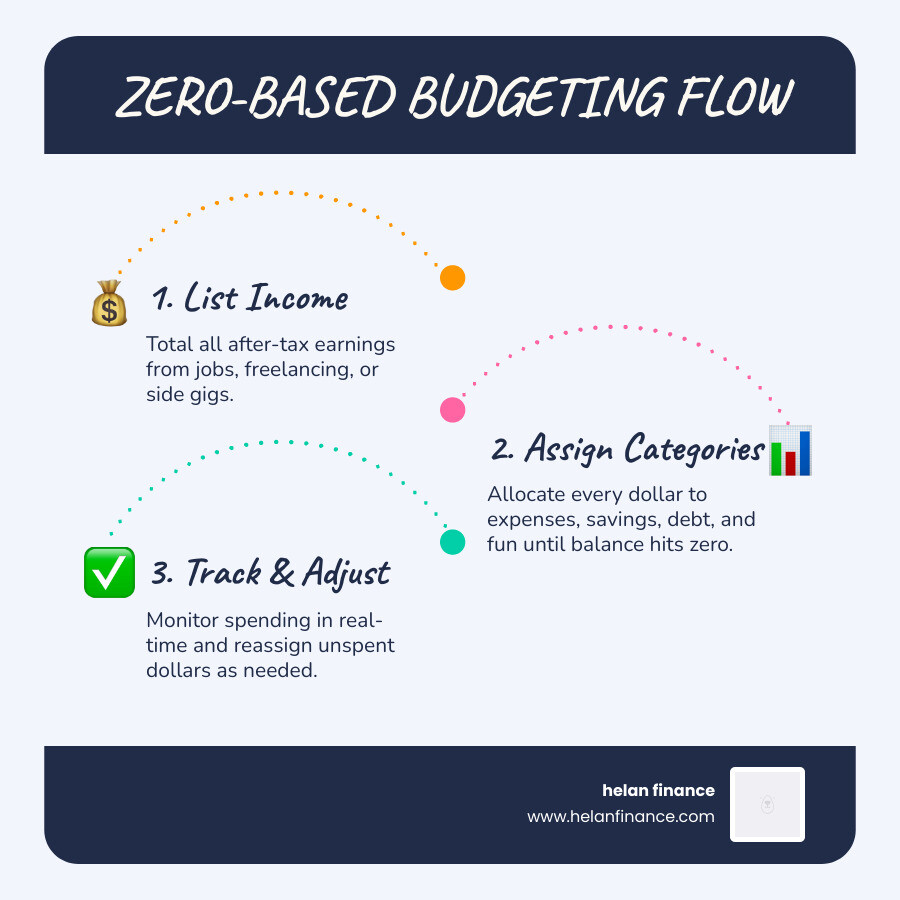
Zero-based budgeting fixes that. The idea is simple: your income minus your expenses equals zero. Every dollar gets a purpose — rent, groceries, savings, debt, even fun money — before you spend it.
Understanding the Zero-Based Budgeting (ZBB) Method
While it might feel like a modern trend driven by slick apps, zero-based budgeting (ZBB) actually has its roots in the corporate world of the late 1960s. Developed by Peter Pyhrr at Texas Instruments, ZBB was designed to challenge the status quo.
In traditional budgeting, most people (and companies) look at what they spent last year and just add or subtract a small percentage. It’s lazy, and it hides inefficiencies. Pyhrr proposed starting from “zero” every single period. Every expense, from the CEO’s travel budget to the office coffee pods, had to be justified from scratch based on its cost-effectiveness and alignment with current goals. If you want background on the original concept, the overview of zero-based budgeting is a helpful starting point.
When applied to personal finance in April 2026, the philosophy remains the same. Instead of saying, “I usually spend $500 on groceries,” you look at your actual income for the month and decide exactly where every cent should go.
The benefits are backed by more than just anecdotes. In the business world, companies using ZBB report cost savings between 10% and 25% because it forces a level of resource alignment that traditional methods ignore. For us as individuals, it provides a sense of financial stability that is hard to find elsewhere.
When you use a zero based budget tool, you aren’t just tracking the past; you are commanding your future. You stop asking “where did my money go?” and start telling it where to stay.
How to Implement Your Zero Based Budget Tool Step-by-Step
Implementing a zero-based budget doesn’t have to be a weekend-long ordeal. Whether you are using a high-tech app or a simple spreadsheet, the process follows a logical flow.
Step 1: Identify Your After-Tax Income
Start with what actually hits your bank account. If you have a side hustle or freelance gig, include those estimates too. In our zero based budget tool, this is the “Ready to Assign” or “Income” bucket.
Step 2: Prioritize the “Four Walls”
Before you think about Netflix or new shoes, you must cover the essentials. We call these the “Four Walls”:
- Food (Groceries, not necessarily fine dining).
- Utilities (Electricity, water, heat).
- Shelter (Rent or mortgage).
- Transportation (Car payments, gas, or transit passes).
Step 3: List Every Other Category
This is where you get granular. Think about insurance, subscriptions, debt repayments, and “sinking funds.” Sinking funds are a secret weapon in ZBB; they are categories where you save a little each month for irregular costs, like a $1,200 annual car insurance bill or a summer vacation.
Step 4: Subtract Until You Hit Zero
If you have $5,000 in income and your expenses total $4,800, you aren’t done yet. You have a $200 surplus. In a zero-based budget, that $200 needs a job. You might send it to your emergency fund, an extra debt payment, or your retirement account. If you have a deficit (expenses higher than income), you must cut back until the math balances perfectly at zero.

Manual Templates vs. Digital Tools
How should you track it? Here is a quick comparison:
| Feature | Manual Template (Paper/Excel) | Digital zero based budget tool |
|---|---|---|
| Speed | Slow, requires manual entry | Fast, often automates imports |
| Accuracy | Prone to math errors | Automated math |
| Accessibility | Usually stays at home | In your pocket (Mobile) |
| Cost | Usually free | Often requires a subscription |
| Visibility | Static | Real-time updates |
Setting Up Your Zero Based Budget Tool
Once you’ve picked your tool, the setup phase is critical. We recommend starting with a “Miscellaneous” or “Buffer” category. Life is messy, and you’ll almost certainly forget a small subscription or a school fundraiser. Keeping a $100–$300 buffer in your checking account prevents the “zero” from becoming a “negative.”
Don’t forget to include:
- Giving: Many users find that setting aside 10% for charity or tithing first helps set a positive tone for the rest of the budget.
- Debt Repayment: Use your tool to track the “Debt Snowball” or “Debt Avalanche.”
- Savings Goals: Seeing a progress bar for your “New Car Fund” is a massive psychological win.
Adapting the Zero Based Budget Tool for Irregular Income
One of the biggest myths is that zero-based budgeting only works for people with a steady salary. In reality, it is perhaps most beneficial for freelancers, gig workers, and those with bi-weekly pay cycles.
If your income fluctuates, use the “Lowest Monthly Income” strategy. Look at your last six months and find the lowest amount you earned. Build your “essential” budget around that number. When you earn more than that baseline—which we hope you do!—you simply treat the extra cash as a “bonus” to be assigned to your debt or savings goals.
For those on bi-weekly cycles, some months will have two paychecks and others will have three. A zero based budget tool allows you to plan per paycheck rather than per month, ensuring your cash flow timing always covers the bills due before the next deposit hits.
Essential Features of a Modern Zero Based Budget Tool
In 2026, we shouldn’t be spending hours on data entry. A modern zero based budget tool should do the heavy lifting for you.
Bank Synchronization and Real-Time Tracking
The best tools link directly to your bank accounts. When you swipe your card at a coffee shop, the transaction should appear in your app within minutes (or even seconds). This real-time feedback is what prevents overspending. If you see you only have $10 left in your “Dining Out” category, you might choose the home-cooked meal instead.
Automated Math and Progress Bars
You shouldn’t need a degree in accounting to know if you’re on track. Visual cues like progress bars and color-coded categories (green for on track, red for overspent) provide instant clarity.

Choosing the Right Zero Based Budget Tool for Your Lifestyle
Not all tools are created equal. Your choice depends on how much “hand-holding” you want.
- For the Enthusiast: Look for tools that offer a comprehensive methodology. Some high-end apps focus on giving every dollar a job before it’s spent, which can help users save significantly in their first year. Studies show that intentional budgeting can help users feel significantly less stressed about their finances.
- For the Debt-Focused: Many users prefer tools designed specifically for those following a structured debt payoff plan. These interfaces are often clean, simple, and prioritize the “debt snowball” method to help you stay motivated.
- For the Analytical Mind: Some platforms are perfect for people who want to track year-to-date progress without the budget “resetting” every month. These are ideal for analyzing long-term spending trends and net worth growth.
- For the Privacy-First User: Open-source and “offline-first” tools are excellent options. These ensure your financial data stays on your personal device rather than on a corporate server, providing peace of mind for the security-conscious.
Why a Digital Zero Based Budget Tool Beats Manual Templates
We’ve all tried the “notebook method” at some point. It works for a week, and then we lose the notebook or forget to write down a cash purchase. Digital tools solve the three biggest hurdles to budgeting:
- Automation: By linking accounts, you eliminate the “I’ll do it later” excuse.
- Collaboration: Many apps allow couples to sync their budgets across two phones. When one person buys groceries, the other person sees the updated balance instantly.
- Data Security: Modern apps use bank-level encryption, which is arguably safer than a spreadsheet on an unencrypted laptop or a physical ledger that can be lost.
Most importantly, digital tools provide momentum. When you can see your net worth climbing in a chart, you are far more likely to stick to the plan than when you’re just staring at a list of expenses.
Frequently Asked Questions about Zero-Based Budgeting
Is there a free zero-based budget tool available?
Yes! Several high-quality options exist. Many popular apps offer robust free versions that allow for manual entry. There are also 100% free tools that offer sinking funds and reports. If you are tech-savvy, open-source options cost nothing and respect your privacy by keeping data local.
How does zero-based budgeting differ for businesses?
In a business context, ZBB is about justifying every expense to improve profit margins. While a personal budget focuses on “giving every dollar a job,” a business ZBB focuses on “making every dollar earn its keep.” Companies that implement this often see 10-25% in cost savings by identifying redundant software subscriptions or inefficient supply chain costs.
Can couples use a zero-based budget tool together?
Absolutely. In fact, ZBB is one of the best ways for couples to get on the same page. Modern digital tools allow for multi-device syncing. This turns money from a point of contention into a shared project. When you both agree on the “zero” at the start of the month, there are no surprises on the 20th.
Conclusion
Financial freedom isn’t about how much money you make; it’s about how much control you have over the money you earn. By using a zero based budget tool, you are taking the driver’s seat in your financial life. You are deciding that your goals — whether that’s a debt-free life, a dream home, or a comfortable retirement — are more important than impulsive spending.
At Helan Finance, we believe that financial planning should be simplified. It shouldn’t be a chore that causes headaches; it should be a routine that brings peace. Whether you choose a high-powered digital app or a privacy-focused open-source tool, the key is to start today.
Assign those dollars, balance that math, and find the clarity you deserve. Start your journey to financial wellness today.

