
The daily habits that lead to financial freedom
Why Most People Never Achieve Financial Freedom (And How a Simple Habit Plan Changes That)
A financial freedom habit plan is the structured system of daily and weekly behaviors that move you from financial stress to financial security — without requiring a windfall or a finance degree.
Here’s the core framework, fast:
- Track your spending — know where every dollar goes
- Build a starter emergency fund — even $500 changes everything
- Automate savings — pay yourself before you spend
- Eliminate high-interest debt — snowball or avalanche method
- Invest consistently — even small amounts, started early
- Grow your income — raises, side work, new skills
- Review and adjust — monthly money check-ins keep you on track
Right now, 56% of Americans report feeling financially stressed. Yet research shows that people who follow a systematic financial habit plan see a 73% improvement in financial confidence within 12 months. That’s not a personality difference. It’s a systems difference.
The problem isn’t discipline. As one widely-cited financial planning perspective puts it, it’s often not a lack of willpower that derails people — it’s the absence of a clear, realistic plan.
The good news? Small, consistent habits compound. Tracking expenses for just 30 days has been shown to reduce unnecessary spending by 23% — without a formal budget. Automating savings can push your savings rate from the typical American median of 3–5% up to 13.6% over time.
This guide breaks down exactly which habits matter most, in what order, and how to build them into a realistic routine — even if you’re busy and starting from scratch.
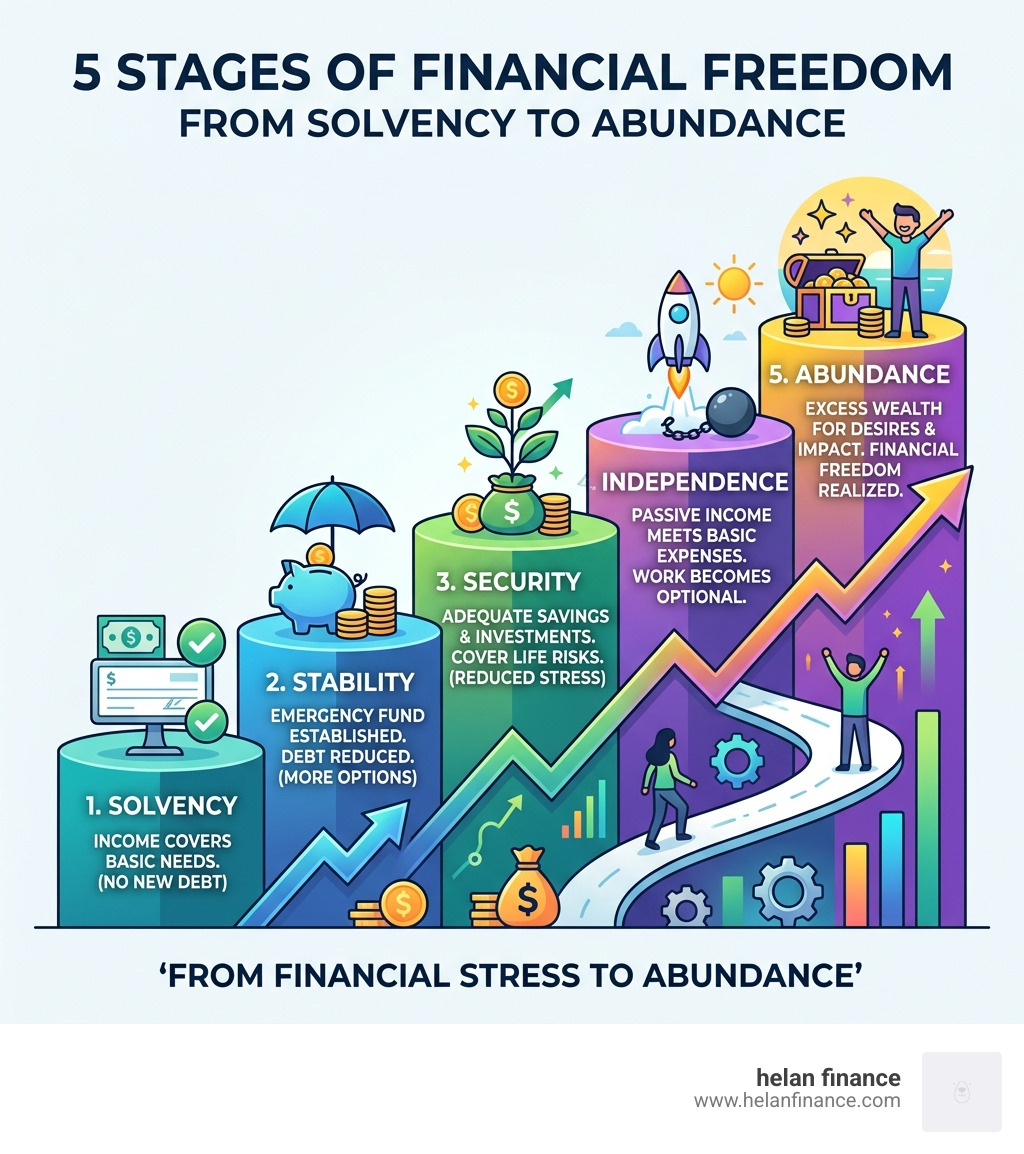
Defining Your Financial Freedom Habit Plan

When we talk about a financial freedom habit plan, we aren’t just talking about being “rich.” True financial freedom means having enough passive income, savings, and investments to cover your desired lifestyle without being tethered to a traditional paycheck. It is the ability to make life decisions—like changing careers, traveling, or retiring early—without money being the primary constraint.
To find your target, many experts point to the 4% Rule. This suggests that if you can live off 4% of your total investment portfolio annually, you have reached a state of permanent financial autonomy. Your “Freedom Number” is typically your annual expenses multiplied by 25. For example, if you need $50,000 a year to live comfortably, your goal is a $1.25 million portfolio.
While that number might seem high today, 12 Key Habits for Achieving Financial Freedom – Investopedia reminds us that reaching this milestone isn’t about one big win; it’s about the cumulative power of small, repeatable actions.
Why a financial freedom habit plan matters in 2026
As we navigate the economic landscape of April 2026, the traditional paths to wealth feel more volatile than ever. House prices were expected to rise by 3% in 2025, and inflation continues to shift the goalposts for savers. Beyond the math, there is a profound biological reason to get your finances in order.
Scientific research on financial stress and health shows that high levels of money-related anxiety can actually reduce your cognitive capacity by the equivalent of 13 IQ points. Chronic financial stress floods the body with cortisol, leading to sleep problems and relationship conflict. By contrast, those with a clear plan report higher life satisfaction and better physical health outcomes. When you master your money, you aren’t just building a bank account; you’re reclaiming your mental bandwidth.
Distinguishing financial independence from financial freedom
It’s helpful for us to distinguish between two common terms. Financial independence is the baseline: it means you have enough income to cover your essential needs (rent, food, utilities) without help from others.
Financial freedom goes a step further. It’s about having the options to choose your lifestyle. It means living debt-free and having the security to say “no” to a toxic work environment or “yes” to a passion project. Independence is about survival; freedom is about design.
Core Daily and Weekly Habits for Wealth Building

The secret to a successful financial freedom habit plan lies in “micro-habits”—actions so small they are hard to fail. One of the most powerful is expense tracking. Research indicates that people who simply track their spending for 30 days see a 23% reduction in unnecessary costs. Why? Because awareness naturally shifts behavior.
We also recommend the 24-hour rule: for any non-essential purchase over $50, wait a full day before hitting “buy.” This simple pause kills impulse spending. Couple this with “Zero-Dollar Days”—designating two days a week where you spend absolutely nothing outside of fixed bills—and you’ll find hundreds of dollars in “found money” every month.
Meal planning is another heavy hitter. Consider the math:
| Expense Category | Typical Cost (Restaurant/Delivery) | Home-Cooked Equivalent |
|---|---|---|
| Single Lunch | $15.00 – $20.00 | $2.00 – $4.00 |
| Dinner for Two | $50.00 – $70.00 | $10.00 – $15.00 |
| Monthly Total | $600+ | $150 – $200 |
By reducing dining out and learning a few cheap, nutritious recipes, you can save thousands annually with very little effort.
Automating your financial freedom habit plan
Willpower is a finite resource. If you have to decide to save money every time you get paid, you will eventually fail. This is where automation becomes your best friend. By setting up automatic transfers to a high-yield savings account or brokerage account the same day your paycheck hits, you “pay yourself first.”
This removes “decision fatigue.” Statistics show that automatic savings features can increase average savings rates from a measly 3.5% to a robust 13.6% over time. When the money is moved before you see it, you learn to live on the remainder without feeling deprived.
Small lifestyle changes with outsized impact
We often overlook the “leaks” in our financial buckets. A recent survey found that the average adult spends $1,080 each year on subscription services, with nearly $200 of that going toward services they don’t even use.
- The Subscription Audit: Once a month, review your bank statement. If you haven’t used a streaming service or app in 30 days, cancel it.
- Rotating Streaming: Don’t pay for Netflix, Hulu, and Disney+ simultaneously. Subscribe to one, watch your show, cancel, and move to the next.
- Secondhand First: Before buying new, check secondhand marketplaces. This habit alone can save 50-70% on furniture, clothing, and electronics.
- Public Transport: If you live in a city, using public transport just 1-2 days a week instead of driving can significantly lower fuel and maintenance costs.
A Step-by-Step Roadmap to Financial Independence
Achieving your goals requires a phased approach. We recommend a 90-day sprint to wire your brain for success, followed by a 12-month trajectory to build momentum.
According to Make a Financial Freedom Plan in 10 Easy Steps, the journey usually looks like this:
- Phase 1: Foundation (Months 1-3): Track every dollar. Build a $500 “starter” emergency fund. Start the Debt Snowball (paying off the smallest debt first for a psychological win).
- Phase 2: Acceleration (Months 4-6): Automate your savings. Negotiate your recurring bills (internet, insurance). Implement the 50/30/20 Rule (50% for needs, 30% for wants, 20% for savings and debt).
- Phase 3: Growth (Months 7-9): Grow your emergency fund to $1,000. Start contributing 3-5% to retirement accounts, especially if there is an employer match.
- Phase 4: Momentum (Months 10-12): Attack your next largest debt. Invest in skill-building to increase your earning power.
Building and maintaining an emergency fund
An emergency fund is the “armor” of your financial freedom habit plan. Without it, one flat tire or unexpected doctor’s visit can send you spiraling back into credit card debt.
Start with a $500 buffer. This covers the majority of minor “surprises.” Once your high-interest debt is gone, aim to build a fund that covers 3 to 6 months of essential expenses. Keep this money in a dedicated high-yield savings account—separate from your checking—so it earns interest while remaining accessible.
Proven strategies for eliminating toxic debt
Not all debt is created equal. “Toxic” debt—usually high-interest credit cards—is a leak that can sink your wealth-building ship.
- The Avalanche Method: You list debts by interest rate and pay off the highest rate first. This is mathematically the fastest way to save money on interest.
- The Snowball Method: You pay off the smallest balance first. While you might pay more in interest, the psychological “win” of crossing a debt off the list often provides the motivation needed to stay the course.
- Consolidation: If you have multiple high-interest cards, a debt consolidation loan or a balance transfer card can lower your interest rate, making your monthly payments more effective.
Frequently Asked Questions about Financial Habits
How long does it take to see results from a financial freedom habit plan?
Most experts agree that it takes 66 to 90 days for a new behavior to become an automatic habit. However, you will see “micro-results” almost immediately. Within the first month of tracking, you’ll likely find “lost” money. Within a year, the power of compound interest and consistent debt reduction starts to create a noticeable shift in your net worth. 12 months of progress trumps perfection.
Can I achieve financial freedom on an average income?
Absolutely. Financial freedom is more about your savings rate than your absolute income. By controlling lifestyle inflation (the tendency to spend more as you earn more) and keeping fixed costs low, an average earner can build significant wealth. That said, increasing your income is a powerful accelerator. Currently, 5.4% of US workers (about 9 million people) work multiple jobs or side hustles to speed up their journey.
What are the most common mistakes that derail financial habits?
The biggest pitfall is emotional spending—using shopping as a response to stress or boredom. Another major hurdle is the lack of written goals. A famous Harvard MBA study found that only 3% of graduates had clear, written goals. Ten years later, that 3% was earning ten times as much as the other 97% combined. If you don’t write down your financial freedom habit plan, it’s just a wish.
Conclusion
At Helan Finance, we believe that your financial health and your physical well-being are deeply connected. Our mission is to provide simplified planning tools, routine exercises, and health-focused advice to help you build a life of abundance.
Achieving financial freedom isn’t about deprivation; it’s about intentionality. By adopting these daily habits and sticking to a structured plan, you can stop living paycheck to paycheck and start building a future with options.
Ready to take control? Start your journey with Helan Finance today and discover how our simplified tools can help you turn these habits into a lifelong reality.

