
Your Bills Are Calling and They Want a Calendar Template
Your Bills Are Calling — Here’s the Fastest Way to Answer
A bill calendar template is a pre-designed document that maps all your recurring bills, due dates, and payment amounts onto a calendar grid — so nothing slips through the cracks.
Here are the best free options available right now:
| Format | Best For | Where to Get It |
|---|---|---|
| Google Sheets | Online editing, easy sharing | Google Drive templates |
| Excel | Automated calculations, offline use | Template.net, Someka |
| Printable PDF | Paper planners, daily visibility | CFPB, budget blogs |
| Canva | Visual, colorful designs | Canva (15,979+ templates) |
Most people don’t miss bill payments because they’re careless. They miss them because their due dates are scattered — buried in email inboxes, written on sticky notes, or just living rent-free in their head.
The result? Late fees. Credit score dips. And that low-grade financial anxiety that follows you around.
The fix is simpler than you’d think. A single, visible place where every bill and due date lives — that’s all it takes to break the cycle.
With 670 people searching for free bill pay calendar printables in a single day on Pinterest alone, it’s clear this is a tool a lot of people are looking for right now.
This guide rounds up the best bill calendar templates available in April 2026 — free and paid, digital and printable — so you can find the one that actually fits your life.
Why You Need a bill calendar template to Master Your Finances
Managing money is often less about the math and more about the logistics. We have found that the primary reason people fall behind on payments isn’t a lack of funds, but a lack of visibility. Using a bill calendar template transforms your financial obligations from a scary pile of “soon” into a clear, visual roadmap.
Visual Tracking and Cash Flow
When you plot your bills on a calendar, you can see exactly when money is leaving your account. This allows you to visualize “bill clusters”—those weeks where the mortgage, car insurance, and electricity all hit at once. By seeing this in advance, you can adjust your spending in the weeks prior to ensure you have a healthy cash flow.
Debt Reduction and Credit Protection
Late payments are the fastest way to damage your credit score. According to industry insights, even one missed payment can lead to hefty fees and a dip in your credit rating. A Bill Calendar Template – Customizable Calendar Ideas helps you prioritize debt reduction by ensuring you never miss a minimum payment, which is the foundation of a healthy financial profile.
Setting Payment Buffers
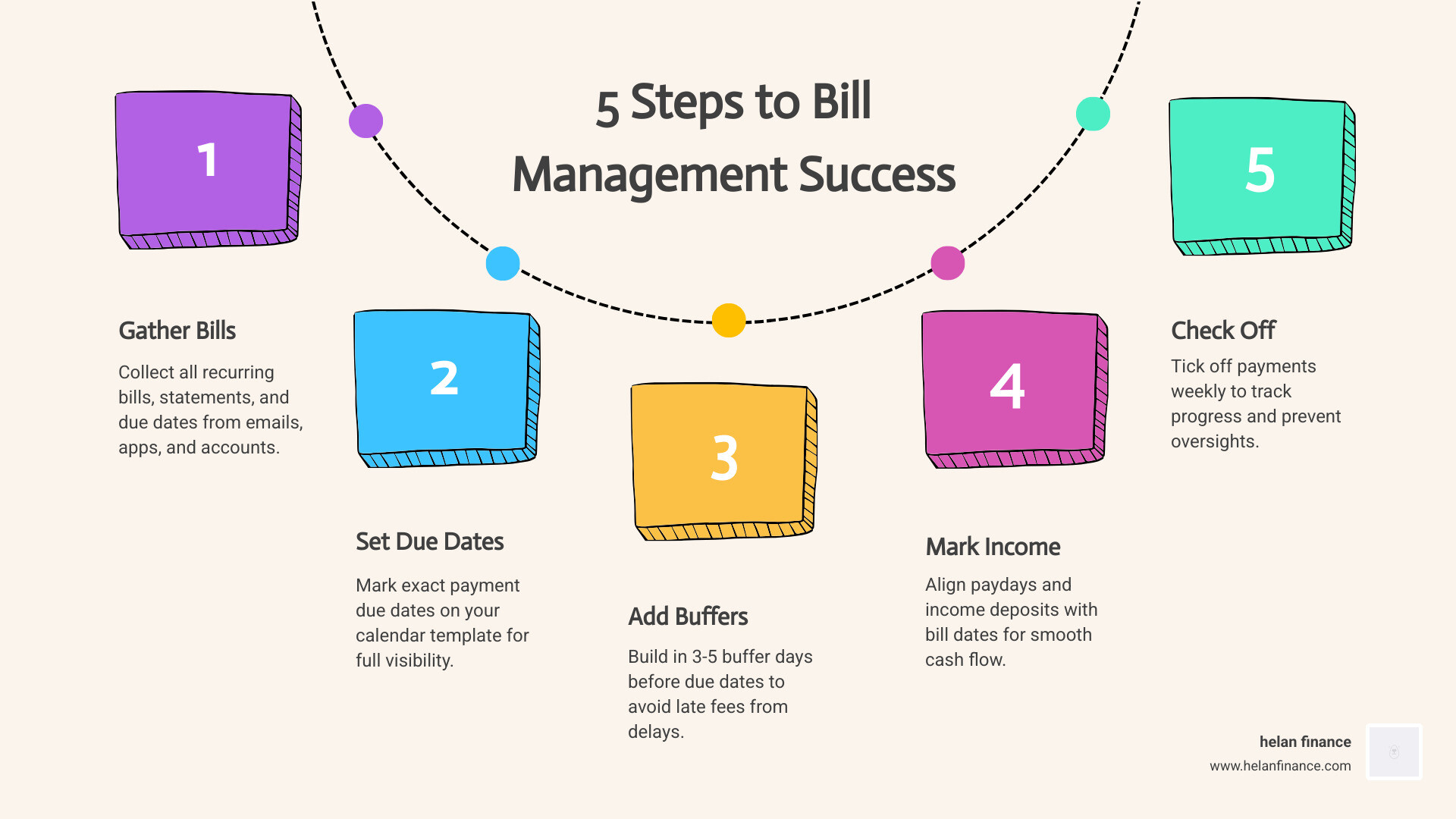
One of the smartest strategies we recommend is building in “buffers.” If a bill is due on the 15th, your calendar should actually prompt you to pay it on the 8th if you’re mailing a check, or the 13th for online transfers. This accounts for processing times and weekends, reducing financial anxiety significantly.
Key Features of an Effective bill calendar template
Not all templates are created equal. When you are hunting for the perfect tool, look for these essential features:
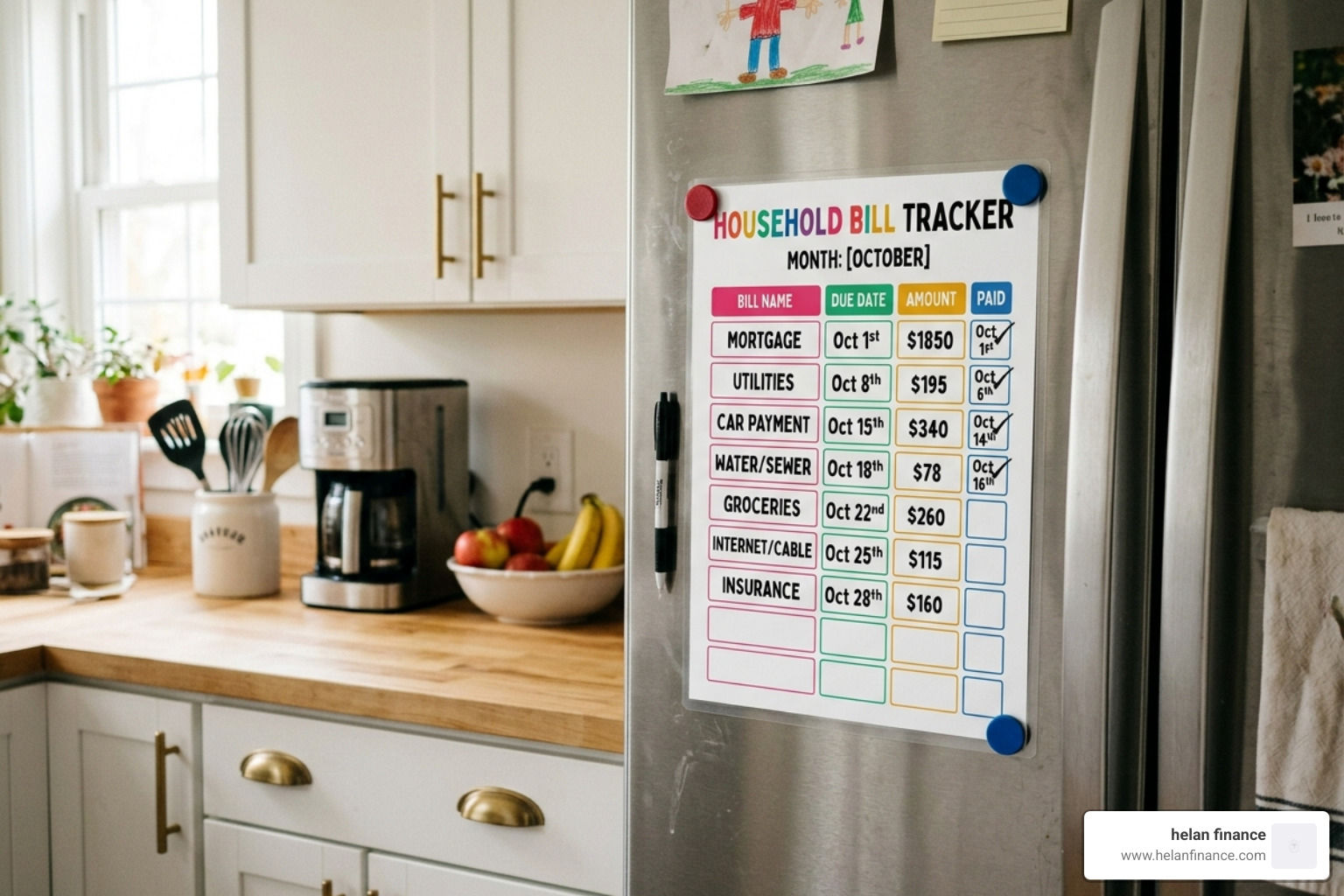
- Status Checkboxes: There is a psychological “win” in checking a box once a bill is paid. It provides immediate confirmation that the task is done.
- Income Integration: A great template doesn’t just show what you owe; it shows when you get paid. Marking your “paydays” in a different color helps you align your outflows with your inflows.
- Automated Calculations: If you prefer digital tools, a Monthly Bill Tracker Template – Google Drive can automatically sum up your total monthly obligations, helping you stay within your budget.
- Custom Categories: Your life isn’t generic. You need to be able to label categories for utilities, subscriptions, rent, and even irregular expenses like quarterly taxes.
- Multi-currency Support: For those managing international expenses or freelance work for global clients, being able to track different currencies in one view is a game-changer.
Best bill calendar template Options for Freelancers and Small Businesses
For the self-employed, a bill calendar template is a survival tool. Unlike a standard employee who gets a predictable paycheck, freelancers must manage erratic cash flow against fixed business expenses.
- Vendor Payments & Client Invoicing: Use your calendar to track not just what you owe vendors, but when you expect client payments to arrive.
- Tax Deadlines: Quarterly estimated taxes can sneak up on you. Marking these in bold on your yearly view ensures you are setting aside the necessary funds.
- Subscription Renewals: From software licenses to professional memberships, small business “drip” expenses add up. A Bill Pay Calendar Free Printable – Pinterest is an excellent way to visualize these recurring renewals so they don’t surprise your bank account.
Top Free Bill Tracking Tools and Formats
Choosing the right format depends entirely on how your brain processes information. Some of us need the tactile feel of a pen on paper, while others want the automation of a spreadsheet.
| Feature | PDF (Printable) | Excel Spreadsheet | Google Sheets |
|---|---|---|---|
| Automation | None | High (Formulas) | High (Cloud Sync) |
| Accessibility | Physical only | Device-specific | Any device with web |
| Visibility | High (on fridge/desk) | Moderate | Moderate |
| Customization | Manual (Writing) | High (Coding/Styles) | High (Collaborative) |
Digital Spreadsheets vs. Visual Design
If you are a fan of data, Excel or Google Sheets are your best friends. Some advanced templates can support viewing up to 50 bills per day and offer long-term planning for up to 50 years. These tools often include dashboards that show your “paid vs. unpaid” ratio as a percentage, which is incredibly motivating.
Tactile Paper Planning
On the other hand, there is something powerful about a physical reminder. A printable Bill Calendar – files.consumerfinance.gov is perfect for people who want to keep their finances front and center. By printing a colorful tracker and placing it on your refrigerator or in a dedicated home office binder, you ensure that your bills are never “out of sight, out of mind.”
How to Set Up and Optimize Your Bill Tracking System
Setting up your bill calendar template for the first time is the hardest part. Once the data is in, the maintenance takes less than ten minutes a week.
- Gather Your Data: Collect every bill you’ve paid in the last 30 days. Don’t forget the small stuff—Netflix, Spotify, and that gym membership you keep meaning to cancel.
- Determine Your Buffer Days: According to Scientific research on financial habit formation, creating clear environmental cues and “if-then” plans is key to success. Set a rule: if it’s a mail-in payment, it goes on the calendar 7 days early. If it’s online, 2 days early.
- Align with Income: Write your income dates at the top of each week. This helps you see which paycheck is responsible for which bills.
- Handle Variable Bills: For bills like electricity that change every month, use a “fixed date” column but leave the amount blank until the statement arrives.
- Visibility is Everything: If you use a digital sheet, bookmark it. If you use a printable, put it where you see it every morning.

Frequently Asked Questions about Bill Calendars
How do I avoid late payments using a bill calendar?
The best way to avoid late payments is to stop using the actual due date as your target. Use your bill calendar template to set “Action Dates.” For example, if your rent is due on the 1st, your Action Date should be the 25th of the previous month. Combine this with a weekly review—perhaps every Sunday morning—to look at the upcoming seven days and process any payments that are nearing their Action Date.
Can I use a bill calendar for both personal and business expenses?
Absolutely. We suggest using a color-coding system to keep them distinct. For instance, use blue ink for personal utilities and rent, and red ink for business software, marketing costs, and taxes. This allows you to see your total financial “weight” in one glance while making it easy to separate totals for tax season.
What are the most common mistakes when using a bill calendar?
- Ignoring Subscriptions: Many people forget “hidden” digital subscriptions. Check your bank statement from the last month to ensure every recurring charge is on the calendar.
- Skipping Updates: A calendar only works if it’s current. If you get a new credit card or change your insurance provider, update your template immediately.
- Lack of Visibility: Hiding your calendar in a drawer is a recipe for failure. Keep it visible to maintain the habit.
Conclusion
At Helan Finance, we believe that financial peace of mind shouldn’t be complicated. By implementing a simple bill calendar template, you are doing more than just avoiding late fees—you are building a healthy financial routine.
Just like a regular exercise routine or a healthy diet, managing your money is about consistency and the right tools. We are here to help you simplify your planning through easy-to-follow routines and expert advice. Whether you are a freelancer managing complex invoices or a family looking to stay on top of household utilities, taking control of your calendar is the first step toward a stress-free financial life.
Start your journey toward easy and efficient financial planning today, and let’s turn those “bill-due” alerts into a thing of the past.

