
From Piggy Bank to Property: Your Guide to Saving for a Home
Why Saving for a Home Feels Hard — And How to Make It Simpler
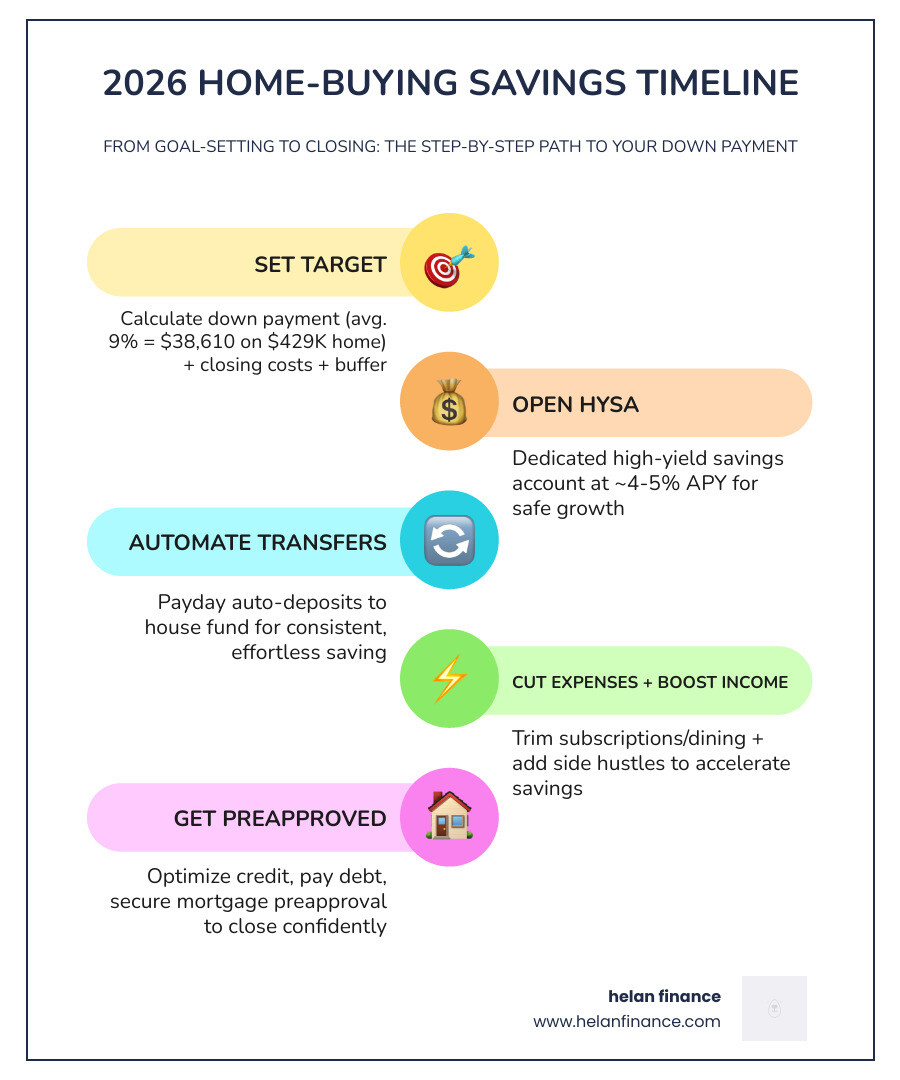
The best way to save up for a house combines a clear savings target, a dedicated account, automated transfers, and a few smart spending adjustments — all working together consistently over time.
Here’s a quick overview:
- Set your target — Calculate your down payment + closing costs + a small buffer
- Open a dedicated account — Use a high-yield savings account (currently ~4% APY)
- Automate transfers — Move money to your house fund on every payday
- Cut 2-3 major expenses — Subscriptions, dining out, or unnecessary services
- Boost income where possible — Side work, raises, or renting out assets
- Direct windfalls straight to savings — Tax refunds, bonuses, gifts
- Get mortgage-ready — Manage debt, monitor your credit score, get preapproved
Homeownership is one of the biggest financial goals most people will ever chase. And in 2026, it’s not getting any cheaper. The median U.S. home price sits around $429,000, and a family earning the national median income now needs roughly 36% of their earnings just to cover mortgage payments on a median-priced home.
Those numbers can feel discouraging — especially if you’re already juggling rent, student loans, and a packed schedule.
But here’s what the data actually shows: most first-time buyers in 2025 put down just 9%, not the 20% figure that stops so many people from even starting. Low-down-payment options (3% conventional, 3.5% FHA, and even 0% for qualifying VA and USDA loans) mean your real savings target is likely much lower than you think.
The challenge isn’t the math. It’s building a system that works without requiring constant willpower or financial expertise.
That’s exactly what this guide is for.
Setting a Realistic Savings Goal for 2026
When we think about buying a home, the first number that usually pops into our heads is that legendary 20% down payment. For a median-priced home of $429,000, that’s a staggering $85,800. If that number makes you want to crawl back into bed and stay a renter forever, we have good news: the 20% rule is largely a myth for first-time buyers.
In reality, the median down payment for first-time buyers in 2025 was just 9%, which is about $35,856 on a median-priced home. Some loan programs allow you to move in with as little as 3% or even 0% down. However, the best way to save up for a house is to look at the total “cash to close,” not just the down payment.
The Total Savings Target
To avoid a nasty surprise at the closing table, your savings goal should include three distinct buckets:
- The Down Payment: This ranges from 0% to 20% depending on your loan type.
- Closing Costs: These typically run between 2% and 5% of the purchase price. For a $400,000 home, that’s an extra $8,000 to $20,000.
- The Moving & Maintenance Buffer: You’ll need cash for the moving truck, that one leaky faucet you discover on day two, and the inevitable trip to the hardware store. Aim for at least $3,000 to $5,000 here.
| Loan Type | Minimum Down Payment | Best For |
|---|---|---|
| Conventional | 3% – 5% | Buyers with strong credit scores |
| FHA | 3.5% | Buyers with lower credit or smaller savings |
| VA | 0% | Eligible Veterans and service members |
| USDA | 0% | Buyers in eligible rural and suburban areas |
For more details on how these targets shift based on your specific situation, you can explore this guide on How to save for a house or down payment | Fidelity .
Calculating the best way to save up for a house based on your income
Setting a goal is one thing; making it fit your paycheck is another. We recommend starting with the “28% Rule.” This classic guideline suggests that your total monthly housing payment (including principal, interest, taxes, and insurance) should not exceed 28% of your gross monthly income.
However, in the 2026 market, many families are finding they need to stretch toward 36% of their earnings for mortgage payments. To find your personal “sweet spot,” look at your Debt-to-Income (DTI) ratio. Lenders generally want to see your total debt payments—including your future mortgage, car loans, and student loans—stay below 43% of your gross income.
Regional Price Variations Where you live changes everything. While the national median is $429,000, the best way to save up for a house in San Francisco (where down payments can average over $450,000) looks very different from saving in San Antonio or the Midwest. Research local listings in your target ZIP code to ensure your savings goal matches the reality of your neighborhood.
Where to Park Your Cash: The Best Accounts for Growth
Once you start seting money aside, where you put it matters just as much as how much you save. If you leave your house fund in a standard checking account earning 0.01% interest, you’re essentially letting inflation eat your future front porch.
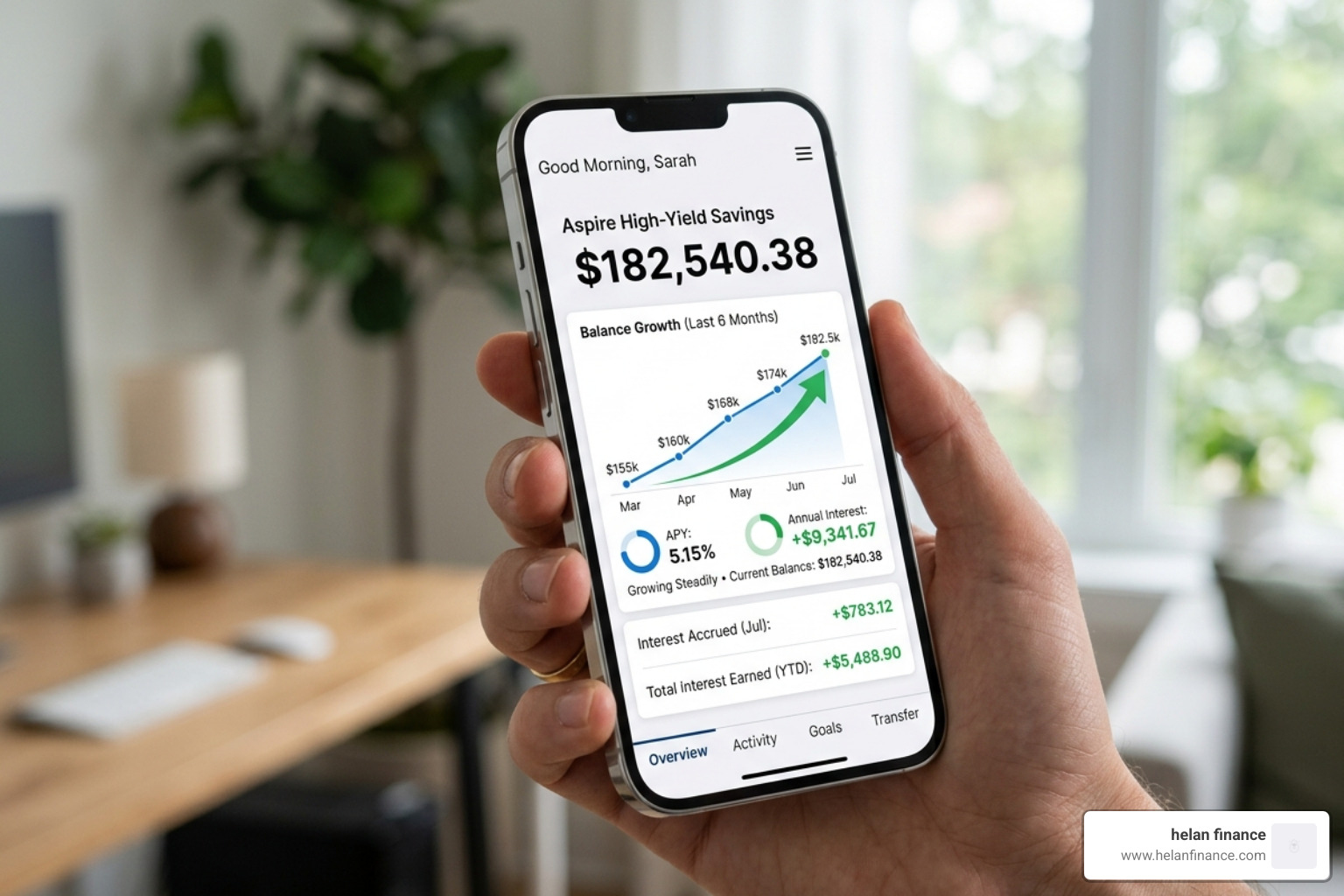
For a timeline of one to five years, stability and liquidity are your best friends. Here are the top contenders:
- High-Yield Savings Accounts (HYSA): In April 2026, top HYSAs are offering between 4.0% and 5.0% APY. They are FDIC-insured, meaning your principal is safe, and you can withdraw the money whenever you’re ready to make an offer.
- Certificates of Deposit (CDs): If you know you won’t buy for at least 12 or 24 months, a CD can “lock in” a high interest rate. Just be aware that there are penalties for withdrawing early.
- Money Market Accounts: These offer a middle ground, often providing slightly higher rates than standard savings while giving you debit card or check-writing access for when those initial inspections and earnest money deposits are due.
As noted by experts at How to Save for a House: A Step-by-Step Guide – NerdWallet , the stock market is generally considered too volatile for money you need in less than three to five years. A 20% market dip right before you find your dream home could delay your purchase by years.
Why automation is the best way to save up for a house
We like to say that willpower is a finite resource, but a scheduled transfer is forever. Behavioral finance studies show that people are three times less likely to “accidentally” spend money that has been moved into a dedicated, labeled account.
The best way to save up for a house consistently is to treat your savings like a non-negotiable bill. Set up an automatic transfer to occur the morning your paycheck hits your account. By moving the money before you have a chance to see it in your checking balance, you remove the “choice” from the equation. Naming the account something motivational—like “Our Future Backyard” or “The 2027 Move-In Fund”—creates a psychological barrier that makes you think twice before dipping into it for a vacation or a new gadget. For more on the logistics of setting this up, check out How To Save Money For A House .
The Best Way to Save Up for a House: Strategic Acceleration
If your current savings rate feels like it’s moving at the speed of a snail, it’s time to look at strategic acceleration. You don’t necessarily need a massive inheritance to speed things up; you need a combination of expense reduction and income boosting.
The Subscription Audit The average American now spends $273 monthly on subscription services. Between streaming platforms, gym memberships you don’t use, and “premium” apps, you might be sitting on $3,000 a year in “ghost” expenses. Auditing these and cutting just half could add $15,000 to your house fund over five years.
Strategic Side Hustles A modest side hustle generating $400 a month adds $4,800 a year to your fund. Whether it’s freelancing, renting out a spare room, or even “house hacking” (living in one unit of a duplex while renting out the other), increasing your “top-line” income is often faster than cutting your “bottom-line” expenses.
Temporary Downsizing Some of the most successful savers we’ve seen utilize temporary downsizing. This might mean moving to a smaller apartment for two years or even moving back in with family. A couple in a high-cost area who saves $1,000 a month on rent by downsizing can accumulate a $24,000 down payment in just two years. For a deeper dive into these “normal salary” strategies, see How to Save for a House on a Normal Salary (2026 Guide) .
Leveraging windfalls and assistance programs
Don’t ignore the “found money.” The average tax refund in 2025 was approximately $3,100. If you commit to directing 100% of tax refunds, annual bonuses, and cash gifts toward your house fund, you can shave months or even years off your timeline.
Additionally, thousands of Down Payment Assistance (DPA) programs exist across the country. Many offer grants between $5,000 and $15,000 that do not have to be paid back if you stay in the home for a certain period. These programs aren’t just for low-income buyers; many are available to middle-income families depending on the area.
Preparing Your Finances for Mortgage Approval
Saving the cash is only half the battle; you also need to make sure a lender will actually give you the rest of the money. Your credit score and Debt-to-Income (DTI) ratio are the two most important factors here.
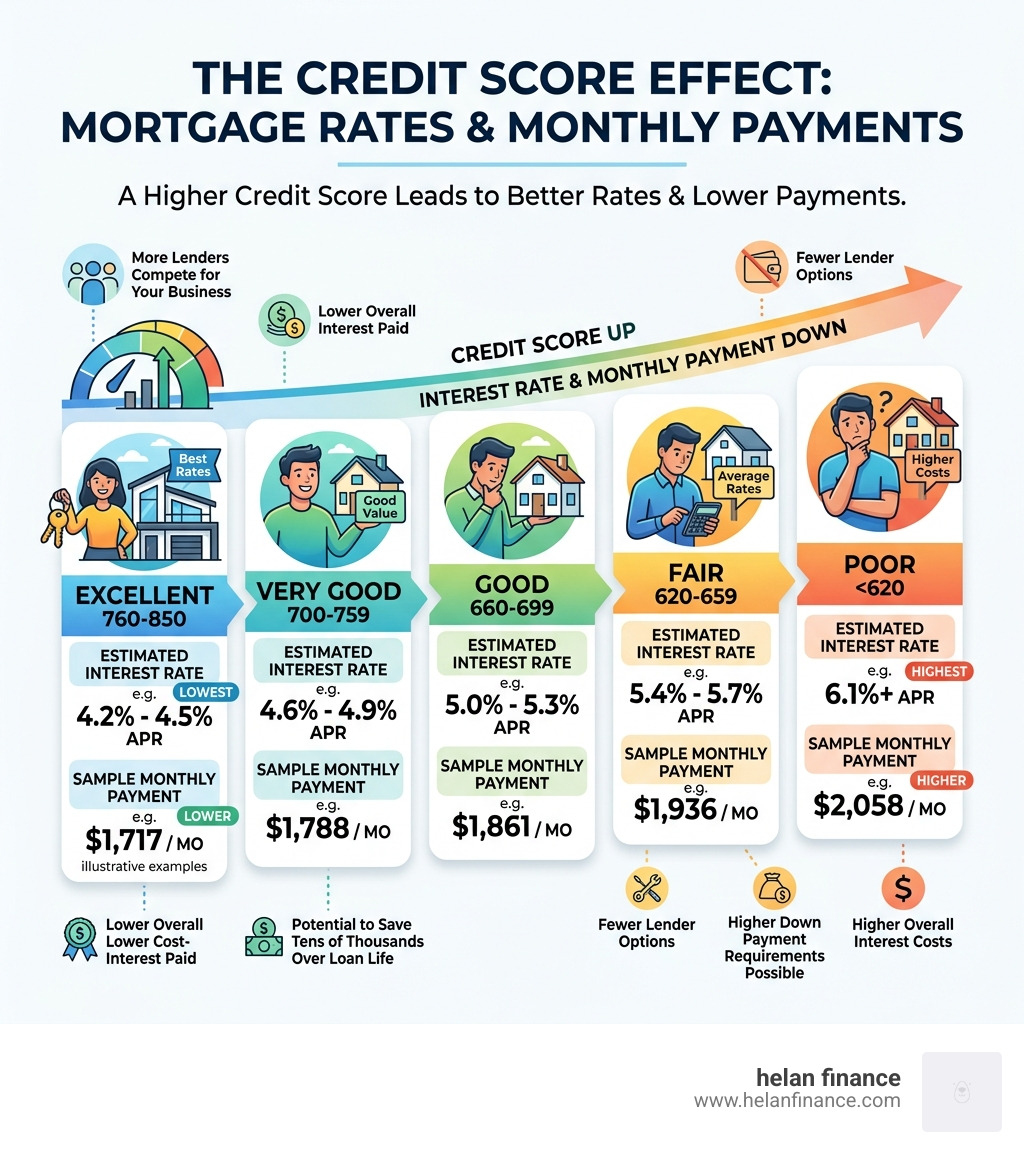
Credit Score and DTI
A higher credit score doesn’t just help you get approved; it saves you tens of thousands of dollars over the life of the loan. For a conventional mortgage, you typically need a score of at least 620, but the best rates are reserved for those above 740.
Lenders also look closely at your DTI. If you’re carrying heavy credit card debt, it reduces the amount of mortgage you can afford. This leads to a common dilemma: should you save for the house or pay down debt first?
The best way to save up for a house while managing debt
In most cases, the best way to save up for a house involves a “balanced” approach. You should prioritize paying off high-interest debt (anything above 7-8%, like credit cards) because the interest you’re paying is likely higher than the interest you’re earning in your savings account.
However, for low-interest debt like student loans, it often makes more sense to keep making the minimum payments while aggressively building your down payment fund. Paying off a $10,000 student loan at 4% interest might feel good, but if it leaves you with $0 in the bank, you’re still no closer to buying a home.
Prequalification vs. Preapproval Early in your journey, getting prequalified gives you a “ballpark” idea of what you can afford. But once you are within six months of buying, you want a full preapproval. This involves a lender verifying your income, taxes, and assets, and it tells sellers that you are a serious, qualified buyer. As the team at 6 Things to Know When Saving for a House – TD Bank suggests, talking to a lender early can help you identify credit issues you didn’t know you had, giving you time to fix them before you start house hunting.
Frequently Asked Questions about Saving for a Home
What is the fastest way to save for a house?
The absolute fastest way is to combine a significant expense cut (like temporary downsizing) with a temporary income boost (like a side hustle or overtime). Automating 100% of that “extra” income into a high-yield account ensures you don’t “lifestyle creep” your way out of your goal.
How much do I realistically need for a down payment in 2026?
While 20% is the gold standard to avoid Private Mortgage Insurance (PMI), most first-time buyers are successful with 3.5% to 10%. For a $400,000 home, aim for a total of $30,000 to $50,000 to cover the down payment, closing costs, and a small emergency buffer.
Should I pay off debt before saving for a house?
Prioritize debt with interest rates higher than what you can earn in a savings account. If you have credit card debt at 22% APR, pay that off first—it’s a guaranteed “return” on your money that far outpaces any savings account. For student loans or car loans with low rates, you can usually save for a home simultaneously.
Conclusion
The journey from a “piggy bank” mindset to property ownership isn’t about a single lucky break. It’s about the routines you build today. By setting a realistic target, choosing the right growth accounts, and automating your progress, you turn a mountain of a goal into a series of manageable steps.
At Helan Finance, we believe that simplified financial planning is the key to long-term wealth. Whether it’s through our daily routines, financial health tips, or simple advice, we’re here to help you build the financial foundation your future home requires. Start your journey with us today and turn your homeownership dreams into a concrete, 2026 reality.
Start your journey with Helan Finance

