
Identifying Money Worksheet: Don’t Let Your Kids Get Shortchanged
Why an Identifying Money Worksheet Belongs in Every Child’s Learning Toolkit
An identifying money worksheet is one of the most practical tools you can give a young learner — and finding the right one doesn’t have to be complicated.
Here are the best free sources to get started right now:
| Resource | Best For | Cost |
|---|---|---|
| K5 Learning | Kindergarten coin sorting and recognition | Free |
| Super Teacher Worksheets | Graded progression, K through upper elementary | Free (membership optional) |
| Math-Aids.com | Customizable US coin and bill worksheets | Free |
| YouveGotThisMath.com | Fun activities including riddles and coloring | Free |
| Money Instructor | Special education and early learners | Free |
Money skills are introduced as early as first or second grade — and the foundation built at that stage shapes how children handle finances for the rest of their lives. A simple worksheet that asks “What coin is this?” or “Three nickels — how much is that?” is doing more than teaching math. It’s building the mental habits that lead to confident, capable money management.
The good news: there are dozens of free, printable options available right now, covering everything from basic coin recognition to counting mixed bills, making change, and even international currencies.
Whether you’re a parent looking for a quick after-school activity or a teacher planning a unit on financial literacy, this guide breaks down exactly what’s available and how to use it well.
Why an Identifying Money Worksheet is Essential for Early Learners
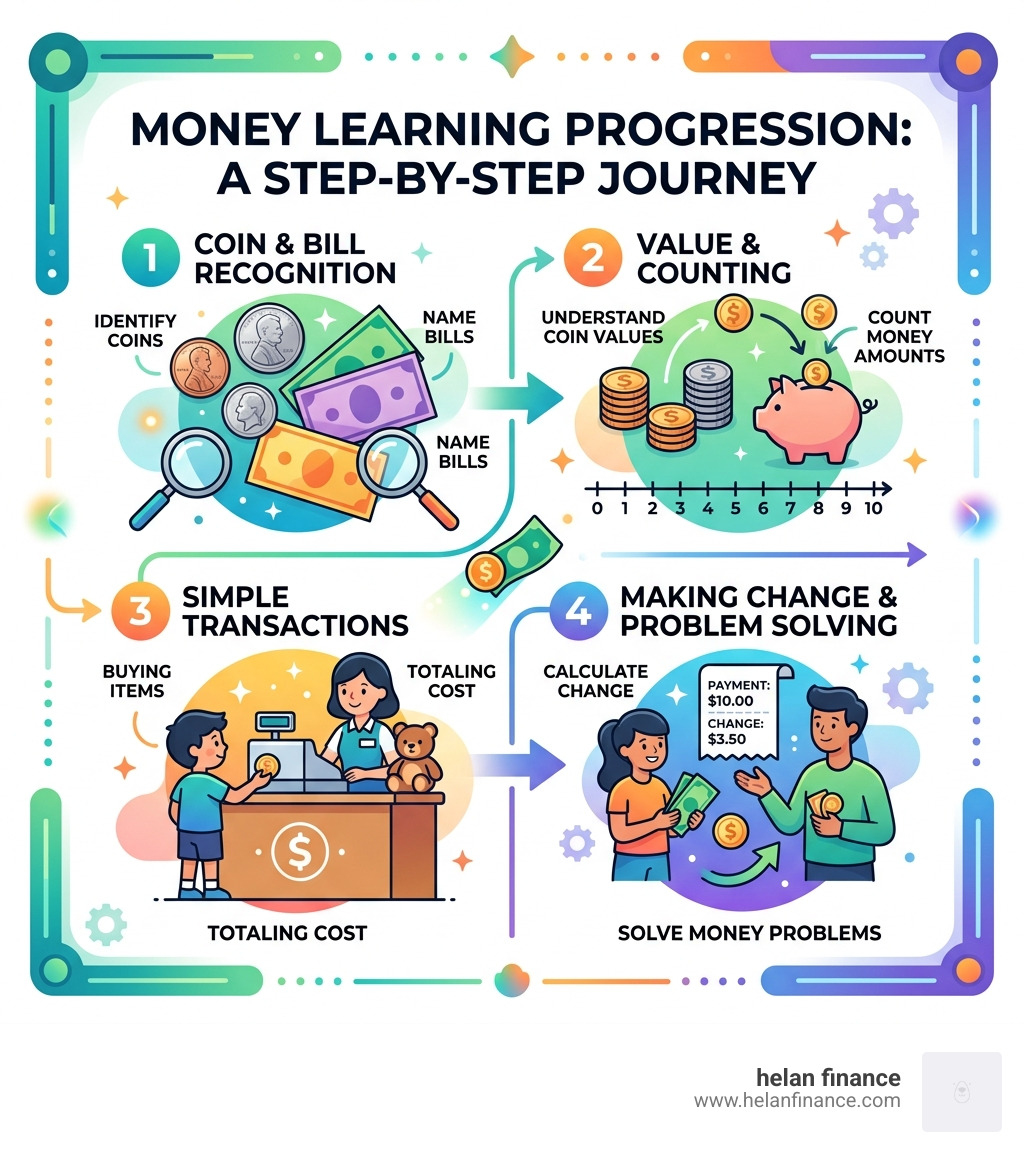
We often think of math as abstract numbers on a chalkboard, but money is where math gets real. For a child, realizing that three small shiny circles (dimes) are worth more than one big shiny circle (nickel) is a massive cognitive leap. Using an identifying money worksheet bridges the gap between “counting for the sake of counting” and “counting to buy a candy bar.”
Building Blocks of Financial Literacy
At Helan Finance, we believe that financial planning isn’t just for adults with 401(k)s; it starts the moment a child receives their first tooth-fairy payout. Early exposure through an Identifying Coins | Worksheet | Education.com helps children form healthy money habits. When they can identify a quarter at a glance, they begin to understand value association. They start to realize that money is a finite resource, which is the very first step toward budgeting and long-term financial health.
Strengthening Basic Math Skills
Money is essentially a “hands-on” version of the base-ten system. When children work on an identifying money worksheet, they aren’t just memorizing faces on metal; they are practicing:
- Addition and Subtraction: “If I have a dime and a penny, how much do I have?”
- Skip Counting: Counting nickels by fives and dimes by tens is the most practical way to master multiplication foundations.
- Decimals and Place Value: Eventually, $1.25$ becomes a lesson in how parts of a whole work.
As noted by Identifying coins , these exercises reinforce mathematical development that helps students well into their upper elementary years.
Core Skills Taught by an Identifying Money Worksheet
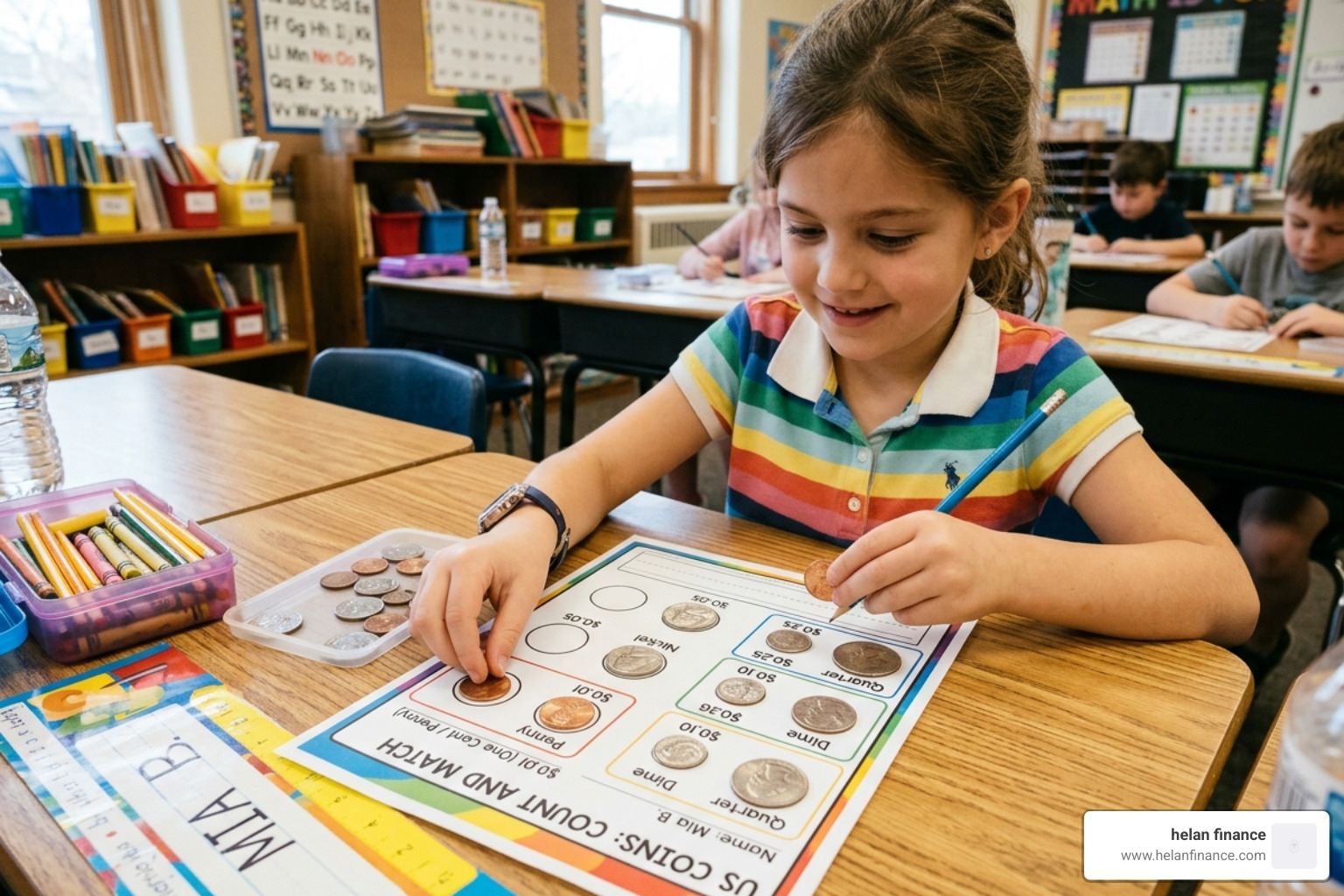
It might seem simple to us, but for a five-year-old, a dime and a nickel look suspiciously similar. A high-quality identifying money worksheet focuses on “visual discrimination”—the ability to tell the difference between objects based on specific features.
Mastering Coin Recognition
Most worksheets start with the basics: the penny, nickel, dime, and quarter. Advanced sheets might throw in a half-dollar or a Susan B. Anthony dollar coin just to keep things spicy.
Effective worksheets don’t just show one side of the coin. They include both front and back views because, in the real world, money isn’t always face-up. We want our kids to recognize the Lincoln Memorial just as easily as they recognize Abe Lincoln’s beard.
| Feature | Penny | Nickel | Dime | Quarter |
|---|---|---|---|---|
| Color | Copper/Bronze | Silver | Silver | Silver |
| Edge | Smooth | Smooth | Ridged | Ridged |
| Value | 1 cent | 5 cents | 10 cents | 25 cents |
| Size | Small-Medium | Medium | Smallest | Largest (common) |
Understanding Bill Denominations
Once coins are mastered, it’s time to move to the “folding stuff.” Identifying bills requires reading numbers and recognizing historical figures. A Money Notes Recognition Worksheet is excellent for teaching the difference between a $1, $5, and $10 bill. This is where children start to understand larger “units” of value, which is essential for more complex financial planning routines later in life.
Types of Identifying Money Worksheets for Every Grade Level
Not all worksheets are created equal. Depending on where your child is in their journey, you’ll want to pick a format that challenges them without causing a “math meltdown.”
Basic Identifying Money Worksheet for Kindergarten
For the littlest learners, the goal is simple: “What is this?”
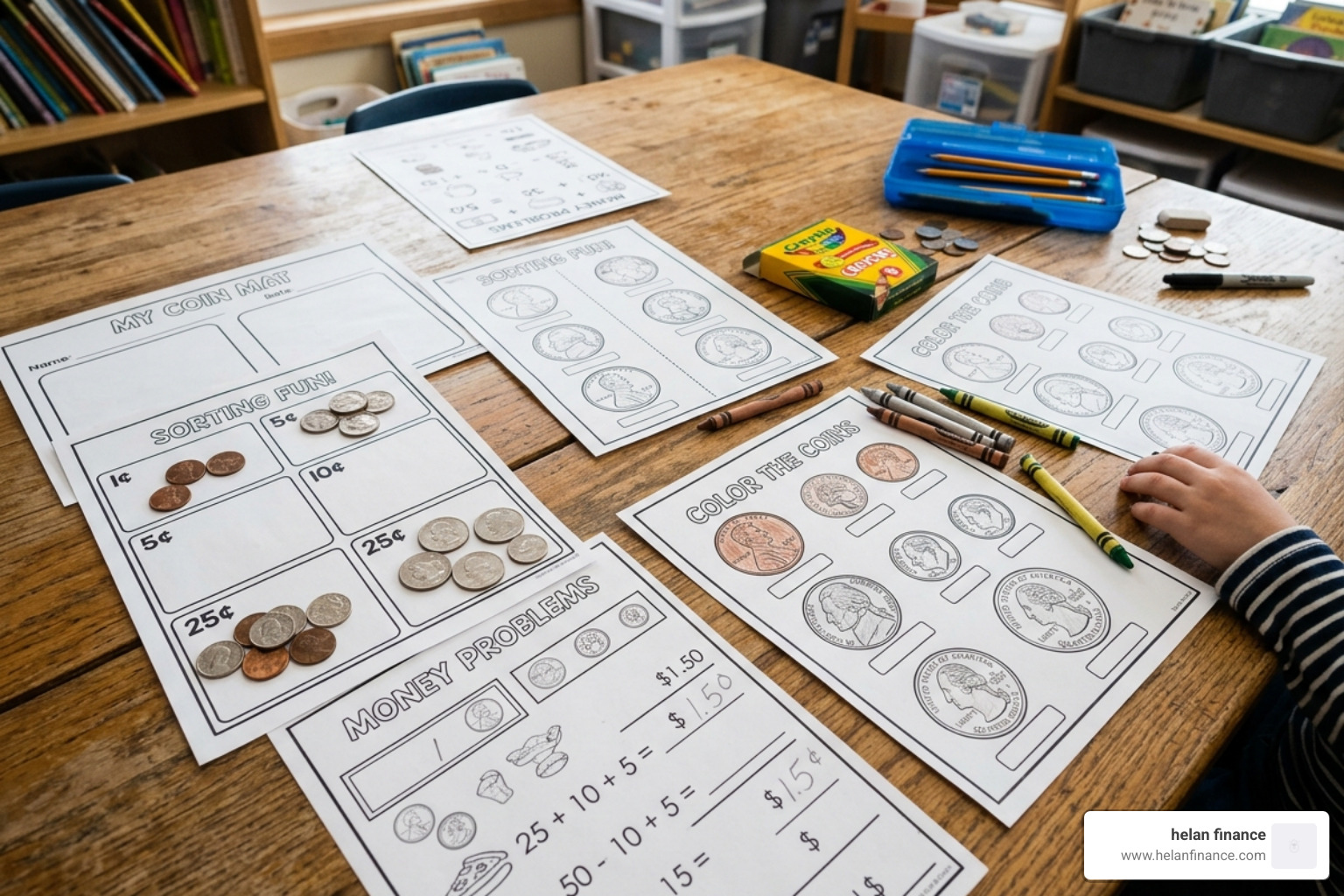
- Sorting Activities: Draw a line from the penny to the jar labeled “1 cent.”
- Coloring Pages: “Color all the quarters blue and all the nickels red.”
- Visual Matching: Matching the front of a coin to its back. Resources like Identify coins money worksheets – K5 Learning provide excellent starting points for these foundational skills.
Intermediate Identifying Money Worksheet for 1st and 2nd Grade
By first and second grade, kids are ready to start “mixing and matching.” They move from identifying a single coin to counting sets.
- Counting Single Types: A row of 5 nickels. How much?
- Mixed Coin Sets: 2 quarters, 1 dime, and 3 pennies. This is where the real brain work begins!
- Comparing Amounts: Which is more? Three dimes or one quarter? You can find a great variety of these at 11 Free Identifying Money Worksheets | Fun Activities , which often include fun elements like money riddles to keep engagement high.
Advanced Identifying Money Worksheet and Making Change
For 3rd grade and up, we move into real-world transactions.
- Word Problems: “If a toy costs 75 cents and you give the cashier a dollar, what is your change?”
- The “Next Dollar” Strategy: Teaching kids that if something costs $6.29, they should hand over $7. This is a vital life skill for quick transactions.
- Rounding and Estimating: Is $4.95 closer to $4 or $5?
Beyond US Currency: International Money Recognition
In our increasingly globalized world, we shouldn’t limit our children to just the “Almighty Dollar.” Learning about different currencies fosters global awareness and prepares them for future travel.
Exploring Canadian and UK Currencies
Many high-quality resource sites offer international versions. It’s fascinating for kids to see the “Loonies” and “Toonies” of Canada or the “Pence” and “Pounds” of the UK. Sites like Money Instructor allow you to print play money from various countries, which can turn a boring math lesson into a “trip around the world.”
Customizable Worksheet Generators for Global Money
If you’re looking for something specific—say, a worksheet that only uses dimes and quarters or one that includes the Euro—customizable generators are your best friend.
- Random Generation: You get a fresh sheet every time you click “refresh.”
- Adjustable Difficulty: You can limit the maximum total value to under $1.00 for beginners or up to $100.00 for advanced students.
- Multi-Currency Support: Choose between USD, CAD, GBP, and more.
Tips for Using Money Worksheets Effectively in the Classroom
A worksheet is a great tool, but it shouldn’t be the only tool. To make the lessons stick, we recommend a “blended” approach that combines paper-and-pencil work with tactile experiences.
Integrating Physical Manipulatives
Nothing beats the real thing. While an identifying money worksheet provides the structure, having a bowl of real (or plastic) coins on the desk allows children to feel the ridges on a quarter or the smoothness of a nickel.
- The “Search and Find”: Have the child find the physical coin that matches the picture on their worksheet.
- Tactile Identification: Have them close their eyes and try to identify the coin just by feeling its size and edges.
Engaging Games and Real-World Simulations
We love turning money lessons into a “Classroom Store.”
- Set up items (erasers, snacks, toys) with price tags.
- Give students “wallets” with play money.
- Have them use their Money Worksheets: Counting Coins & Making Change to calculate if they have enough to buy the “luxury” pencil sharpener.
Frequently Asked Questions about Money Identification
Where can I find free printable identifying money worksheets?
There are several fantastic repositories online. Identifying Coins Worksheet – TPT is a goldmine for teacher-created materials that are often free. Additionally, Coin Identification Worksheets for Young Students – Kids’ Money offers curated lists specifically for early elementary levels.
What age is best for starting money identification?
Most educators suggest starting basic recognition in Kindergarten (ages 5-6). By age 7 or 8 (2nd grade), most children are ready to begin counting mixed groups of coins and understanding the concept of making change.
How do customizable worksheet generators work?
These tools (like the one found on Math-Aids or Money Instructor) use an algorithm to randomly place coin and bill images on a page based on the parameters you set. You can choose the number of problems, the types of currency, and whether you want the coins sorted from largest to smallest value to make counting easier for beginners.
Conclusion
Teaching a child to identify money is about more than just passing a second-grade math quiz. It’s about giving them the keys to the world. When a child masters an identifying money worksheet, they are taking their first steps toward the kind of easy and efficient financial planning we champion at Helan Finance.
By starting with the basics—recognition, value, and counting—you are ensuring that your children grow up to be financially savvy adults who won’t get “shortchanged” in the real world. For more tips on simplified financial planning tools, exercises, and health tips for the whole family, we invite you to explore our resources.
More info about financial planning services

