
10 Essential Categories for Personal Expenses You Need to Track
What Are the Best Categories for Personal Expenses?
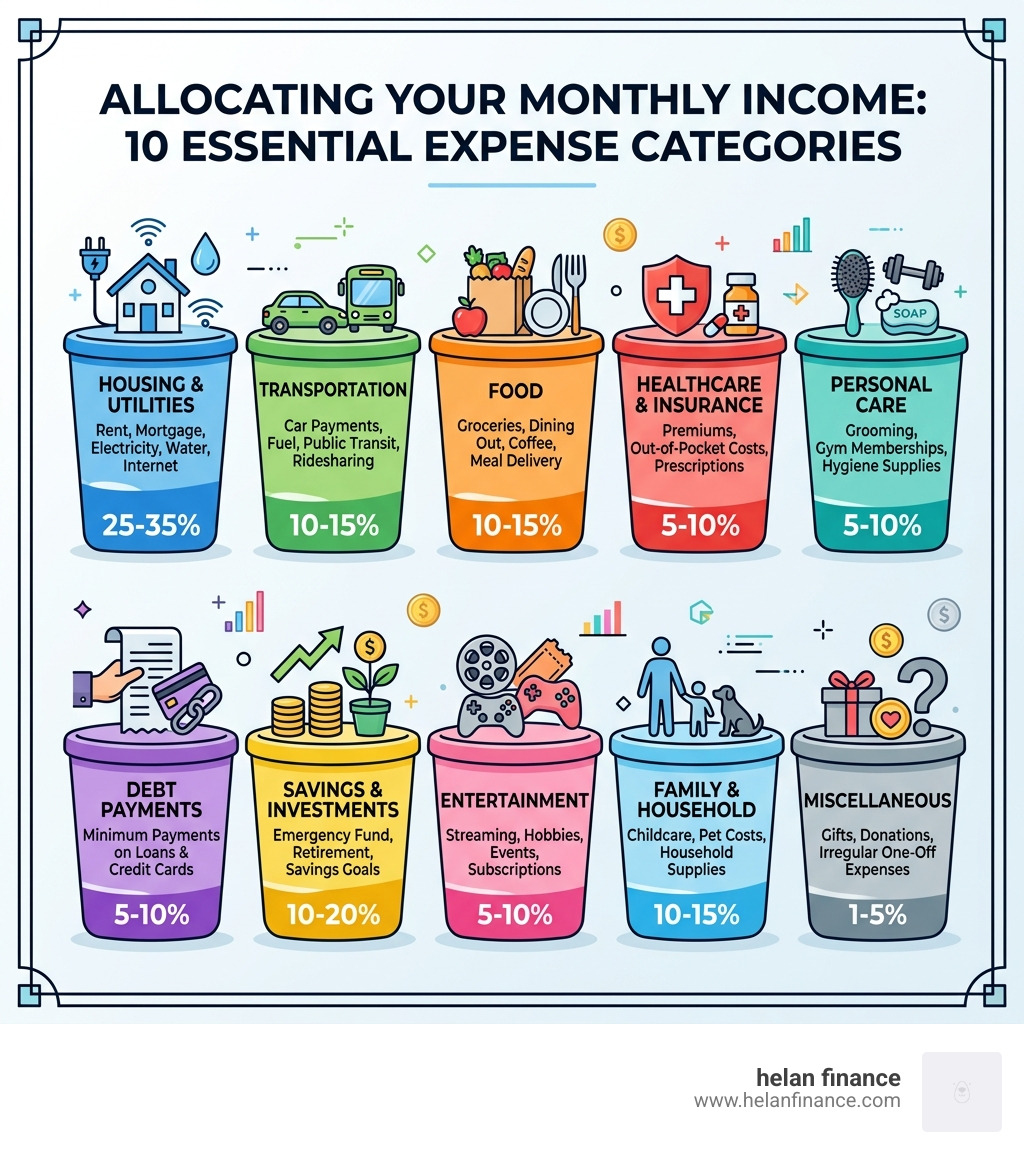
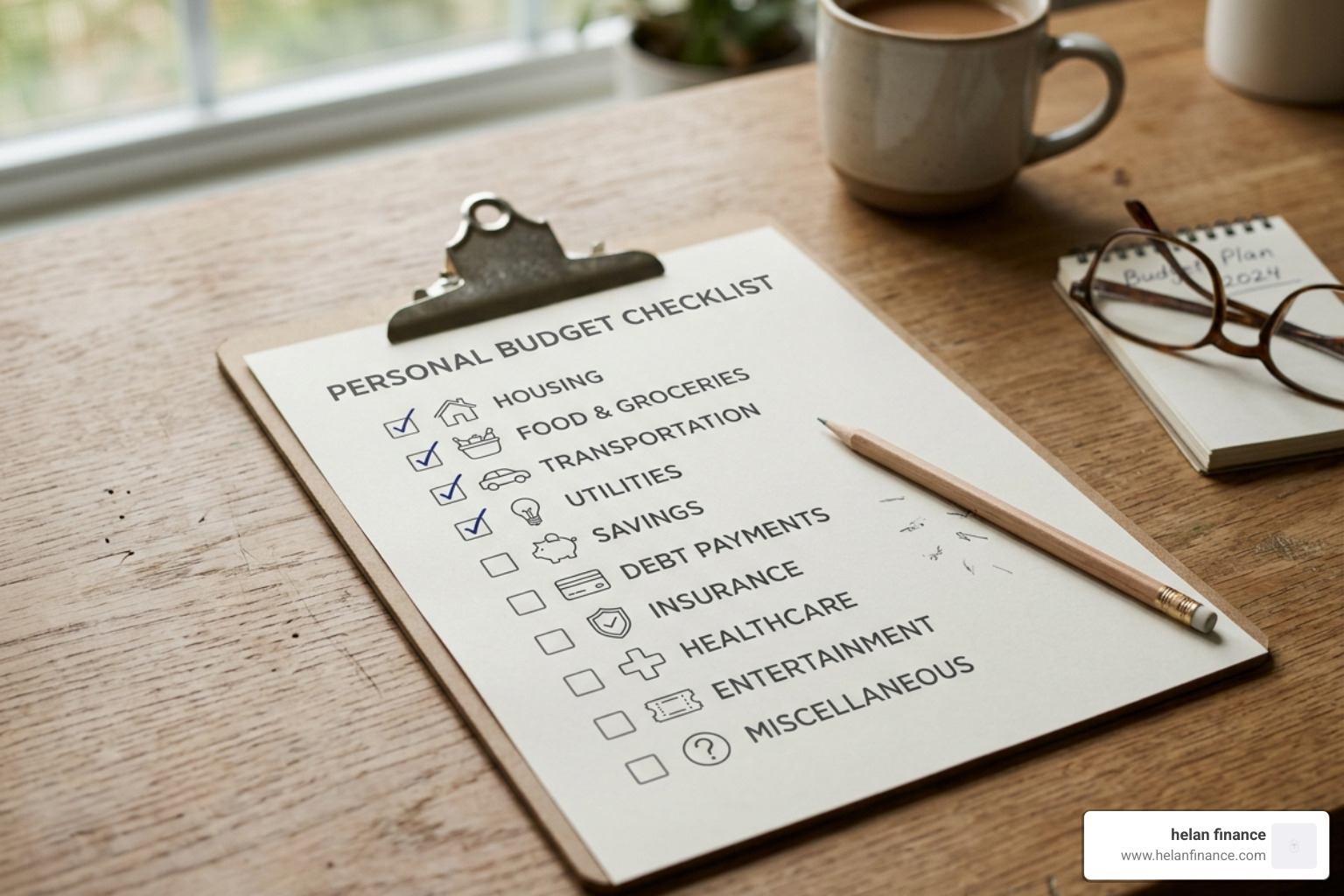
Categories for personal expenses are the building blocks of any working budget. Here are the 10 essential ones you need to track:
- Housing and Utilities — rent, mortgage, electricity, water, internet
- Transportation — car payments, fuel, public transit, ridesharing
- Food — groceries, dining out, coffee, meal delivery
- Healthcare and Insurance — premiums, out-of-pocket costs, prescriptions
- Personal Care — grooming, gym memberships, hygiene supplies
- Debt Payments — minimum payments on loans and credit cards
- Savings and Investments — emergency fund, retirement, savings goals
- Entertainment — streaming, hobbies, events, subscriptions
- Family and Household — childcare, pet costs, household supplies
- Miscellaneous — gifts, donations, irregular one-off expenses
If your paycheck seems to vanish before the month is over, you are not alone. Most people have a rough sense of their big bills — rent, car, maybe a phone plan — but the smaller expenses blur together fast.
The problem is not how much you earn. It is the lack of a clear picture of where every dollar actually goes.
Without categories, a budget is just a wish list.
Organizing your spending into clear groups gives you that picture. It takes the chaos out of your bank statement and turns it into something you can actually act on. Whether you are saving for a house, paying down debt, or just trying to stop the month-end panic, the right expense categories make it simple.
The Bureau of Labor Statistics tracks consumer spending across 14 major categories — from housing and food to healthcare and entertainment. That framework exists because structure works. And it works just as well for your personal finances as it does for national economic data.
Below, we break down the 10 categories that matter most, how much to allocate to each, and how to make the system work even when life gets messy.
Why Categorizing Your Spending is Essential for Financial Health
Think of categories for personal expenses as a GPS for your money. Without them, you are driving in the dark. Categorization provides financial visibility, allowing us to see exactly how much we spend on “needs” versus “wants.” When we group our spending, we can identify patterns—like realizing those “quick” coffee runs actually add up to a monthly car payment.
Effective categorization supports several pillars of financial health:
- Cash Flow Management: It helps us ensure that money coming in covers the money going out, preventing the dreaded “more month than money” scenario.
- Goal Alignment: If your goal is to buy a home in 2027, your categories will show you if your current spending on entertainment is stealing from your down payment fund.
- Debt Reduction: By identifying variable costs that can be trimmed, we free up extra cash to pay down high-interest credit cards.
- Retirement Planning: Categorizing savings as a “must-pay bill” ensures we are building wealth for the future rather than just surviving the present.
As noted in Budgeting 101: Personal Budget Categories | First Bank, a comprehensive list ensures no expenses are overlooked. This clarity significantly reduces financial stress. When every dollar has a name and a place to go, the anxiety of the unknown disappears.
The 10 Essential Categories for Personal Expenses
To build a resilient budget in April 2026, we need to distinguish between different types of costs. Generally, expenses fall into four buckets:
- Fixed Expenses: The same amount every month (e.g., rent).
- Variable Expenses: Costs that change based on usage (e.g., groceries).
- Discretionary Spending: “Wants” that we can cut if needed (e.g., movies).
- Non-monthly/Periodic Costs: Expenses that happen once or twice a year (e.g., car registration).
Housing and Utilities: The Largest Categories for Personal Expenses
For most of us, housing is the “big kahuna” of the budget. Experts generally recommend keeping housing costs—including rent or mortgage, property taxes, and HOA fees—to between 25% and 35% of your take-home pay. Based on an average monthly take-home pay of $3,564, this means spending roughly $891 to $1,247.
Utilities are often grouped with housing but are variable. These include:
- Electricity and Natural Gas: These often fluctuate with the seasons (heating in winter, cooling in summer).
- Water and Trash: Usually stable but important to track.
- Internet and Cell Phone: Modern essentials that Intuit Blog often classifies alongside living expenses.
Transportation and Food Costs
Transportation should ideally consume 10% to 15% of your budget. This includes car payments, fuel, and vehicle maintenance. If you live in a city and don’t own a car, this category covers public transit passes and ridesharing.
Food is the trickiest variable category. Most sources suggest 10% to 15% of income for food, but the way you spend it matters. We recommend splitting this into two subcategories:
- Groceries: Essential fuel for the home.
- Dining Out: Discretionary spending, including coffee shops and takeout.
Separating these two helps you see if your “convenience spending” is ballooning. A single adult might spend $200–$350 on groceries, while a family might range from $600–$900 depending on size.
Healthcare, Insurance, and Personal Care
This category covers your well-being. It includes medical premiums, out-of-pocket costs (like co-pays), and dental care. We also include “Personal Care” here—things like hygiene supplies, grooming, and mental health services. Even gym memberships belong here, as they are an investment in your long-term health. Don’t forget insurance types like life and disability coverage, which provide a safety net for your family.
How to Allocate Your Income Using Categories for Personal Expenses
Now that we have our categories, how do we fill them? There is no one-size-fits-all answer, but frameworks provide a great starting point.
| Budgeting Method | Needs (Housing, Food, Utilities) | Wants (Entertainment, Travel) | Savings & Debt Payoff |
|---|---|---|---|
| 50/30/20 Rule | 50% | 30% | 20% |
| Zero-Based Budgeting | Every dollar is assigned a specific job until $0 remains. | ||
| Tight Budget Guidelines | 60-70% | 10-20% | 10% |
The 50/30/20 rule is the most popular. It suggests 50% for needs, 30% for wants, and 20% for savings and extra debt payments. However, as users on Reddit’s personalfinance community point out, these percentages are flexible. If you live in a high-cost area, your housing might take 40%, meaning you must trim your “wants” to 20% to keep your savings on track.
The goal is to ensure your net income (take-home pay after taxes) covers all categories. If your expenses exceed your income, start by cutting the “wants” before touching your 20% savings goal.
Managing Tricky Categories for Personal Expenses and Mixed Purchases

Life rarely fits into neat little boxes. What do you do with a $200 Costco receipt that includes groceries (Food), laundry detergent (Household), and a new book (Entertainment)?
The Rule of Function Over Vendor: Don’t categorize by where you shopped, but by what you bought. If the amounts are large, split the receipt. If you bought $190 of groceries and a $10 book, it is fine to just list the whole thing under groceries for simplicity.
Other tricky areas include:
- Subscription Fatigue: Group all streaming services, apps, and software into one “Subscriptions” sub-category so you can see the total monthly drain.
- Sinking Funds: For irregular costs like home repairs or holiday gifts, divide the annual cost by 12. If you spend $1,200 on gifts a year, budget $100 every month into a “Gift Fund.”
- Miscellaneous Limit: Keep your “Misc” category to less than 5% of your total budget. If it’s higher, you aren’t being specific enough with your categories.
Strategies to Organize and Track Your Budget
Tracking doesn’t have to be a chore. In April 2026, we have more tools than ever to simplify this:
- Digital Apps: Many apps automatically pull your transactions and guess the category. You just need to review them once a week.
- Spreadsheets: Great for those who want total control. You can customize your categories for personal expenses exactly how you like them.
- The Cash Envelope System: For categories where you tend to overspend (like dining out), use physical cash. When the envelope is empty, the spending stops.
- Automation: Set up automatic transfers to your savings and investment accounts the day you get paid. This “pays yourself first” strategy ensures your goals are met before you have a chance to spend the money.
Pro-Tip: Review your categories every three months. Your life changes—maybe you moved from being a renter to a homeowner, or you welcomed a new pet. Your budget should evolve with you.
Frequently Asked Questions about Expense Categorization
How many categories for personal expenses should I have?
For beginners, 8 to 12 categories is the “sweet spot.” If you have too few (e.g., just “Bills” and “Fun”), you won’t have enough detail to see where to cut. If you have 40 categories, you will get overwhelmed and quit. Start broad and only add sub-categories if you feel a specific area (like “Amazon Purchases”) needs closer monitoring.
How do do I handle non-monthly or irregular expenses?
Use the Monthly Average Method. Total up your annual costs for things like car insurance premiums, Amazon Prime, or annual medical checkups. Divide by 12 and set that money aside in a separate savings account (a “sinking fund”) each month. When the bill arrives, the money is already there.
What is the most common mistake when categorizing expenses?
The “Miscellaneous Overflow.” Many people dump everything they can’t immediately identify into a “Misc” bucket. This hides spending leaks. Another common error is forgetting “phantom” subscriptions—those $9.99 charges that you no longer use but still pay for.
Conclusion
Mastering your categories for personal expenses is about more than just numbers on a screen; it is about financial empowerment. By creating a clear structure, you move from being a passive observer of your bank account to an active manager of your wealth.
At Helan Finance, we believe that financial planning should be easy and efficient. By turning budgeting into a simple routine—much like a morning exercise or a health tip—you build the foundation for a secure April 2026 and beyond.
Start today by picking just three categories to track this week. Once you see where the money is going, you’ll have the power to decide where it should go. Your future self will thank you.

