Common Money Habits That Keep You Poor
The Money Habits That Keep You Poor (And How to Spot Them)
The money habits that keep you poor are rarely dramatic. They’re small, quiet, and easy to miss — until they’ve done years of damage.
Here are the most common ones at a glance:
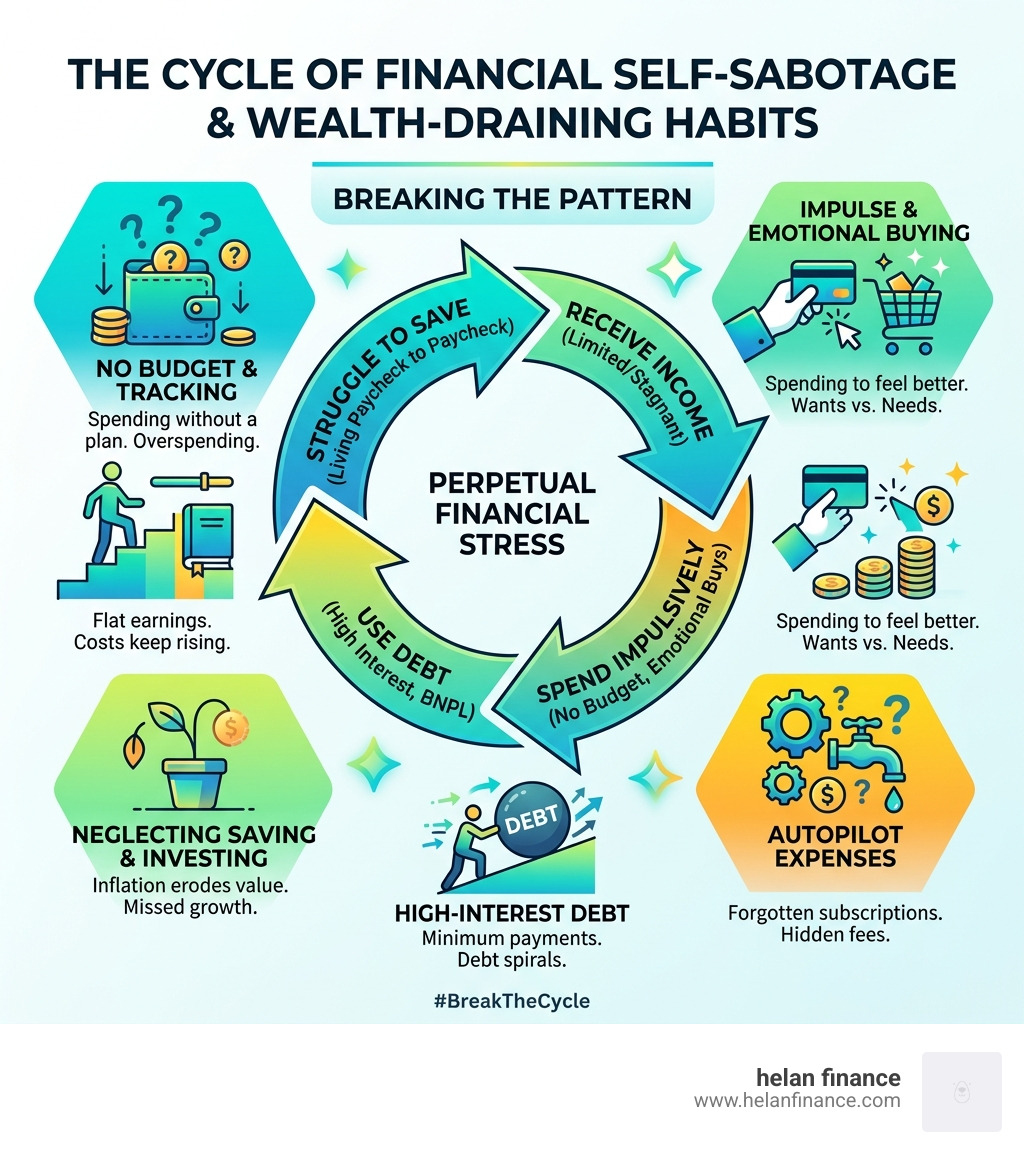
- Spending without a budget — no plan means no control
- Autopilot expenses — forgotten subscriptions and price hikes draining your account silently
- Emotional and impulse buying — spending to feel better, not to meet a need
- Carrying high-interest debt — minimum payments that barely touch the principal
- Using Buy Now, Pay Later — phantom debt that adds up fast
- Not saving or investing — letting inflation quietly erode your cash
- Skipping financial automation — relying on willpower instead of systems
- Ignoring taxes and cybersecurity — leaving money on the table and putting it at risk
- Stagnant income and skills — earning the same while costs keep rising
- Excessive frugality — cutting so deep you skip things that actually matter
Most people assume financial struggles come from not earning enough. But research and real-world experience tell a different story. Even people with solid incomes can stay stuck when their daily money habits work against them.
The good news? These habits are not permanent. They’re patterns — and patterns can be changed.
Whether you’re living paycheck to paycheck or just feel like your money disappears every month, the first step is recognizing which habits are quietly holding you back.
Spending and Budgeting Habits That Drain Your Wealth
We often think of wealth-building as a series of massive decisions, like buying a house or picking a winning stock. However, as we see at Helan Finance, it is usually the small, daily choices that dictate our financial destination. If you don’t have a map for your money, you’re essentially road-tripping through life without a GPS. You might keep moving, but you probably won’t end up where you want to be.
One of the most pervasive money habits that keep you poor is the absence of a clear budget. Around 1 in 4 people don’t make a budget at all, and among those who do, a staggering 84 percent admit to breaking it. Without a plan, your money flows toward the path of least resistance—usually impulse buys and convenience fees—rather than toward your long-term goals.
Why Autopilot Spending is One of the Money Habits That Keep You Poor
In April 2026, we live in a “subscription economy.” Everything from your morning coffee to your toothbrush can be put on a recurring monthly charge. While convenient, this “autopilot” mindset is a silent wealth killer.
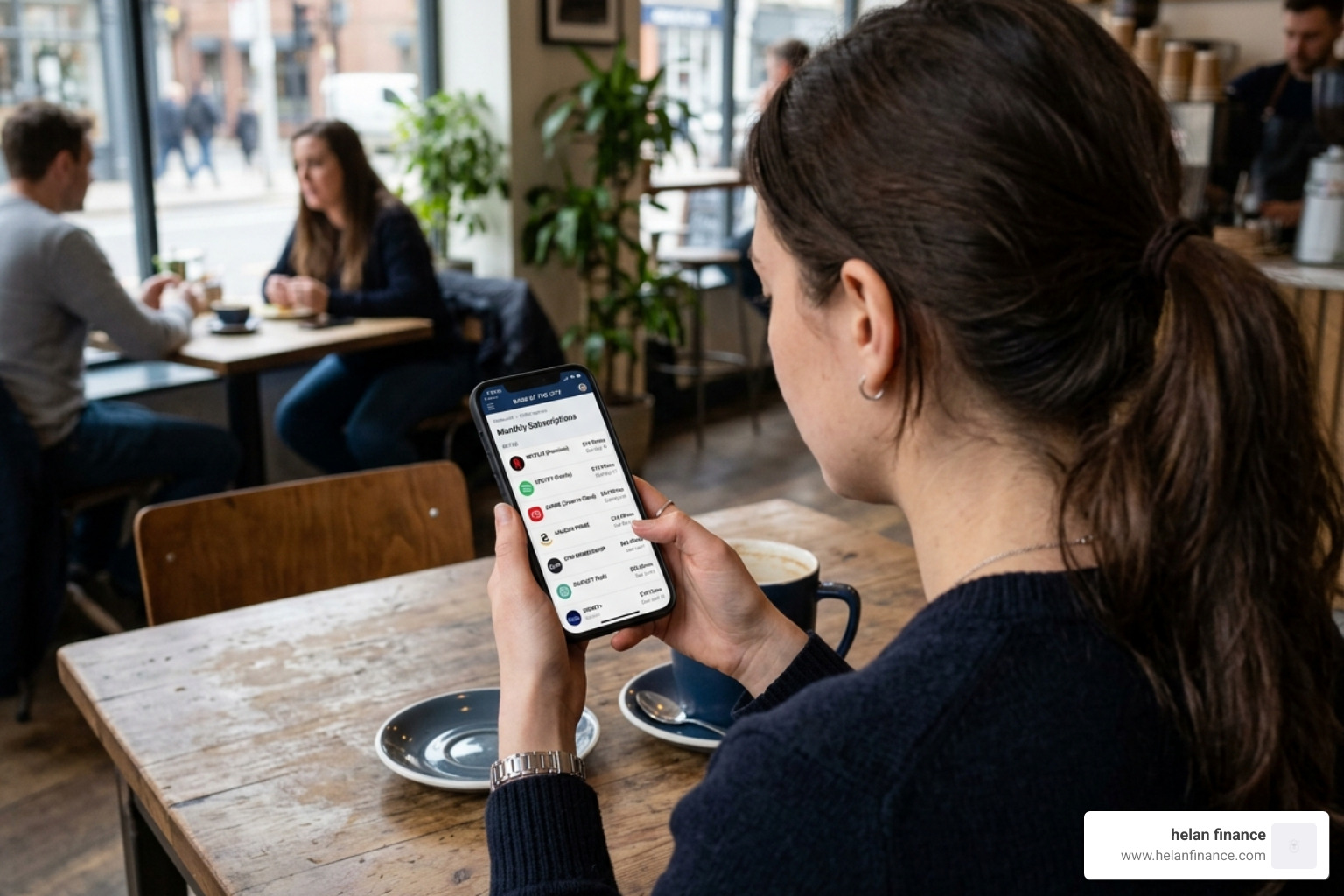
Research shows that Americans spend, on average, more than $200 a year for subscriptions they don’t even use. These are “zombie” expenses—charges for apps you deleted months ago, streaming services you don’t watch, or gym memberships for a place you haven’t visited since 2024. Because these payments are automated, they hide price increases. You might sign up for $9.99, but two years later, you’re paying $16.99 without ever consciously agreeing to the hike.
To break this habit, we recommend a “subscription audit” every quarter. If you haven’t used it in 30 days, cut it. That $200 saved isn’t just $200; if invested, it becomes a significant part of your future nest egg.
How Emotional Spending Fuels Money Habits That Keep You Poor
We’ve all been there: a bad day at work leads to “retail therapy.” This is emotional spending, and it’s one of the most difficult money habits that keep you poor to break because it feels good in the moment. Impulse buying provides a hit of dopamine that masks stress or boredom, but the “high” vanishes the moment the credit card bill arrives.
The fix? The 24-hour rule. If you see something you want but didn’t plan to buy, wait exactly one day. Usually, the emotional urge fades, and you’ll realize you don’t actually need the item. This simple routine protects your discretionary income for things that truly matter.
| Feature | 50/30/20 Budget | No Budget |
|---|---|---|
| Needs (Housing, Food) | Capped at 50% | Often exceeds 70% |
| Wants (Fun, Dining) | Controlled at 30% | Unlimited/Untracked |
| Savings/Debt Paydown | Guaranteed 20% | “Whatever is left” (usually $0) |
| Stress Level | Low (Planned) | High (Surprise bills) |
For more structured guidance on avoiding these pitfalls, check out these 10 Money Habits That Keep You Poor – Safe 1 Credit Union.
The Debt Trap: Credit Cards and BNPL Schemes
Debt is often described as the most expensive way to live. When you carry a balance, you aren’t just paying for the item you bought; you’re paying a “tax” to the bank in the form of interest. With credit card interest rates often hovering between 20% and 25% APR, a simple $1,000 purchase can end up costing you double if you only make minimum payments.
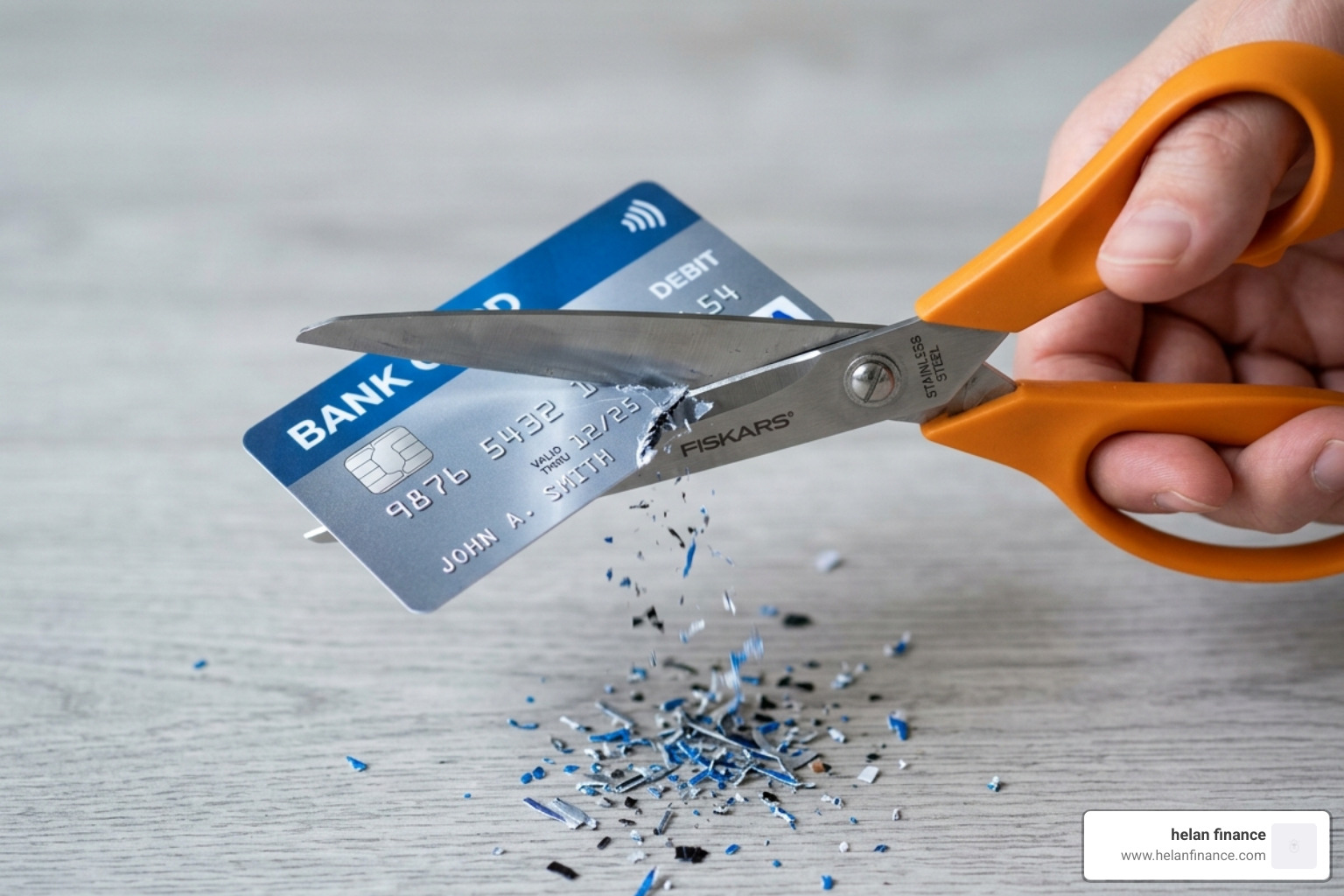
Relying too heavily on credit to sustain a lifestyle you can’t afford is a surefire way to stay stuck in a fiscal mess. As noted in these 7 Common Bad Money Habits that Keep You Poor, ignoring your debt or only paying the minimum allows compounding interest to work against you rather than for you.
The Hidden Cost of Buy Now, Pay Later
“Buy Now, Pay Later” (BNPL) schemes have exploded in popularity, often marketed as a “friendlier” alternative to credit cards. However, they can be even more predatory. BNPL creates “phantom debt”—small, manageable payments that feel insignificant individually but collectively devour your monthly cash flow.
The risk is high: some BNPL services have reported incredibly high payment failure rates. When you miss a payment, the fees kick in, and your credit score can take a major hit. This makes it harder (and more expensive) to get a mortgage or a car loan later in life, keeping you in a cycle of high costs.
Breaking the Cycle of High-Interest Liabilities
To escape the debt trap, you need a strategy. We often suggest two main methods:
- The Debt Avalanche: List your debts by interest rate and attack the highest one first. This saves you the most money over time.
- The Debt Snowball: Pay off the smallest balance first to get a quick win. This builds the psychological momentum needed to keep going.
Regardless of the method, the goal is to shift toward cash-only spending for non-essentials. If you can’t pay for it in cash today, you can’t afford it.
Savings and Investment Mistakes to Avoid
One of the most dangerous money habits that keep you poor is treating savings as “optional.” Many people wait until the end of the month to see what’s left over to save. The problem? There is never anything left over.
Furthermore, keeping all your money in a standard savings account is a mistake in 2026. With inflation constantly nibbling at the value of the dollar, cash is “trash” if it’s not growing. You aren’t just losing out on potential gains; you are actively losing purchasing power every single day.
Why Willpower Fails Without Financial Automation
We only have a limited amount of willpower each day. If you have to choose to save money every time you get paid, eventually you will choose to spend it instead. This is why financial automation is the “secret sauce” of the wealthy.
The 10% rule (or ideally 20%) should be automated. Set up your payroll to deposit a portion of your check directly into a high-yield savings or investment account. By “paying yourself first,” you remove the temptation to spend that money. At Helan Finance, we emphasize creating these types of routines because they turn wealth-building into a background process that happens while you sleep.
The Risk of Excessive Frugality and Stagnant Income
Can you be too cheap? Surprisingly, yes. Being a “cheapskate” can backfire. Avoiding essential car repairs or medical checkups to save a few dollars today often leads to massive, multi-thousand-dollar bills later.
Moreover, focusing solely on cutting expenses has a limit—you can only cut your spending to zero. However, your income potential is theoretically limitless. Sticking to low-paying skills and refusing to invest in your own education or “skill stacking” is a habit that keeps your ceiling low. Wealthy people focus on the “gap”—the space between an increasing income and a stable, controlled lifestyle.
For more on how to manage these behaviors, see these 6 Bad Money Habits to Break – AARP.
Overlooked Money Habits That Keep You Poor: Security and Taxes
In our digital-first world, your financial health is tied directly to your digital security. Neglecting cybersecurity is a modern habit that can wipe out years of hard work in an instant.
The statistics are sobering:
- Americans age 60 and older lost $4.8 billion to cybercrime in 2024.
- More than 2 in 5 Americans have lost money to scams or identity theft.
- Two-thirds of people still reuse the same passwords across multiple accounts.
If you are recycling passwords, you are leaving the front door to your bank account unlocked.
Neglecting Cybersecurity and Tax Planning
Building wealth is not just about what you earn; it’s about what you keep. Neglecting tax planning is essentially giving the government a tip they didn’t ask for. Are you maxing out your 401(k) to get the full employer match? If not, you are turning down a 100% return on your money—something you won’t find anywhere else.
Using tools like multifactor authentication (MFA) and password managers are non-negotiable financial habits in 2026. Protecting your assets is just as important as growing them.
The High Cost of Financial Illiteracy
Avoiding financial education because it feels “boring” or “too complex” is a habit that keeps you dependent on others. When you don’t understand market volatility, you are prone to panic selling during a market dip, which locks in your losses and prevents you from benefiting when the market recovers.
“Helicoptering” your portfolio—checking it every hour and making emotional trades—causes unnecessary stress and poor results. True wealth comes from a long-term perspective and the discipline to stay the course.
Frequently Asked Questions about Financial Habits
What is the fastest way to break bad money habits?
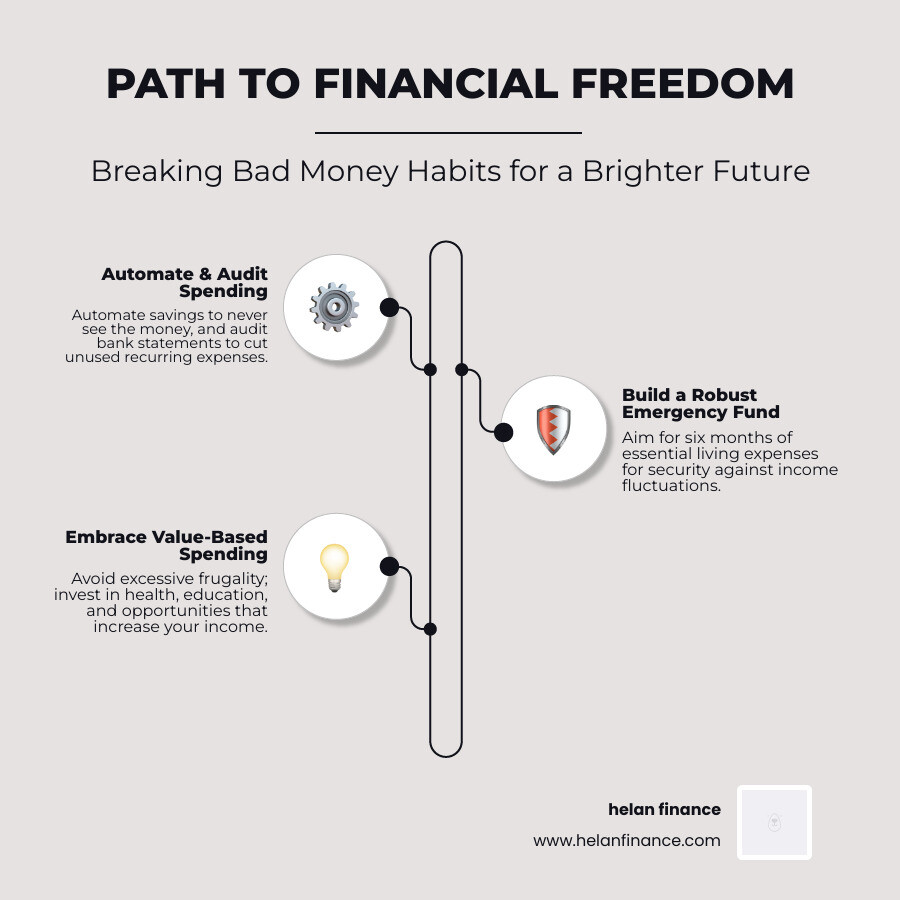
The fastest way is to automate and audit. Automate your savings so you never see the money, and audit your bank statements to cut every recurring expense you don’t use. Replacing a bad habit with a system is much more effective than relying on willpower.
How much should I save for an emergency fund in 2026?
Most experts recommend three to six months of essential living expenses. In 2026, with the gig economy and potential for income fluctuation, aiming for six months provides a much-needed “sleep at night” factor.
Can being too frugal actually hinder my wealth?
Yes. If you are so frugal that you neglect your health, skip networking opportunities, or refuse to spend money on tools or education that would increase your income, you are practicing “penny wise, pound foolish” behavior. Value-based spending is better than blind frugality.
Conclusion
Breaking the money habits that keep you poor isn’t about deprivation; it’s about liberation. It’s about taking control of your daily routines so that your money starts working for you, rather than you working endlessly for your money.
At Helan Finance, we believe that financial planning should be easy and efficient. By incorporating simple exercises, consistent routines, and even basic health tips into your life, you can shore up your nest egg and finally achieve the financial peace you deserve.
Stop letting small choices drain your future. Start building your wealth today by choosing one habit from this list and changing it. Your future self will thank you.