
The Best Bi Weekly Bill Planner Tools to Sync Your Paycheck
When Your Paycheck Schedule and Your Bills Don’t Line Up
A bi weekly bill planner is a budgeting tool that organizes your expenses around each paycheck rather than the calendar month — and it’s the clearest way to stop bills from slipping through the cracks.
Best bi-weekly bill planner tools at a glance:
| Tool | Type | Best For |
|---|---|---|
| Digital Spreadsheets | Cloud-based sheet | Automation and cloud access |
| Visual Templates | Graphic layouts | Custom layouts and design |
| Mobile Apps | Smartphone application | Paycheck-aligned tracking |
| Physical Planners | Paper notebook | Hands-on, tactile budgeting |
| Pre-made Templates | Digital download | Ready-made, perpetual use |
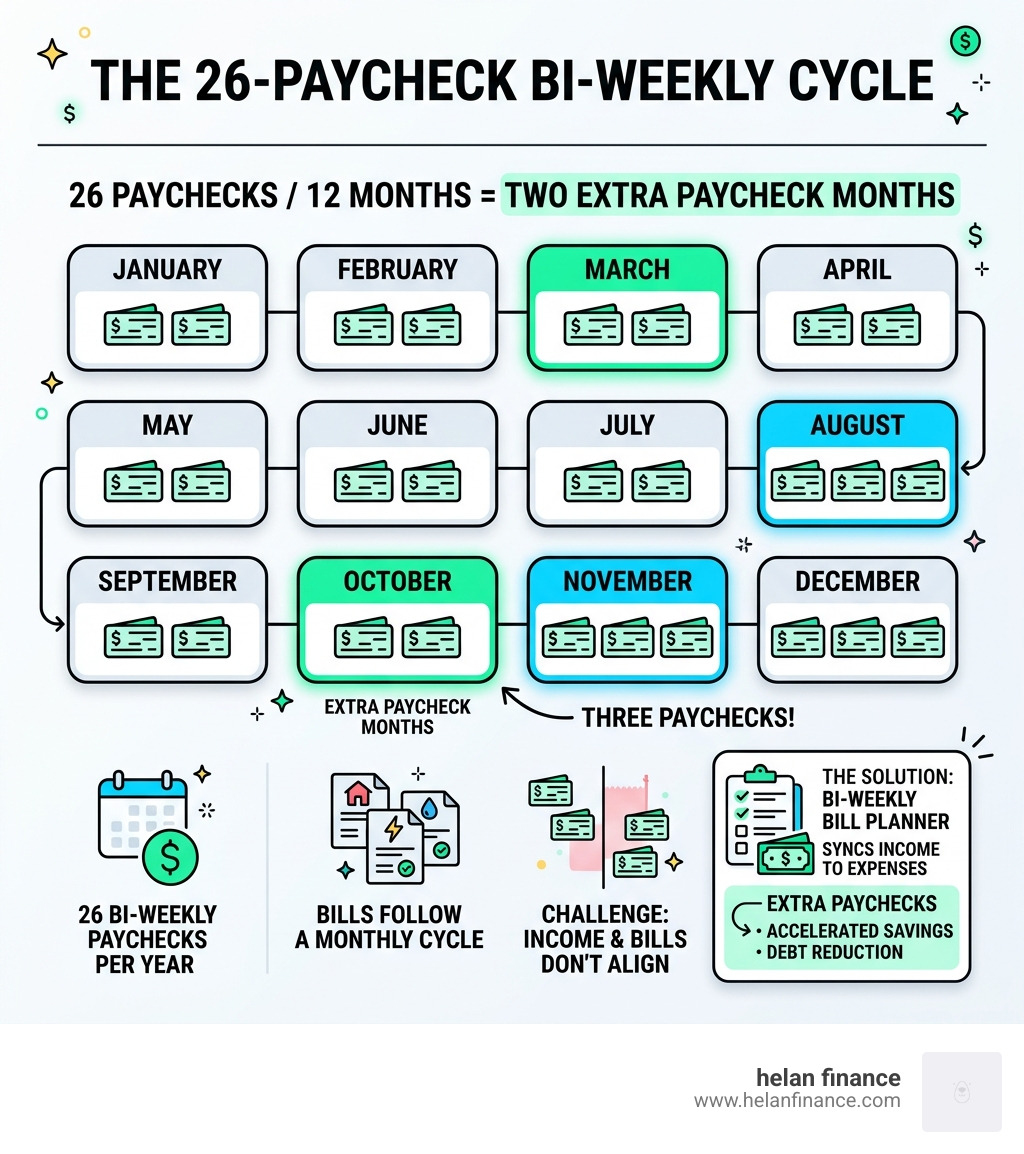
If you’re paid every two weeks, you get 26 paychecks a year — not 24. That means two months each year bring a third paycheck. It also means your bills and your pay dates rarely line up neatly.
Standard monthly budgets ignore this completely. They treat every month the same, which creates real cash flow gaps — and real stress.
One user put it simply: “I’ve tried every budgeting app available, but they all focus on the calendar month, which just doesn’t work for me.”
That frustration is incredibly common. When your income arrives every 14 days but your rent, utilities, and subscriptions follow a monthly clock, you need a system built around your schedule — not a generic one.
That’s exactly what a bi-weekly bill planner solves.
Why You Need a bi weekly bill planner in 2026
As we navigate the financial landscape of April 2026, the traditional monthly budget is increasingly falling short for modern workers. If you are paid every other Friday, you aren’t living on a 30-day cycle; you are living on a 14-day cycle. Without a bi weekly bill planner, you are essentially trying to fit a square peg into a round hole every single month.
The primary reason to switch to a paycheck-based system is visibility. A standard budget might tell you that you have $4,000 in monthly income and $3,500 in expenses. On paper, you’re fine. But in reality, $3,000 of those bills might be due between the 1st and the 15th, while your largest paycheck doesn’t arrive until the 16th.
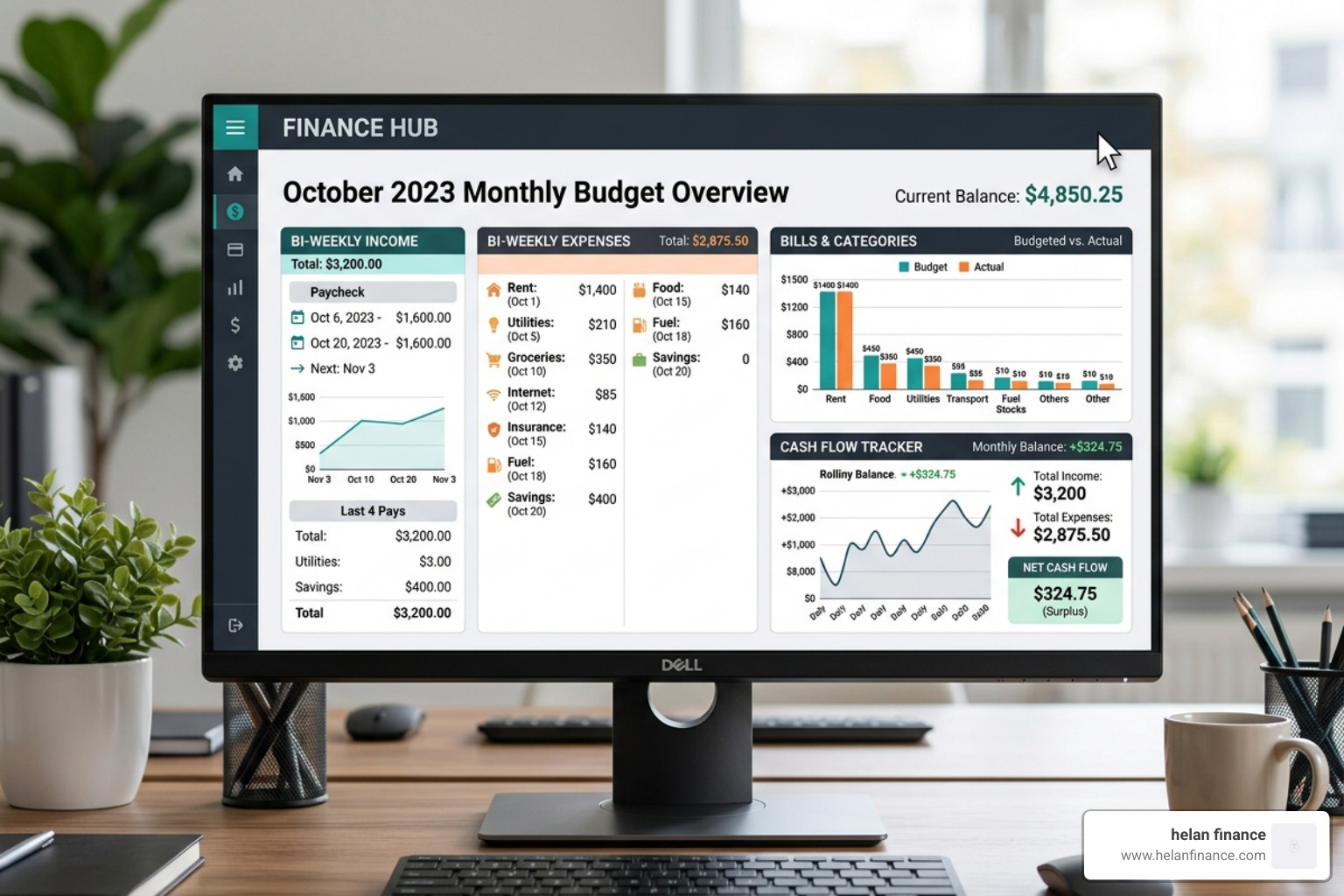
By using a dedicated planner, we can identify these “danger zones” before they happen. This proactive approach is the ultimate overdraft prevention tool. Instead of crossing your fingers at the ATM, you’ll know exactly which paycheck covers which bill. To get a head start on your numbers, you can use a bi-weekly budget calculator to see your real-time cash flow.
Benefits Over Monthly Budgeting
The core difference lies in the frequency and the “extra” pay. While a monthly budget focuses on 12 cycles, a bi-weekly plan focuses on 26. This offers:
- Timing Visibility: You see exactly which week will be “heavy” with bills and which will be “light.”
- 14-Day Accountability: It’s much easier to stay disciplined for two weeks than it is for an entire month.
- Bill Alignment: You can assign specific bills to specific paychecks, ensuring the money is there when the auto-pay hits.
| Feature | Bi-Weekly | Semi-Monthly | Monthly |
|---|---|---|---|
| Paychecks per year | 26 | 24 | 12 |
| Frequency | Every 14 days | Twice a month (e.g., 1st/15th) | Once a month |
| Extra Paychecks | 2 months with 3 checks | None | None |
| Best For | Most hourly/salary workers | Specific corporate roles | Freelancers/Renters |
Who Should Use a Biweekly System?
This system is ideal for anyone whose bank account fluctuates every two weeks. This includes hourly employees who might see slight variations in overtime, salaried workers on a standard fortnightly schedule, and even families managing joint incomes where paydays might fall on alternating Fridays.
If you’ve ever felt like you’re “rich” one week and “broke” the next, you’re a prime candidate for this method. For those still searching for the right medium, checking out community discussions like Finding the perfect budget app or excel sheet for biweekly income can provide peer-to-peer insights on what works in the real world.
Top Tools to Build Your Biweekly Budget
Choosing the right bi weekly bill planner depends entirely on your personal style. Do you want the computer to do the math for you, or do you find peace in writing things down by hand? In 2026, we have more options than ever to bridge the gap between digital convenience and tactile control.
Digital Spreadsheets and Google Sheets
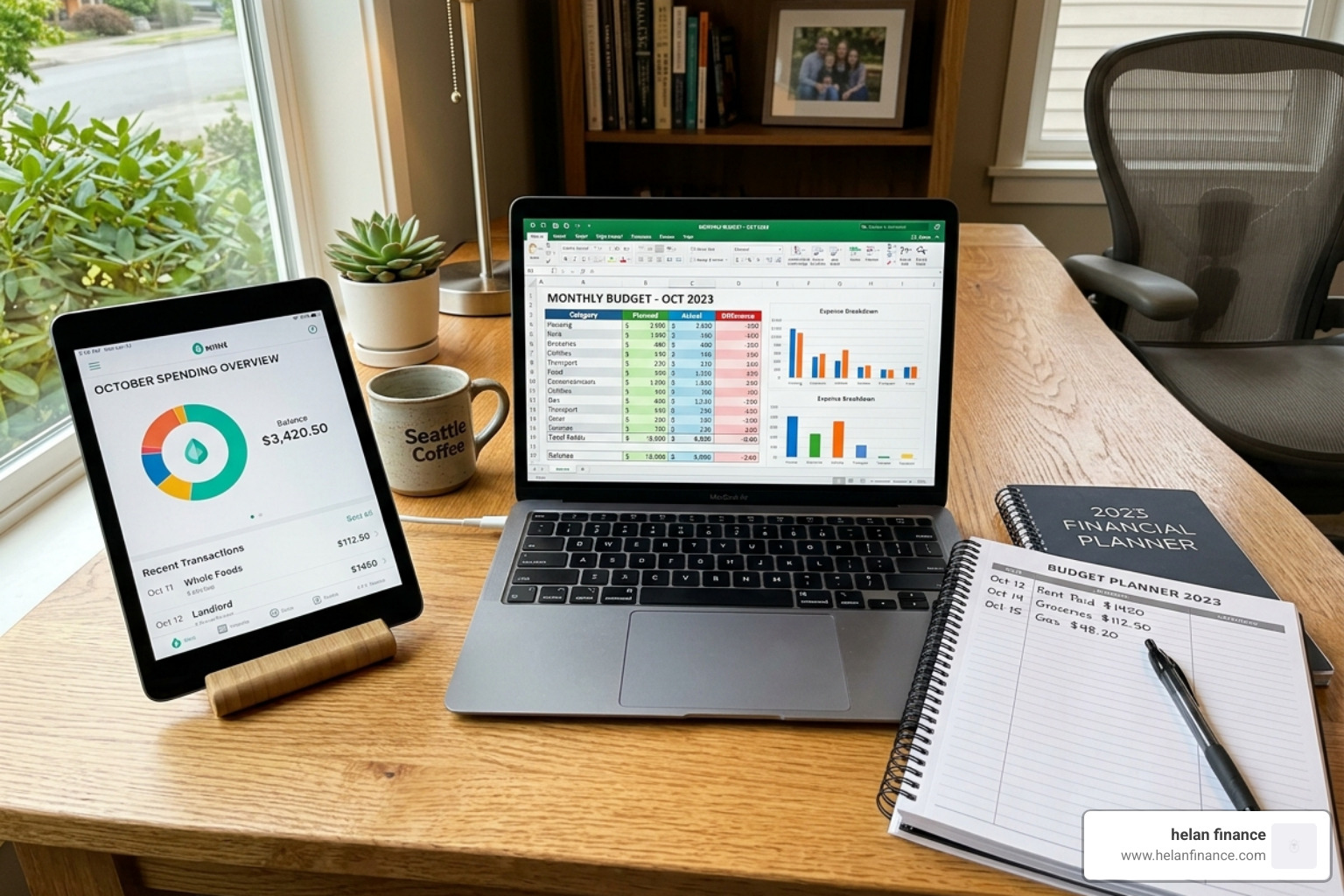
Google Sheets remains a powerhouse for bi-weekly budgeting because of its “perpetual usability.” Unlike a paper planner that runs out of pages, a well-built spreadsheet can be rolled over year after year.
- Automation: Set up formulas once, and the sheet will automatically calculate your remaining balance as you enter expenses.
- Cloud Access: Check your budget at the grocery store on your phone and update it on your laptop when you get home.
- Customization: You can add rows for specific 2026 goals, like a “Summer 2026 Vacation Fund” or “Electric Vehicle Savings.”
Customizable Templates and Canva
If you are a visual learner, a rows-and-columns spreadsheet might feel a bit cold. This is where visual templates come in. You can find Free and customizable budget templates that allow you to color-code your spending. These are perfect for those who want to print out their budget and stick it on the fridge as a daily reminder. Visual help can make the 14-day cycle feel less like a chore and more like a roadmap.
Physical bi weekly bill planner Options
There is a unique psychological benefit to physically writing down your numbers. It forces you to slow down and acknowledge every dollar spent. High-quality physical planners often include sections for:
- Goal Setting: Planning your financial wins for the year.
- Strategy Building: Deciding how to tackle debt.
- Net Worth Estimation: Tracking your total progress over time. For those who prefer the “analog” route, you can browse a variety of specialized notebooks like the Biweekly Budget Planner – Amazon.com.
How to Create a Biweekly Bill Planner from Scratch
If you’re ready to stop the “payday-to-payday” stress, let’s build your system. We recommend setting this up on a weekend when you have about an hour of quiet time to look through your bank statements.
Step 1: Map Your Pay Dates and Fixed Bills
First, grab a calendar (digital or paper). Mark every payday for the rest of 2026. Next, list every recurring bill you have—rent, car insurance, Netflix, gym memberships, and utilities.
- The Inventory: Write down the name of the bill, the average amount, and the due date.
- The Sync: Look at which bills fall between Paycheck A and Paycheck B.
Step 2: Assigning Expenses to Each Paycheck
This is where the magic happens. Instead of looking at your monthly total, you only look at the next 14 days.
- Bill Splitting: If you have a massive bill (like a $2,000 mortgage) that wipes out one entire paycheck, try the “half-payment” method. Set aside $1,000 from Paycheck 1 and $1,000 from Paycheck 2 so the full amount is ready by the 1st.
- The 50/30/20 Rule: Try to allocate 50% of your bi-weekly income to needs, 30% to wants, and 20% to savings or debt.
- Spending Buffers: Always leave a small “cushion” (even just $50) in your checking account to account for small price fluctuations in utilities or gas.
Step 3: Tracking and Adjusting Monthly
Your bi weekly bill planner is a living document. At the end of every two-week cycle, spend 20 minutes comparing what you planned to spend versus what you actually spent. Did the grocery bill run high? Did you forget a subscription? Adjust the next 14-day block accordingly. This routine maintenance is what builds long-term financial health.
Mastering the “Third Paycheck” and Variable Expenses
One of the best “perks” of being paid bi-weekly is the two months a year where you receive three paychecks instead of two. In 2026, depending on your start date, these often fall in months with five Fridays or five Wednesdays. Many people treat this as “free money,” but the savvy bi-weekly planner treats it as a strategic tool.
Strategic Uses for Your Extra bi weekly bill planner Income
Since your monthly bills are likely already covered by your first two paychecks, the third check is a powerful accelerator for your goals:
- Debt Avalanche: Throw the entire check at your highest-interest credit card.
- Sinking Funds: Fund your entire Christmas or holiday budget in one go.
- Emergency Buffer: If you don’t have three months of expenses saved, this is the fastest way to build that wall of security.
- Annual Premiums: Use it to pay your car insurance for the full year, which often comes with a discount.
Handling Irregular and Unexpected Costs
Life doesn’t always happen in 14-day increments. Car repairs, medical co-pays, and birthday gifts can wreck a budget if you aren’t prepared. We suggest building a “Buffer Fund” within your bi weekly bill planner. By contributing a small, fixed percentage (even 2-5%) of every paycheck into a separate “unexpected” account, you ensure that a flat tire in June doesn’t mean you can’t pay rent in July.
Frequently Asked Questions about Biweekly Budgeting
What is the difference between biweekly and semi-monthly pay?
This is the most common point of confusion. Biweekly means you get paid every 14 days (usually a specific day of the week like Friday), totaling 26 checks a year. Semi-monthly means you get paid twice a month (usually the 1st and 15th), totaling 24 checks a year. The bi-weekly schedule is slightly more complex to budget because the dates change every month, but it rewards you with those two “extra” paychecks!
How much should I aim to save from each biweekly paycheck?
While the “ideal” is 10-20%, we believe the best amount is whatever you can do consistently. If things are tight, start with 5%. The key is to “pay yourself first”—meaning the savings transfer happens the moment your check hits your account, not at the end of the two weeks when the money might be gone.
How do I handle monthly bills that don’t align with my pay dates?
If you have a bill due on the 10th but you don’t get paid until the 12th, you have two options:
- Negotiate: Call the company! Many utility and credit card companies will gladly move your due date to the 15th to align with your pay cycle.
- The Buffer: Use a previous “extra paycheck” to build a one-month buffer so you are always paying this month’s bills with last month’s money.
Conclusion
Mastering your money doesn’t require a degree in finance; it just requires a system that matches your life. By using a bi weekly bill planner, you stop guessing and start growing. Whether you choose a high-tech spreadsheet or a classic paper journal, the act of syncing your bills to your paychecks is the first step toward true financial freedom.
At Helan Finance, we believe that financial planning should be easy and efficient. Our mission is to provide you with the simplified tools, routines, and advice you need to improve your financial health without the headache. Ready to take the next step? Take control of your finances with Helan Finance and start building the future you deserve.

