
Beginner’s Guide to Sinking Funds
What Is a Sinking Fund? (Quick Answer)
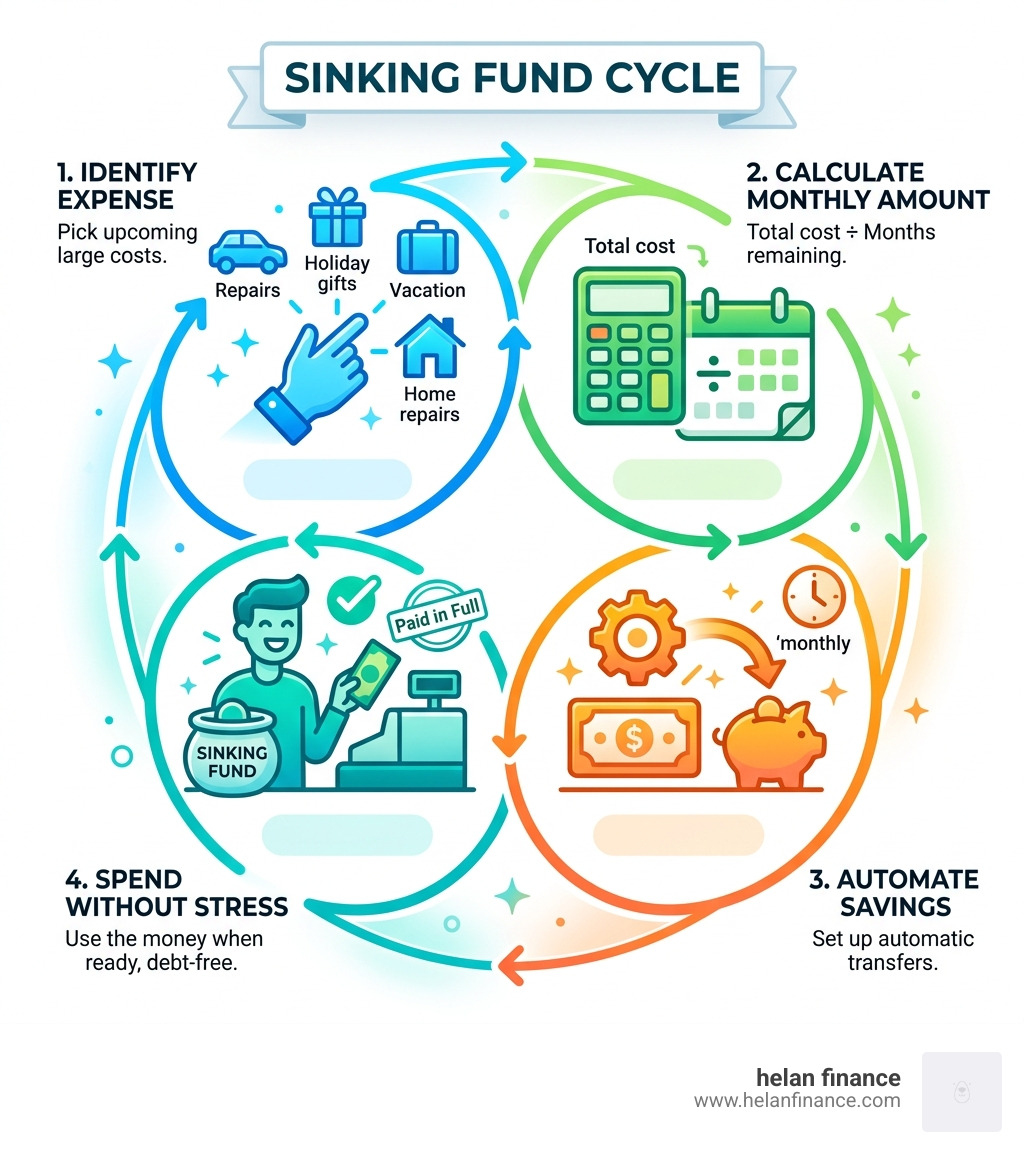
A sinking fund is a dedicated savings strategy where you set aside small amounts of money over time for a specific future expense.
In simple terms:
- You pick an upcoming expense (like car repairs or holiday gifts)
- You estimate the total cost
- You divide that amount by the months you have left
- You save that smaller amount each month until you’re ready to pay
Example: Need $600 for car maintenance in 6 months? Save $100/month. Done.
Most people hit a wall when a big bill arrives — not because it was truly unexpected, but because they hadn’t prepared for it. Insurance renewals, vet visits, back-to-school shopping, home repairs — these expenses aren’t surprises. They’re just easy to ignore until they’re urgent.
That’s the problem a sinking fund solves. Instead of scrambling for cash or reaching for a credit card, you’ve already got the money sitting there, earmarked and ready.
It’s one of the simplest, most effective tools in personal finance — and it works for busy people precisely because it runs quietly in the background once you set it up.
What is a Sinking Fund and How Does It Work?
While the term might sound a bit “heavy,” the Sinking fund concept is actually about keeping your head above water. Historically, the term originated in the 18th century as a way for governments to “sink” or reduce national debt. Today, it has evolved into a powerhouse strategy for personal finance and corporate stability.
At its core, a sinking fund is a way to turn irregular, large expenses into manageable monthly line items. According to Britannica Money, it is a fund established by setting aside revenue over a period of time to fund a future capital expense or debt repayment.
In our daily lives, this means using a zero-based budgeting approach. We assign every dollar a job before the month begins. By earmarking funds for a specific purpose—like a new roof or a summer vacation—we gain incredible financial visibility. We no longer have to guess if we can afford a purchase; the balance in the dedicated fund gives us a clear “yes” or “no.” This promotes cash-based purchasing, allowing us to avoid the “buy now, pay later” trap that often leads to high-interest debt.
Sinking Funds vs. Emergency Funds: Key Differences
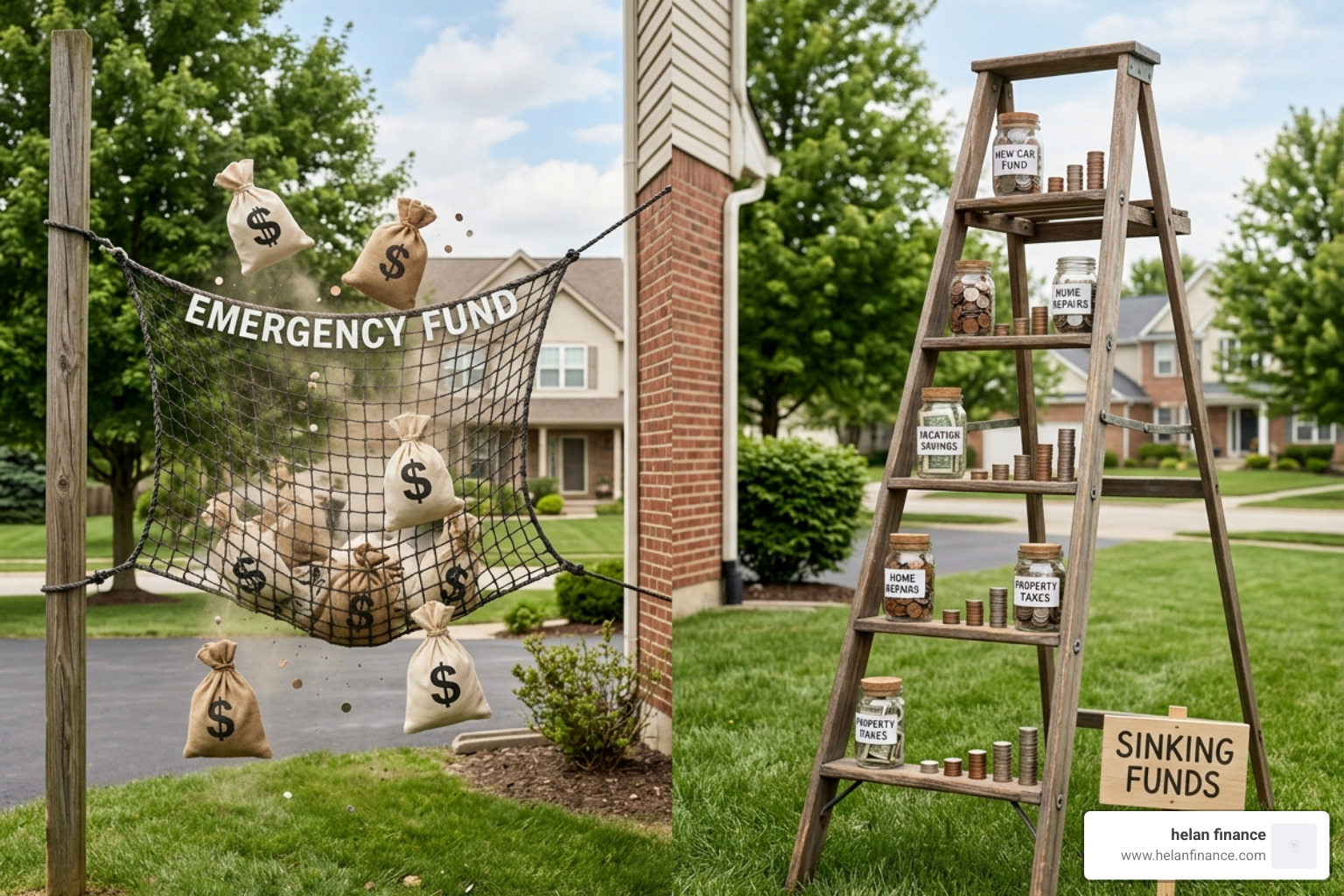
One of the most common questions we hear is: “If I have an emergency fund, why do I need a sinking fund?” It’s a great question! While both are safety nets, they serve very different roles in your financial ecosystem.
Think of it this way: An emergency fund is for the unknown unknowns (the “Oh no!” moments), while a sinking fund is for the known unknowns (the “I knew this was coming” moments).
| Feature | Emergency Fund | Sinking Fund |
|---|---|---|
| Purpose | Unforeseen crises (Job loss, major illness) | Planned or predictable expenses |
| Timing | Unexpected and urgent | Scheduled or anticipated |
| Accessibility | Only for true emergencies | Used when the specific goal is reached |
| Example | Sudden transmission failure | New tires (expected in 12 months) |
By separating these two, we protect our financial resilience. If you use your emergency fund to pay for Christmas gifts, you won’t have that money available if your furnace breaks in January. Using a sinking fund ensures your emergency stash stays untouched for actual emergencies, providing true budget stability.
Common Examples of Personal Sinking Funds
Essential Sinking Fund Categories for 2026
As we navigate through April 2026, we’ve seen that life isn’t getting any cheaper. Statistics show that the costs of basic maintenance and care are rising. Here are the “must-haves” for your budget:
- Pet Care Costs: In 2025, nearly half of pet owners reported that unexpected vet bills caused financial concern. With the 15-year cost of caring for a dog exceeding $60,000, setting aside money for “Fido’s” dental cleanings or prescriptions is essential.
- Vehicle Maintenance: The average annual maintenance cost for a vehicle is roughly $900. Instead of panicking when you see a car repair estimate, a sinking fund allows you to pay the mechanic with a smile.
- Home Repair: Experts recommend budgeting 1% to 4% of your home’s value annually for maintenance. Replacing a roof on a standard home can average over $9,000—not a bill you want to pay out of your monthly checking account!
- Medical Deductibles: Last year, families with employer-provided insurance spent an average of $3,564 on out-of-pocket costs. A sinking fund helps cover those co-pays and deductibles without stress.
- Holiday Spending: We all know December happens every year, yet it still catches many by surprise. If you plan to spend $1,200 on gifts and travel, saving $100 a month starting in January makes the holidays truly joyful.
Overlooked Sinking Fund Opportunities
Beyond the big basics, there are several “sneaky” expenses that often disrupt our budgets:
- Back-to-School Items: Families spend an average of $858 for K-12 students and $1,326 for college students.
- Technology Upgrades: American households spent an average of $896 on connected devices in 2025. Whether it’s a new phone or a laptop repair, these costs are inevitable.
- Subscription Renewals: Annual Amazon Prime, Netflix, or gym memberships often hit all at once.
- Annual Insurance Premiums: Many insurance companies offer a discount if you pay your premium annually rather than monthly. A sinking fund lets you take advantage of that discount.
- Self-Care and Giving: Haircuts, dental cleanings, and charitable donations (like Giving Tuesday) are much easier to manage when you’ve saved for them in advance.
How to Set Up Your First Sinking Fund
Step-by-Step Guide to Creating a Sinking Fund
Ready to stop the financial fire-drills? Follow these steps to get started:
- Identify Your Goals: Look at your bank statements from the last year. What were the “surprises” that hurt? Pick one or two to start with.
- Calculate the Total Cost: Be realistic. If you want to go on a $3,000 vacation, that’s your target.
- Divide by the Time-Frame: If that vacation is in 10 months, you need to save $300 per month.
- Choose Your Method: You can use the Ramsey approach of using a budgeting app, or simply open a dedicated savings account.
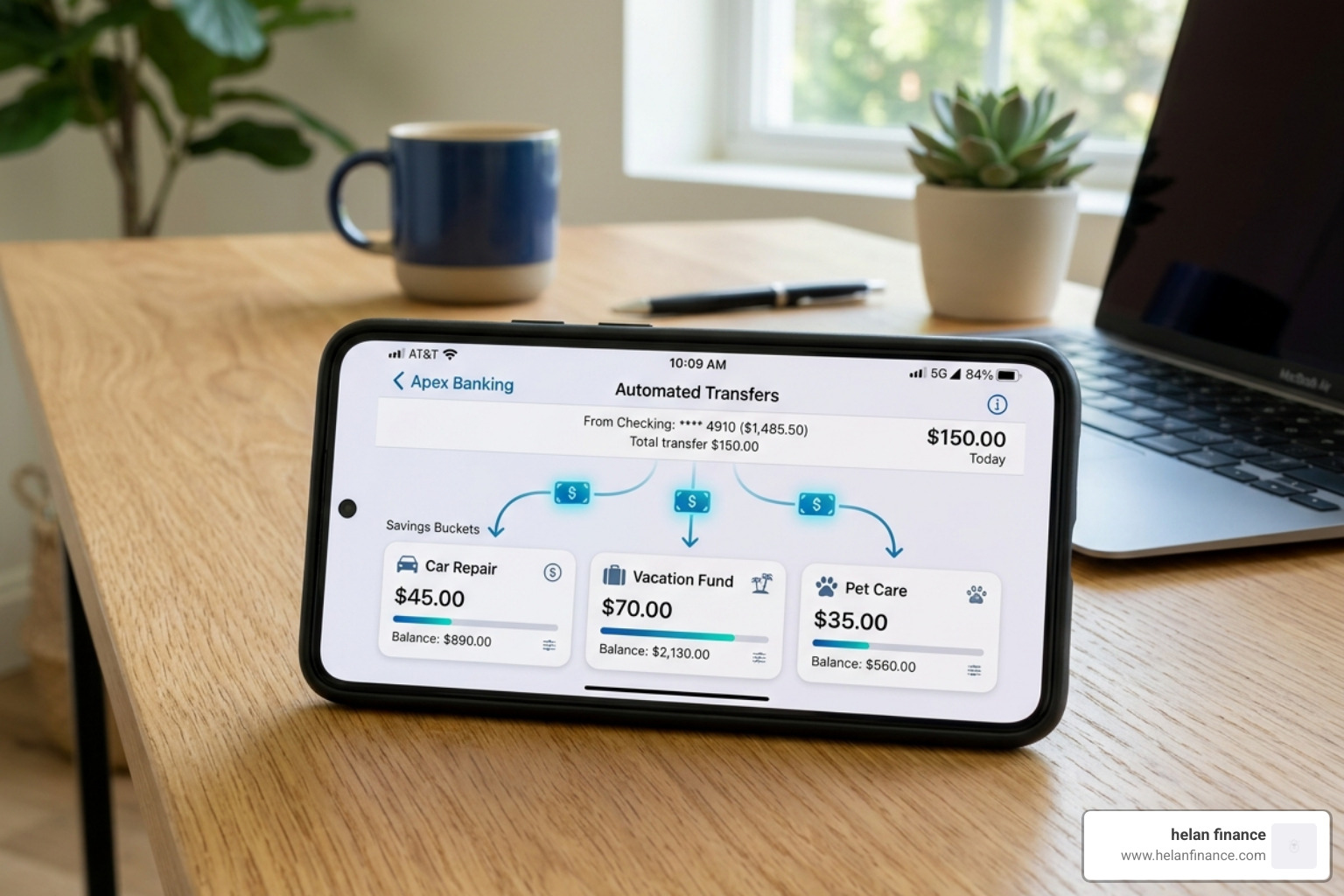
- Automate Your Savings: This is the secret sauce. Set up an automatic transfer from your checking to your sinking fund the day after you get paid. If you don’t see the money, you won’t spend it!
Strategies for Managing Multiple Sinking Funds
Once you have the hang of one fund, you might want ten! Here is how to manage them without getting overwhelmed:
- Prioritize: You can’t save for everything at once. Focus on the expenses that are most likely to happen soonest or cause the most stress.
- Use Sub-Accounts: Many modern banks allow you to create “buckets” or sub-accounts within one savings account. This keeps your “Car Repair” money separate from your “Christmas” money.
- Internal Tracking: If your bank doesn’t offer sub-accounts, a simple spreadsheet or a budgeting app can help you track how much of your total savings is allocated to each goal.
- Monthly Monitoring: Check your progress. If a repair cost more than you expected, adjust your monthly contribution for the next cycle.
Sinking Funds in Corporate Finance and Business
While we love them for personal use, sinking funds are also a cornerstone of the business world. In corporate finance, a Sinking Fund Method is often used to ensure a company can pay back its debts.
When a corporation issues bonds to raise money (perhaps for a new factory), investors want to know they will get their money back. A sinking fund provision requires the company to set aside money periodically to retire portions of that debt before it matures. This significantly reduces credit risk for the investor.
According to AccountingTools, these funds are typically listed as noncurrent assets on a balance sheet because they aren’t intended for daily operations.
Businesses also use them for:
- Capital Expenditures: Saving up to replace expensive machinery or a fleet of vehicles.
- Callable Bonds: Some bonds are “callable,” meaning the company can use its sinking fund to buy back the bonds early if interest rates drop, saving the company money on interest payments.
- Investor Confidence: A company with a healthy sinking fund is seen as more stable and creditworthy, which can lead to lower interest rates on future loans.
Frequently Asked Questions about Sinking Funds
Is a sinking fund considered a current asset?
In a business context, no. Because the money is earmarked for a long-term debt or a future purchase (usually more than a year away), it is classified as a noncurrent asset. For individuals, it’s just “your money,” but it’s best to treat it as “spent” in your mind so you don’t use it for pizza or clothes!
How many sinking funds should I have at once?
There is no “magic number,” but we recommend starting with 3 to 5. If you have too many, your contributions might be so small that you don’t feel like you’re making progress. Common starters are: Car Maintenance, Holidays, and Home Repairs.
Where is the best place to keep sinking fund money?
A High-Yield Savings Account (HYSA) is usually the best bet. It keeps the money separate from your daily spending, it’s liquid (meaning you can get it when you need it), and it earns a little bit of interest while it sits there.
Conclusion
At Helan Finance, we believe that financial peace isn’t about how much you make; it’s about how well you plan. Implementing a sinking fund is a simple routine that can transform your financial health. It moves you away from “crisis mode” and into a state of calm, prepared confidence.
By turning those looming “big bills” into small, manageable steps, you take control of your future. Start small—pick one category today, calculate your monthly amount, and set up that first automated transfer. Your future self (and your bank account) will thank you.
Ready to simplify your financial life? Start your financial journey today and explore more of our tools and advice designed to make planning easy and efficient.

