
Budget Worksheet: Free Download & Template
What is a Budget Worksheet and Why is it Essential?
At its core, a budget worksheet is a financial map. Without a map, you’re just wandering through the woods of your bank account, hoping you stumble upon a pile of savings. For us at Helan Finance, financial clarity is the ultimate goal. When you use a budget worksheet, you transition from reactive spending (wondering where the money went) to proactive planning (telling the money where to go).
By documenting every dollar, you significantly reduce the “financial anxiety” that often comes from the unknown. A budget worksheet isn’t a restriction on your freedom; it’s a permission slip to spend on what truly matters to you. It is an essential tool for personal financial management for several reasons:
- Debt Avoidance: By seeing exactly how much disposable income you have, you can avoid overextending yourself on credit cards and falling into high-interest traps.
- Consumer Education: Using a worksheet helps you understand the difference between gross income and net income (what you actually take home after taxes and deductions).
- Spending Adjustments: It’s hard to cut back on “dining out” if you don’t realize you’re spending $600 a month on it. The worksheet makes these patterns impossible to ignore.
- Monthly Tracking: It provides a historical record of your financial habits, allowing you to see if you are improving over time and reaching your long-term goals.
For those just starting, we recommend using a simple budget worksheet PDF or spreadsheet template designed to be clean, intuitive, and focused on the essentials. Financial literacy isn’t about knowing fancy jargon; it’s about knowing your numbers and taking control of your future.
Mastering the 50/30/20 Rule with a Budget Worksheet
If you’ve ever felt overwhelmed by the idea of managing dozens of different spending categories, the 50/30/20 rule is your new best friend. This popular framework simplifies your budget worksheet by grouping everything into three main buckets:

- 50% for Needs: These are your non-negotiables. Think housing, utilities, groceries, transportation, and insurance. If you don’t pay these, your quality of life (or legal status) takes a hit. This category ensures your survival and basic comfort.
- 30% for Wants: This is the “fun” category. It includes dining out, hobbies, streaming services, and that extra pair of shoes. It’s important to allocate money here so you don’t feel deprived and give up on your budget altogether. Life is meant to be enjoyed, and this bucket protects your mental well-being.
- 20% for Savings and Debt Repayment: This is your “future self” bucket. It includes contributions to your emergency fund, retirement accounts, and payments toward high-interest debt beyond the minimum requirements.
The beauty of the 50/30/20 rule is its inherent flexibility. If you live in a high-cost-of-living area, your “needs” might temporarily take up 60% of your income, requiring you to trim your “wants” to 20%. When you use a budget worksheet organized around this rule, you can quickly calculate if your percentages are out of whack. For example, if your “needs” are taking up 70% of your income, you know you either need to find a way to lower your fixed costs (like moving to a cheaper apartment) or increase your income. The key is to use the worksheet consistently so you can spot these imbalances early and make practical adjustments.
Step-by-Step Guide to Organizing Your Finances
Starting a budget worksheet can feel like the first day of a workout routine—a little intimidating, but ultimately rewarding. The key is to gather all your data before you start typing or writing.

Gathering Information for Your Budget Worksheet
Before you sit down, make sure you have the following handy (digitally or on paper):
- Income Proof: Pay stubs, tax records, or invoices from side hustles.
- Bank & Credit Card Statements: Review the last 30 to 90 days to get an accurate picture of your spending habits.
- Fixed Bills: Utility bills, rent/mortgage statements, and insurance premiums.
- Debt Details: Statements for student loans, car loans, or credit card balances.
Categorizing Income and Essential Needs
Once you have your documents, start by listing your Income. This should be your “after-tax” salary—the actual amount that hits your bank account. Don’t forget to include side hustles, child support, or disability benefits.
Next, list your Essential Needs. These are the “must-haves” we mentioned earlier.
- Housing: Rent or mortgage, property taxes, and homeowners/renters insurance.
- Utilities: Electricity, water, sanitation, and your phone/internet bill.
- Food: Specifically groceries and household essentials (toiletries).
- Transportation: Car payments, gas, insurance, and public transit passes.
- Healthcare: Health insurance premiums and out-of-pocket medical costs like prescriptions.
Strategies for Managing a Budget Deficit
What happens if you finish your budget worksheet and realize you are spending more than you earn? This is called a budget deficit, and while it’s stressful, it’s also a call to action.
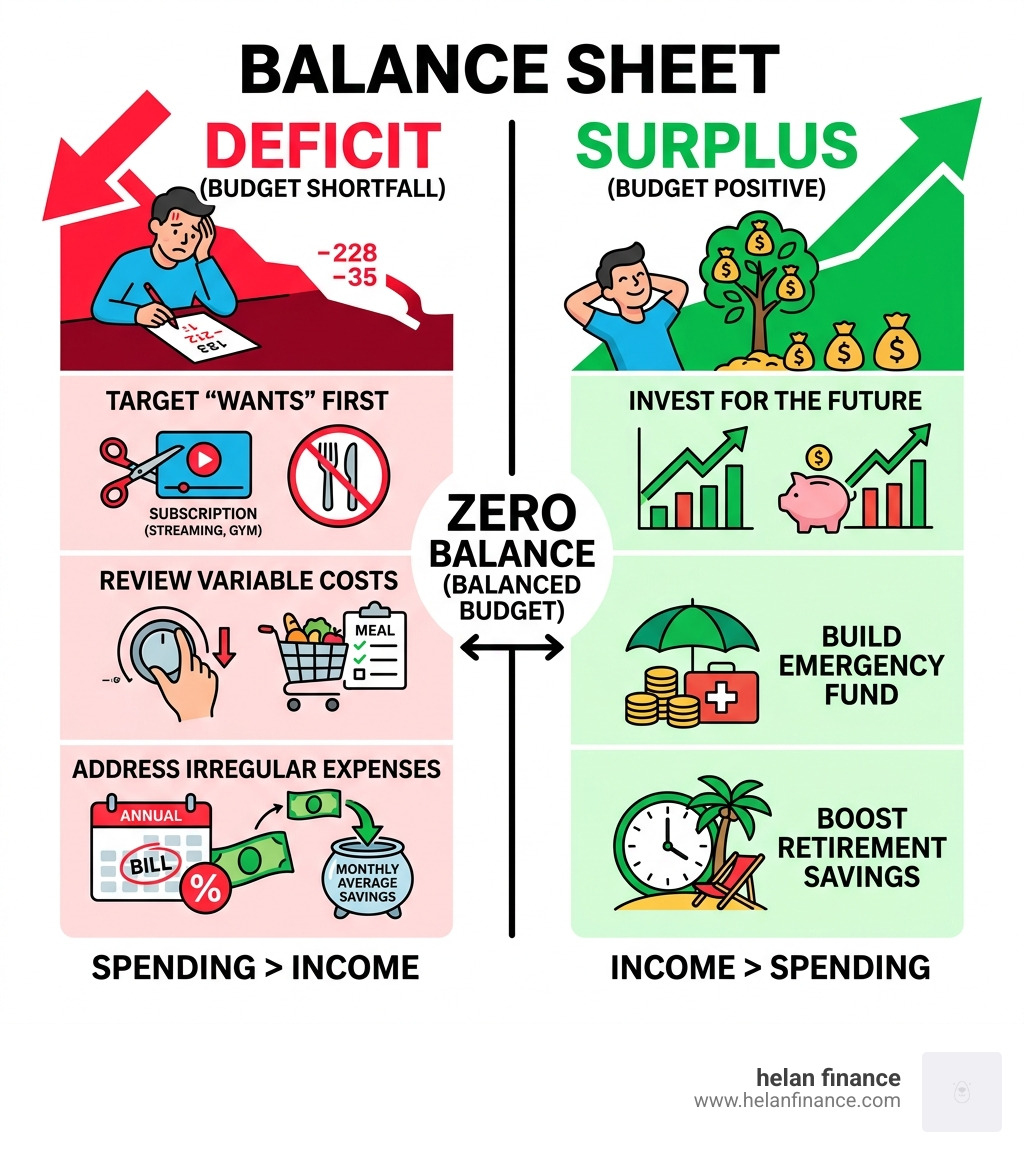
If you are in the red, here are the steps we recommend:
- Target the “Wants” First: This is the easiest place to find “found money.” Cancel subscriptions you don’t use and temporarily reduce dining out.
- Review Variable Costs: Look at your “needs” that fluctuate. Can you lower your grocery bill by meal prepping? Can you reduce your utility bill by being more mindful of energy use?
- Address Irregular Expenses: Sometimes a deficit happens because an annual bill (like car registration) hit during a month where you didn’t plan for it. Use your budget worksheet to calculate a “monthly average” for these annual costs so you can save for them a little bit each month.
- Increase Income: If you’ve cut everything possible and you’re still in the red, it may be time to look at side income or selling items you no longer need.
- Build an Emergency Fund: Even if it’s just $10 a week, start putting money aside. Having a small cushion prevents you from turning to high-interest debt when an unexpected expense arises.
Best Free Resources and Digital Tools for 2026
As we move through April 2026, the tools available for budgeting have never been better. While a paper budget worksheet is great for some, others prefer the automation of digital tools to keep their finances in check.
- Microsoft Excel & Google Sheets: These remain the gold standard for customization. You can use pre-built templates that already have formulas included to do the math for you. Free budget template spreadsheets to customize | Microsoft Excel is an excellent starting point for those who like to tweak every detail.
- Consumer.gov: For those who want something very straightforward without any “fluff,” the Budget Worksheet and their Make a Budget – Worksheet | consumer.gov are fantastic, no-nonsense PDF tools provided by the government.
- Helan Finance: Helan Finance focuses on simplified financial planning through practical exercises, routines, and easy-to-follow advice that can support your budgeting process. If you prefer a straightforward approach, pairing a basic worksheet with simple planning habits can make monthly tracking much easier.
Choosing the Right Budget Worksheet for Your Lifestyle
One size does not fit all in personal finance. Your budget worksheet should reflect your specific life stage and unique financial obligations:
- College Students: Focus on financial aid, meal plans, and student loan interest. Tracking small expenses like textbooks and social events is key.
- Homeowners: Ensure you are accounting for maintenance, repairs, property taxes, and homeowners association fees.
- Parents: You’ll need specific categories for childcare, extracurricular activities, school supplies, and education savings accounts.
- Retirees: Focus on draw-down strategies from retirement accounts, managing healthcare costs, and adjusting for a fixed income environment.
Frequently Asked Questions about Budgeting
How often should I update my budget worksheet?
We recommend a monthly review as the gold standard. At the end of each month, sit down for 20 minutes to reconcile what you planned to spend versus what you actually spent. For those with highly variable income, a bi-weekly check-in aligned with paydays can be even more effective. As of April 2026, many apps can automate this, but manually checking your numbers ensures you remain mindful of your habits.
What should I do if my expenses are higher than my income?
Don’t panic, but do act immediately. This is a signal that your current lifestyle is unsustainable. Look for discretionary spending cuts (the “wants”) first. If the gap is large, consider seeking professional debt counseling or looking for ways to reduce your largest fixed costs, like housing or transportation. Sometimes, even small habit changes—like making coffee at home or canceling unused gym memberships—can bridge a minor gap and get you back into the green.
How do I account for expenses that don’t happen every month?
This is a common budgeting trap that leads to “surprise” debt! To handle quarterly bills (like water) or annual subscriptions (like Amazon Prime), divide the total cost by 12. Include that “monthly average” in your budget worksheet as a fixed expense. Think of these as “sinking funds.” By setting aside a small amount each month into a separate savings account, you transform a potential financial emergency into a planned, stress-free expense. When the bill arrives, the cash is already there waiting for you.
Conclusion
Taking the time to fill out a budget worksheet is an act of self-care. It’s about giving yourself the freedom to spend without guilt and the security of knowing your future is protected. Whether you use a simple PDF or a complex spreadsheet, the goal remains the same: financial empowerment.
At Helan Finance, we believe that simplified planning leads to a better life. By mastering your monthly cash flow, you’re not just managing money; you’re building the foundation for your long-term dreams, from emergency funds to a comfortable retirement.
Start your simplified financial planning journey today and take the first step toward a more secure financial future.

