
Budget Coaches Near Me and Where to Find Them
Drowning in Financial Stress? Budget Coaches Can Help
Budget coaches are professionals who help you build a personalized spending plan, break the paycheck-to-paycheck cycle, and develop lasting money habits – without the overwhelm.
Where to find budget coaches:
- Professional directories that list certified financial experts with verified reviews
- Non-profit programs such as United Way offer free volunteer budget coaching (six-month commitment)
- Faith-based organizations like Crown Financial Ministries provide low-cost coaching for around $49.95
- Independent coaches found through financial wellness platforms
- Budgeting apps with built-in coaching features, starting around $15-$99/month
Most people who struggle with money aren’t bad at math. They simply never learned how to budget – and that’s not their fault.
Think about it: schools rarely teach it. Parents often avoid the topic. And by the time financial stress hits, it can feel too late to ask for help. Improving your financial literacy is a journey that starts with the right support.
That’s exactly where a budget coach steps in.
Unlike a financial advisor who focuses on investments and long-term wealth, a budget coach works with you on the day-to-day – where your money goes, why you overspend, and how to build a plan that actually fits your life.
In April 2026, with rising costs squeezing household budgets tighter than ever, more people are turning to budget coaches for practical, judgment-free support. And the results speak for themselves – one couple eliminated $125,000 in debt in just 3.5 years by working with a budget coach and committing to a simple spending plan.
Whether you’re a busy professional, a single parent, or simply someone who wants to stop wondering where their paycheck went, this guide covers the best ways to find a budget coach – and what to expect when you do.
What are Budget Coaches and How Do They Help?
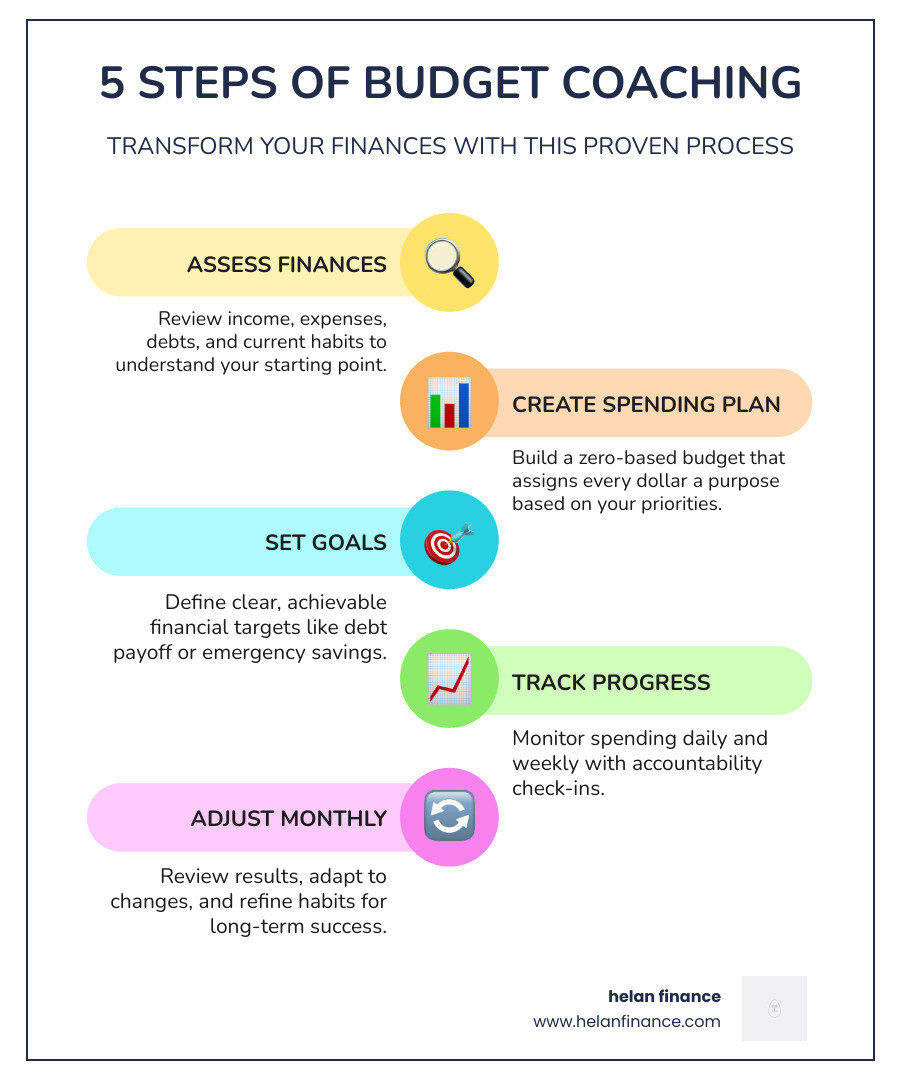
A budget coach is essentially a personal trainer for your money. While a financial advisor might help you pick the right stocks for your retirement account in 2050, a budget coach is focused on what happens to the money hitting your bank account this Friday.
They help you master your day-to-day habits. This isn’t just about spreadsheets; it’s about behavioral change. Many of us know what we should do (spend less than we earn), but doing it consistently is the hard part. Budget coaches provide the external accountability needed to stick to a plan when life gets complicated.
They also help you implement values-based spending. Instead of a restrictive “money diet” that leaves you feeling deprived, coaching focuses on aligning your spending with what you actually care about. If you value travel, your coach helps you find the money to make it happen by cutting out the “leakage”-those small, mindless expenses that don’t bring you joy.
At Helan Finance, we believe that financial clarity shouldn’t be a luxury. Our Helan Finance Budget Coaching services are designed to take the guesswork out of your monthly numbers, replacing anxiety with a clear, actionable roadmap.
Comparing Financial Professionals
It is easy to get confused by the different titles in the financial world. Here is how budget coaches stack up against other experts:
| Feature | Budget Coach | Financial Coach | Financial Advisor |
|---|---|---|---|
| Primary Focus | Daily cash flow and budgeting | General financial habits and debt | Investments and wealth management |
| Main Goal | Stop the paycheck-to-paycheck cycle | Build a solid financial foundation | Grow long-term assets and net worth |
| Typical Topics | Spending plans, tracking, groceries | Credit scores, savings, debt | Stocks, bonds, insurance, taxes |
| Regulatory Body | None (Certification-based) | None (Certification-based) | SEC / FINRA (Licensed) |
Services Provided by Professional Budget Coaches
When you hire a coach, you aren’t just paying for a conversation. You are paying for a system. Most budget coaches provide a suite of specific services tailored to your unique financial situation:
- Zero-Based Budgeting: This is the “gold standard” of coaching. It involves giving every single dollar a “job” before the month begins. If you earn $5,000, you and your coach plan exactly where all $5,000 goes-down to the last cent.
- Debt Payoff Plans: Coaches help you look at the “valley of debt” and create a realistic climb-out strategy. This often includes choosing between the “debt snowball” or “debt avalanche” methods and predicting your exact debt-free date.
- Variable Income Systems: One of the hardest things to do is budget when your income changes every month (like for freelancers or sales pros). Coaches specialize in “budgeting on what you have today” rather than what you hope to make tomorrow.
- Expense Tracking & Goal Alignment: They help you set up systems-whether through apps, spreadsheets, or notebooks-to track your spending in real-time.
- Personalized Spending Plans: Forget generic templates. A coach builds a plan that accounts for your specific life, including irregular expenses like car registrations, holiday gifts, and annual subscriptions.
Budget Coaches vs. Automated Apps
In the age of AI and automation, you might wonder why you should pay for a human when you can download a popular budgeting app.
The truth is, apps track numbers, but coaches change lives. An app can tell you that you spent $200 too much on dining out, but it can’t ask you why you felt the need to order takeout four nights in a row. A human coach provides the emotional support and psychological insight to help you break habits like compulsive spending or “retail therapy.”
Working with a coach allows for deep customization. They can help you break free from money stress with personalized coaching by identifying the specific blockages-like shame or procrastination-that keep you from opening your banking app. While software is a great tool, the human connection provides the “why” behind the “how.”
Who Should Hire a Budget Coach?

You might think budget coaches are only for people who are “broke,” but that couldn’t be further from the truth. In fact, many clients are high earners who make six figures but still feel like they have nothing to show for it at the end of the month.
According to recent industry data, over 75% of workers who are ready to make a financial change face major obstacles like financial instability or a lack of confidence. A budget coach is the bridge over those obstacles.
Ideal candidates for budget coaching include:
- High Earners Living Paycheck-to-Paycheck: If you make “good money” but your bank account hits zero before your next deposit, you have a management problem, not an income problem.
- Couples Fighting About Money: Money is a leading cause of divorce. A coach acts as a neutral third party, helping partners align their priorities. Research shows that after coaching, couples can discuss money without getting emotionally charged up to 97% of the time.
- Neurodiverse Individuals: For those with ADHD or other neurodivergent traits, the executive function required for consistent budgeting can be a massive hurdle. Coaches provide the structure and external “brainpower” to make it manageable.
- Single Parents and Divorcees: Navigating a sudden change in household income requires a radical restructuring of finances. Coaches provide the pragmatic and emotional support needed to find stability.
- Military Families: With frequent moves and unique pay structures, military families benefit from coaches who understand their specific lifestyle.
Costs, Qualifications, and Choosing the Right Expert
Budget coaching is an investment, and like any investment, you want to know the “buy-in.” Because the industry isn’t strictly regulated like medical or legal professions, pricing and qualifications can vary wildly.
Typical Pricing Models
Most budget coaches use one of three pricing structures:
- Subscriptions: Common for platform-based coaching, ranging from $15 to $99 per month.
- Hourly Rates: Individual sessions with experienced coaches typically cost between $35 and $150 per hour.
- Packages: Many coaches offer a “startup” package (e.g., three months of intensive help) for a flat fee ranging from $300 to $1,500.
What Qualifications to Look For
Since anyone can call themselves a “coach,” look for these gold-standard credentials to ensure you’re getting expert advice:
- AFC® (Accredited Financial Counselor): Focuses on the psychology of money, debt, and budgeting. This is often considered the premier credential for budget-focused coaching.
- CFP® (Certified Financial Planner): While they often focus on investments, many CFPs offer holistic coaching that includes budgeting.
- CPA/PFS (Certified Public Accountant / Personal Financial Specialist): These professionals have a deep tax and accounting background, ensuring your budget is technically sound.
When you’re ready to start, we recommend checking out how to find a qualified coach through our directory or other reputable sources. Most professional coaches offer a free 20-30 minute introductory call. Use this time to see if your personalities click—trust and empathy are just as important as the numbers.
Free and Low-Cost Budgeting Resources
If you’re currently in a position where paying for a coach feels impossible, don’t lose hope. There are several high-quality, low-cost, or even free options available to help you get your feet under you.
- Volunteer Programs: Organizations like United Way often run volunteer budget coaching programs. These typically require a six-month commitment where a trained volunteer helps you track expenses and increase your savings.
- Faith-Based Assistance: Crown Financial Ministries offers a robust program where coaches are trained via ICF-certified courses. They often charge a small, one-time fee (around $49.95) to cover materials, providing 6-10 sessions of one-on-one support.
- Non-Profit Credit Counseling: Agencies like the NFCC (National Foundation for Credit Counseling) provide free or low-cost initial consultations to help you manage debt and build a basic budget.
- Employer Wellness Programs: Many modern companies now offer “financial wellness” as a benefit. Check with your HR department to see if they provide access to coaching platforms as part of your employment package.

Expected Results from Professional Coaching
What does success look like? It’s more than just a balanced checkbook. The results of working with budget coaches are often life-changing.
Take the real-world example of Trevor Vance and his wife. By working with a structured budget, they were able to eliminate $125,000 of debt in just over 3.5 years. This wasn’t magic; it was the result of consistent, disciplined planning.
Beyond the math, clients report:
- Stress Relief: The “Sunday Scaries” regarding your bank account disappear when you know exactly where every dollar is going.
- Savings Growth: Many people find “hidden money” in their budget—often hundreds of dollars a month—that can be redirected toward an emergency fund or a down payment on a home.
- Improved Relationships: When you and your partner stop arguing about the past (what you spent) and start planning the future (what you will spend), the tension in the home drops significantly.
- Financial Independence: Coaching gives you the skills to manage your money for the rest of your life. You aren’t just getting a fish; you’re learning how to fish.
Frequently Asked Questions about Budgeting Assistance
How much does a budget coach typically cost?
Costs vary based on the level of support. You can find subscription-based coaching for as low as $15/month, while private, one-on-one coaching with a veteran professional like a CPA or AFC® can range from $150 to $500 for a multi-session package. There are also free volunteer options through non-profits like United Way.
What is the difference between a budget coach and a financial advisor?
A budget coach helps with the “here and now”—managing your weekly spending, paying off debt, and building habits. A financial advisor focuses on the “later”—managing your investment portfolio, retirement planning, and insurance needs. Think of a coach as a personal trainer and an advisor as a doctor.
Can a budget coach help if I have variable income?
Absolutely. In fact, people with variable income (freelancers, realtors, small business owners) are some of the people who benefit most from coaching. Coaches teach you how to use “cap” systems and “hill and valley” funds to ensure your bills are paid during slow months and your goals are funded during busy ones.
Conclusion
Finding the right budget coach is the first step toward a life of financial freedom and empowerment. Whether you choose a high-end private coach, a subscription-based app with coaching features, or a free community program, the act of asking for help is what changes the trajectory of your financial future.
At Helan Finance, our mission is to simplify the complex. We provide the tools, routines, and advice you need to stop stressing and start living. You don’t have to navigate your finances alone—there is a path forward, and it starts with a simple plan.
Ready to take control? Start your financial journey with Helan Finance today and see how easy it can be to align your money with your life.

