
One Simple Way to Create Monthly Budget
Why a Monthly Budget Is the First Step to Financial Control
A monthly budget is a simple plan that shows you how much money comes in, where it goes, and how much you can save each month.
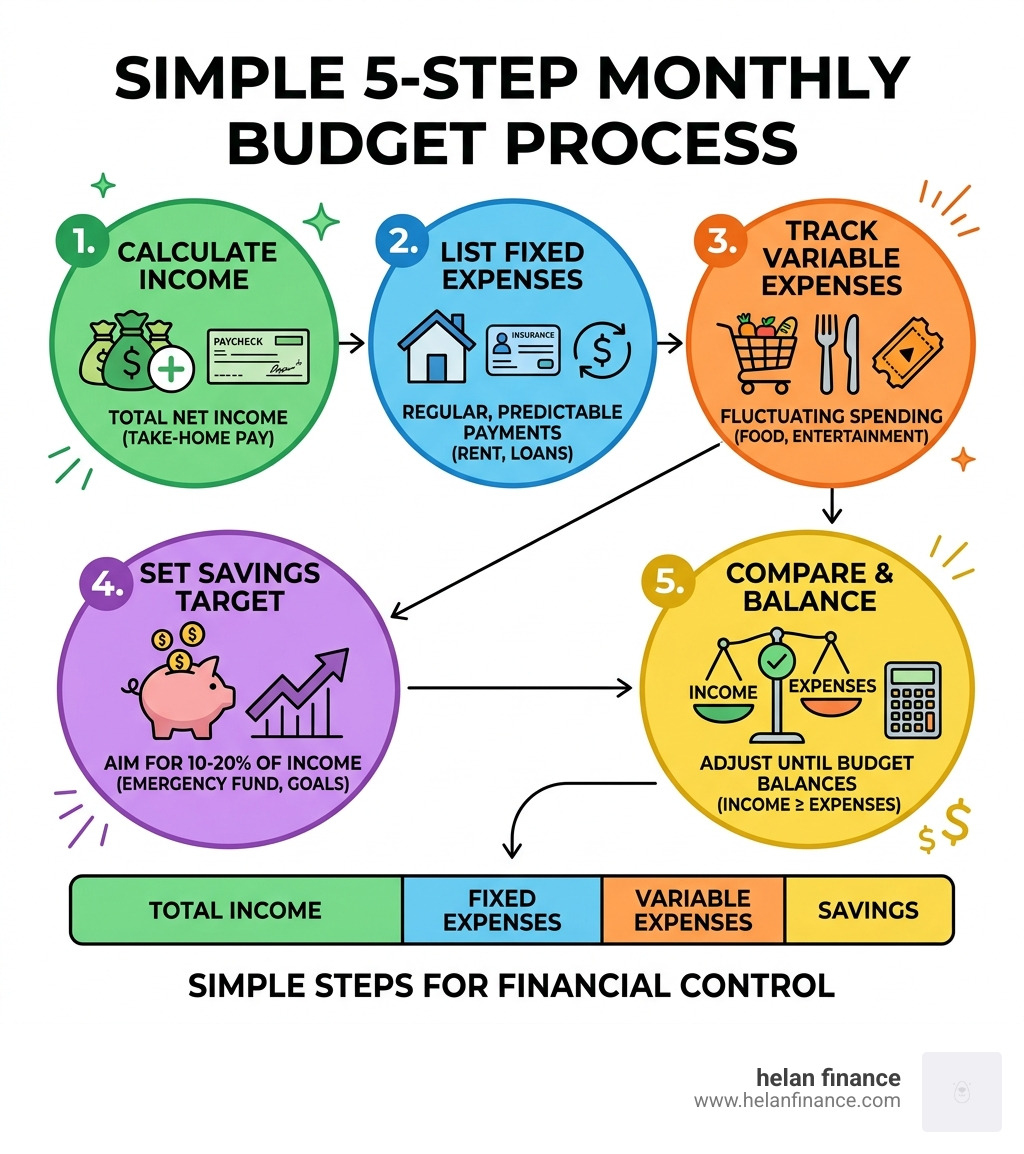
Here’s how to create one in 5 steps:
- Calculate your net monthly income — your take-home pay after taxes
- List your fixed expenses — rent, insurance, loan payments
- Track your variable expenses — groceries, dining out, entertainment
- Set a savings target — aim for at least 10–20% of your income
- Compare income vs. expenses — adjust until your budget balances
Most people know they should have a budget. But between work, family, and everything else life throws at you, sitting down to organize your finances can feel like one more thing on an already long to-do list.
Here’s the thing: you don’t need a complicated system. You don’t need a finance degree. You just need one simple framework and the habit of using it.
A monthly budget gives you a clear picture of your money — what’s coming in, what’s going out, and whether you’re moving toward your goals or quietly falling behind. Without it, even a decent income can disappear without much to show for it.
And the stakes are real. Budgets often fail not because people overspend on obvious things, but because hidden costs — a car repair, a vet bill, a forgotten annual subscription — quietly drain accounts that seemed just fine.
The good news? A solid monthly budget doesn’t have to take hours to build or require perfect discipline to maintain.
Why a Monthly Budget is Your Foundation for Financial Stability
In our experience at Helan Finance, we’ve seen that financial security isn’t about how much you make; it’s about how much you keep and how intentionally you spend it. As of April 2026, the economic landscape continues to shift, making a monthly budget more than just a “good idea”—it is your primary defense against financial stress.
A budget acts as a roadmap for your cash flow. Without it, you are essentially driving in the dark without headlights. When you create a plan, you gain immediate awareness of your spending habits. This awareness is the “magic” that helps you save for major milestones, like a down payment on a home or a well-deserved vacation.
Furthermore, a budget protects your emergency fund. Many people find themselves dipping into savings for things that aren’t actually emergencies—like an annual car registration or a friend’s wedding gift. By including these in your monthly planning, you ensure your emergency fund stays reserved for true crises.
For those looking to dive deeper into the psychological and practical benefits of tracking your money, the CFPB Monthly Budget Guide provides excellent insights into how budgeting improves overall financial well-being.
Step 1: Calculating Your True Net Monthly Income
The biggest mistake we see beginners make is budgeting based on their gross salary. If you earn $5,000 a month on paper, but only $3,800 hits your bank account after taxes, health insurance, and retirement contributions, your budget must start at $3,800. This is your net monthly income, or take-home pay.
To get an accurate number for April 2026:
- Check your recent pay stubs: Look at the “Net Pay” line.
- Include side hustles: If you drive for a ride-share service or sell crafts, estimate this income conservatively. It’s always better to have a surprise surplus than a shortfall.
- Account for variable earnings: If you are a freelancer or work on commission, use your lowest-earning month from the past year as your baseline.
If you need a structured way to list these out, the Make a Budget Worksheet is a fantastic tool to ensure no income source is left behind. The goal is to be realistic, not optimistic.
Step 2: Categorizing Your Spending into Needs, Wants, and Savings
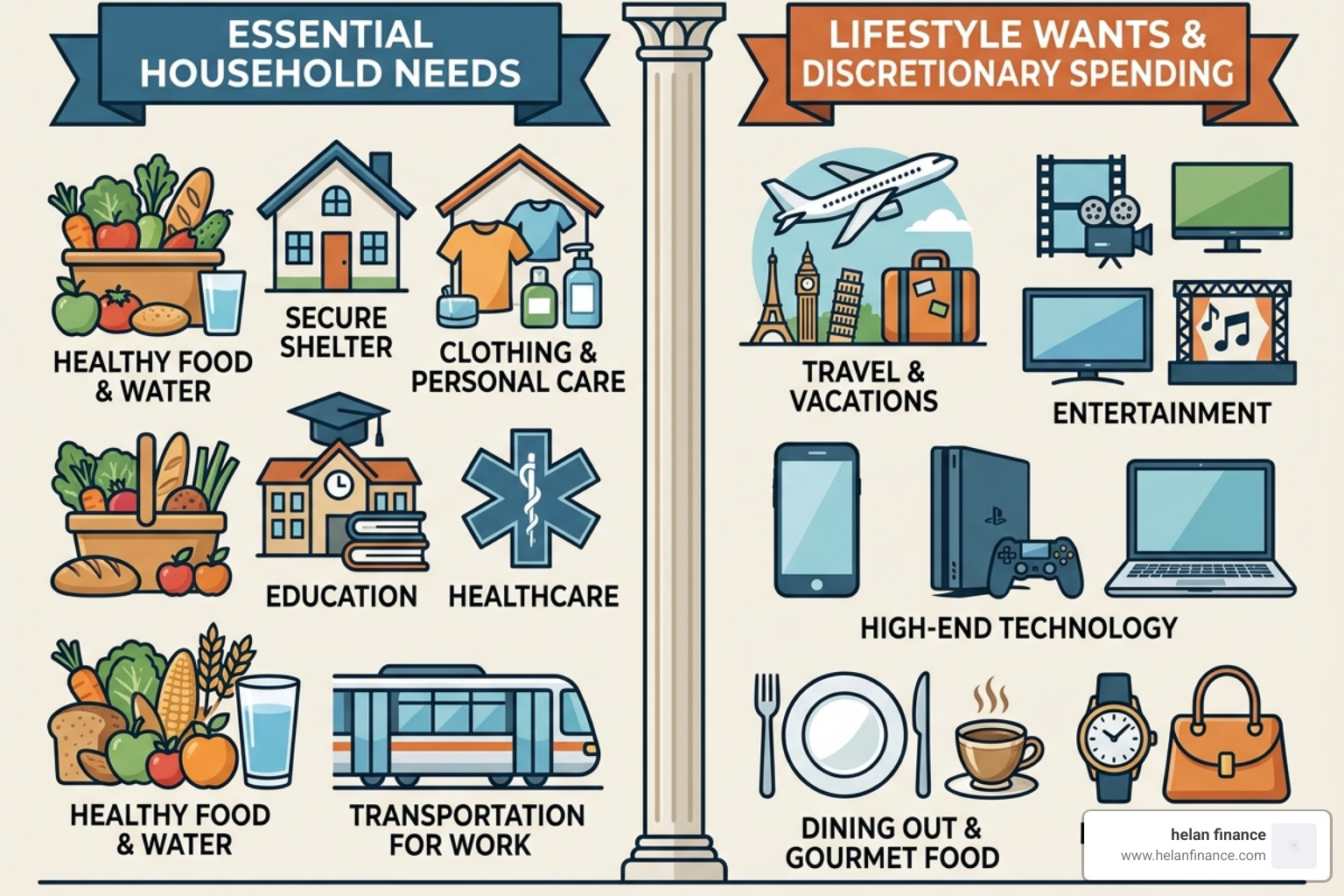
Once you know what’s coming in, it’s time to see where it’s going. We like to simplify this by breaking expenses into three main buckets.
Needs (50% of Income)
These are the non-negotiables. If you don’t pay these, there are serious consequences.
- Housing: Rent or mortgage, property taxes, and homeowners insurance.
- Utilities: Electricity, water, heat, and basic internet.
- Transportation: Car payments, insurance, gas, or public transit passes.
- Groceries: Essential food and household supplies.
- Insurance: Health, life, and disability premiums.
Wants (30% of Income)
These are lifestyle choices that make life more enjoyable but aren’t strictly necessary for survival.
- Dining out: From your morning latte to Friday night sushi.
- Entertainment: Streaming services, concert tickets, and hobbies.
- Shopping: New clothes (beyond the essentials) and home decor.
- Travel: Saving for that summer getaway.
Savings and Debt Repayment (20% of Income)
This is where you build your future self.
- Emergency Fund: Aiming for 3–6 months of expenses.
- Retirement: 401(k) or IRA contributions.
- Extra Debt Payments: Paying more than the minimum on credit cards or student loans.
Identifying Commonly Forgotten Expenses
This is where most budgets fall apart. We call this “budget creep.” You think you’re doing great, and then—BAM—your car needs new brakes. Did you know that replacing brake pads and rotors alone can cost anywhere from $500 to $1,000? If you haven’t budgeted for vehicle maintenance, that’s a huge hit to your monthly stability.
Other commonly forgotten expenses include:
- Pet Care: Annual vaccines, grooming, and the occasional “he ate a sock” vet visit.
- Professional Fees: Annual license renewals or membership dues.
- Home Repairs: HVAC inspections or a leaky faucet.
- Gifts: Birthdays, weddings, and holidays happen every year, yet they often “surprise” our bank accounts.
- Sinking Funds: This is the secret weapon. A sinking fund is where you take a large, irregular expense (like $600 for annual car insurance) and divide it by 12. By saving $50 a month, the bill becomes a non-event when it finally arrives.
Proven Frameworks to Manage Your Money
Choosing a budgeting method is like choosing a workout routine—the “best” one is the one you will actually stick to for more than three months. At Helan Finance, we believe in simplicity, but different personalities require different levels of detail.
If you are looking for a comprehensive tool to test these methods, the Monthly Budget Planner offers a great interface for organizing your thoughts.
The 50/30/20 Rule for Your Monthly Budget
This is the gold standard for beginners. As we mentioned earlier, it suggests allocating 50% of your take-home pay to needs, 30% to wants, and 20% to savings and debt repayment.
The beauty of this rule is its flexibility. If you live in a high-cost-of-living area where rent takes up 40% of your income, you might have to squeeze your “wants” down to 20% to keep your savings on track. To see how your specific numbers stack up, try the Voya Budget Calculator. It provides an instant snapshot of your financial health.
Zero-Based Budgeting and the Envelope System
For those who want maximum control, Zero-Based Budgeting is the answer. The philosophy is simple: Income minus Expenses equals Zero. Every single dollar you earn is assigned a specific “job”—whether that job is “buy groceries,” “pay the electric bill,” or “go into the Roth IRA.”
If you find yourself constantly overspending in specific categories (we’re looking at you, Target runs), the Envelope System can be a game-changer. You withdraw cash for your variable categories (Groceries, Dining Out, Fun Money) and put it into physical envelopes. Once the cash in the “Dining Out” envelope is gone, you don’t eat out until the next month. It creates an immediate emotional connection to your spending that swiping a card simply can’t match.

Tracking and Adjusting for Long-Term Success
A monthly budget is not a “set it and forget it” document. It’s a living thing. We recommend a “Budget Rhythm” to keep yourself on track:
- The Weekly Check-In (10 Minutes): Every Friday or Sunday, review your transactions from the past week. Did you spend more on groceries than planned? Adjust your “Fun Money” for the coming week to compensate. This prevents “end-of-month panic.”
- The Monthly Review (30 Minutes): At the end of the month, compare what you planned to spend with what you actually spent. This is where the magic happens. You’ll start to see patterns—maybe you’re spending $200 a month on subscriptions you don’t even use.
- The Quarterly Deep Dive (1 Hour): Every three months, look at the big picture. Are you meeting your savings goals? Do you need to adjust for seasonal changes (like higher cooling bills in the summer)?
How to Review Your Monthly Budget in 2026
In April 2026, we have to stay mindful of inflation. The price of eggs, gas, and insurance can change quickly. If your grocery bill has naturally risen by 10% over the last year, your budget needs to reflect that reality. Don’t beat yourself up for “failing” your budget if the cost of living has simply gone up; instead, adjust your limits and look for other areas to cut back.
Frequently Asked Questions about Monthly Budgeting
What are the most commonly forgotten expenses?
We see people miss these all the time:
- Vehicle Maintenance: As mentioned, brake pads, oil changes, and registration.
- Annual Checkups: Co-pays for the doctor or dentist.
- Pet Vaccines: And grooming or boarding fees.
- Professional Renewals: License fees or union dues.
- Wardrobe Updates: Kids grow out of shoes, and winter coats eventually wear out.
How much of my income should go toward housing?
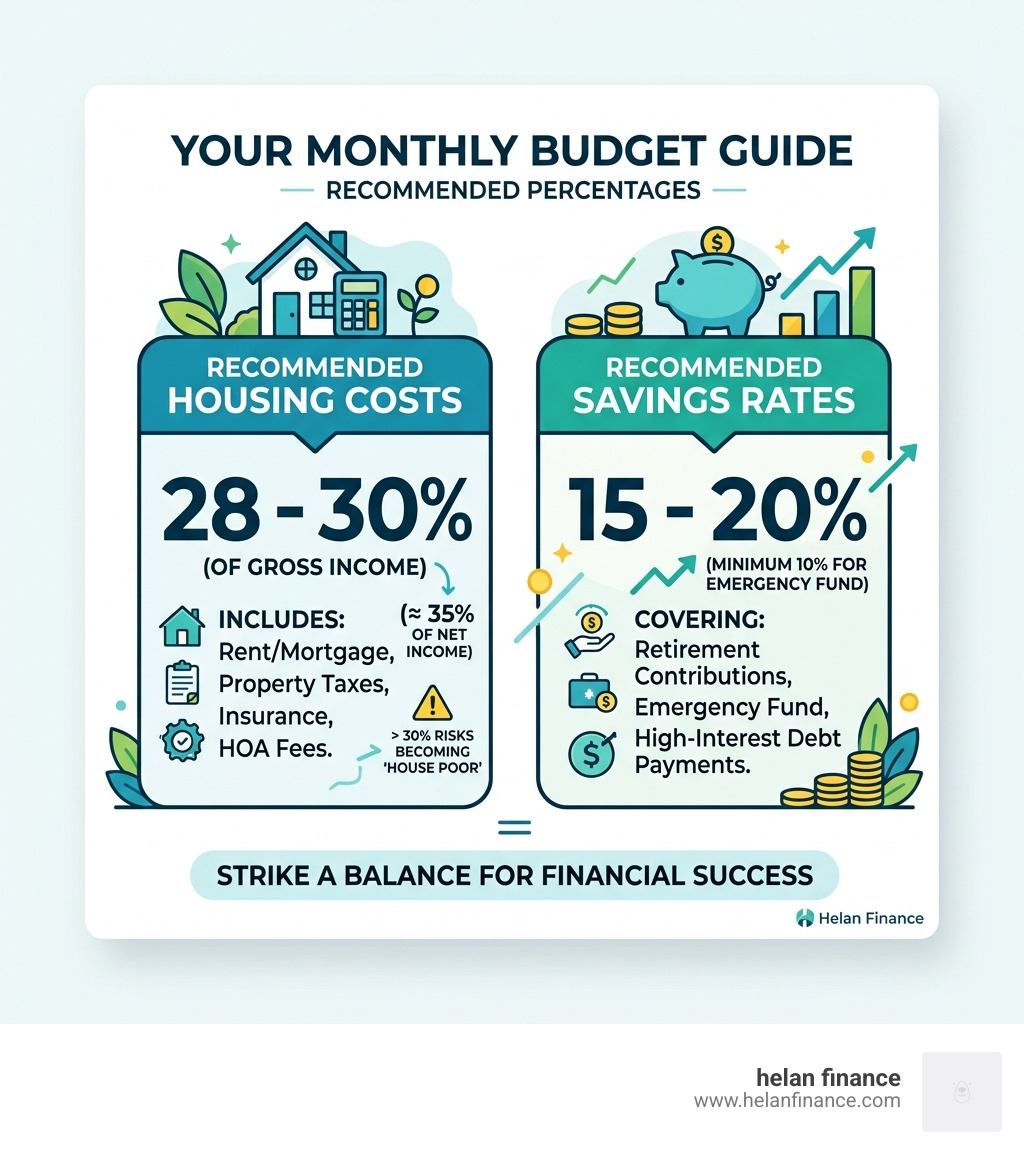
A standard rule of thumb is that housing should be no more than 28–30% of your gross income. If you are looking at your after-tax (net) income, this usually equates to about 35%. This includes your rent or mortgage, property taxes, insurance, and any HOA fees. If you go much higher than this, you risk becoming “house poor”—meaning you have a beautiful place to live but no money left over to actually enjoy your life.
What is the recommended monthly savings rate?
At Helan Finance, we suggest saving at least 10% of your income each month as a bare minimum. However, many experts recommend aiming for 15–20% when possible. This 20% should cover your emergency fund, retirement contributions, and any extra payments toward high-interest debt.
Conclusion
Creating a monthly budget is the single most effective way to take the stress out of your financial life. It isn’t about restricting your freedom; it’s about giving yourself permission to spend on the things that actually matter to you, while ensuring your future is secure.
At Helan Finance, we believe that financial planning should be easy and efficient. By following these steps—calculating your true income, accounting for those “hidden” costs like brake repairs, and choosing a framework like the 50/30/20 rule—you are building a routine that leads to long-term health.
Building a stable financial future takes time and patience, but you don’t have to do it alone. We are here to support you with simplified tools and advice every step of the way.
Ready to take the next step? Start your financial journey today and see how a little planning can lead to a lot of freedom.

