
Personal Money Habits for a Wealthier Mindset
Why Your Personal Money Habits Define Your Financial Future
Personal money habits are the daily, often automatic behaviors that determine where your money goes — and whether it works for you or against you.
If you want the short version, here are the core habits that move the needle:
- Track every dollar for at least 30 days to reveal where money actually goes
- Automate savings before discretionary spending can absorb your income
- Build an emergency fund covering 3-6 months of essential expenses
- Audit subscriptions quarterly — unused ones average $45/month in silent waste
- Use a simple budget framework like 50/30/20 (needs / wants / savings)
- Identify emotional triggers that push you toward unplanned purchases
- Apply a 24-hour rule before any non-essential purchase over $20
Most people assume financial struggle comes down to not earning enough. But the data tells a different story. Around 70% of Americans admit to having bad spending habits — yet fewer than 1 in 3 regularly track their spending. That gap between knowing and doing is where financial progress gets lost.
What makes this harder is that most spending isn’t rational. Research suggests emotions and cognitive biases drive somewhere between 70-80% of spending decisions. You’re not just choosing products — you’re responding to stress, boredom, social pressure, and deeply ingrained beliefs about money that formed long before you earned your first paycheck.
The good news? Habits are learned patterns. That means they can be unlearned — and replaced.
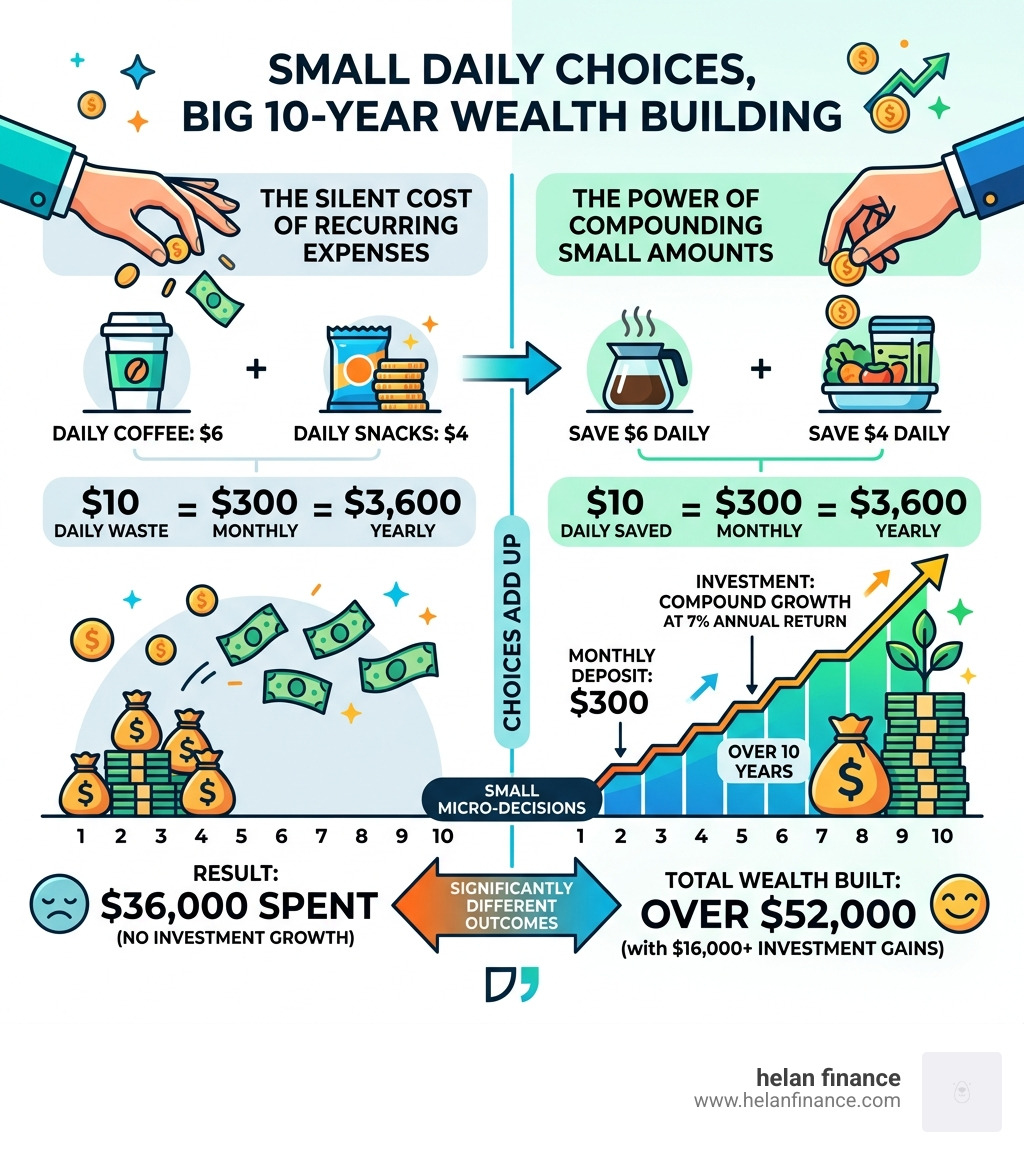
Even small shifts compound dramatically over time. A $6 daily coffee habit costs $2,160 per year. Invested over 10 years at a 7% return, that same money grows to over $26,000. That’s not a lecture about lattes — it’s a demonstration of how micro-decisions at scale shape your entire financial trajectory.
Understanding Your Personal Money Habits and Spending Identity
To change how we spend, we first have to understand who we are when we hold a wallet. We all have a “spending identity” — a unique psychological profile shaped by our values, upbringing, and emotional triggers. This identity acts as the invisible hand behind every swipe of a credit card.
According to Scientific research on money attitudes and habits, our behaviors are often linked to how we view money’s purpose. Is it for security? Power? Freedom?
Most people fall into a few primary archetypes:
- The Security Spender: You feel safest when your bank balance is high. You might actually struggle to spend money even on things you need because “spending” feels like losing protection.
- The Joy Buyer: You view money as a tool for immediate happiness. If you see something that sparks joy, you buy it now and worry about the math later.
- The Status Spender: Your purchases are often driven by social comparison. You want the latest tech or fashion to signal success to your peers.
- The Avoider: You don’t like looking at bank statements. You’d rather not know the balance because the truth feels overwhelming.

Our personal money habits are also heavily influenced by cognitive biases. One of the most common is hyperbolic discounting — our brain’s tendency to choose a small reward now (like a fancy dinner tonight) over a much larger reward later (like a comfortable retirement). We are literally wired to prefer the present, which is why building a wealthier mindset requires conscious effort to override these ancient biological urges.
The Psychology Behind Your Personal Money Habits
Where do these habits come from? Most of us carry “money scripts” — unconscious beliefs about money inherited from our families. If you grew up in a household where money was a source of constant tension, you might view it with anxiety. If it was never discussed, you might lack the “vocabulary” to manage it today.
Social pressure adds another layer of complexity. We often spend to maintain a sense of belonging. This is compounded by the “pain of paying.” Research shows that using a credit card actually numbs the brain’s pain receptors associated with spending. When we use cash, we “feel” the money leaving our hands. With digital payments, that friction is gone, which is why credit card users often spend roughly twice as much as those using physical currency.
As highlighted in Personal Finance Education & Tips from Better Money Habits, recognizing that 70-80% of our spending is emotionally driven is the first step toward reclaiming control. We aren’t failing at math; we are navigating complex human emotions.
Identifying Your Unique Spending Triggers
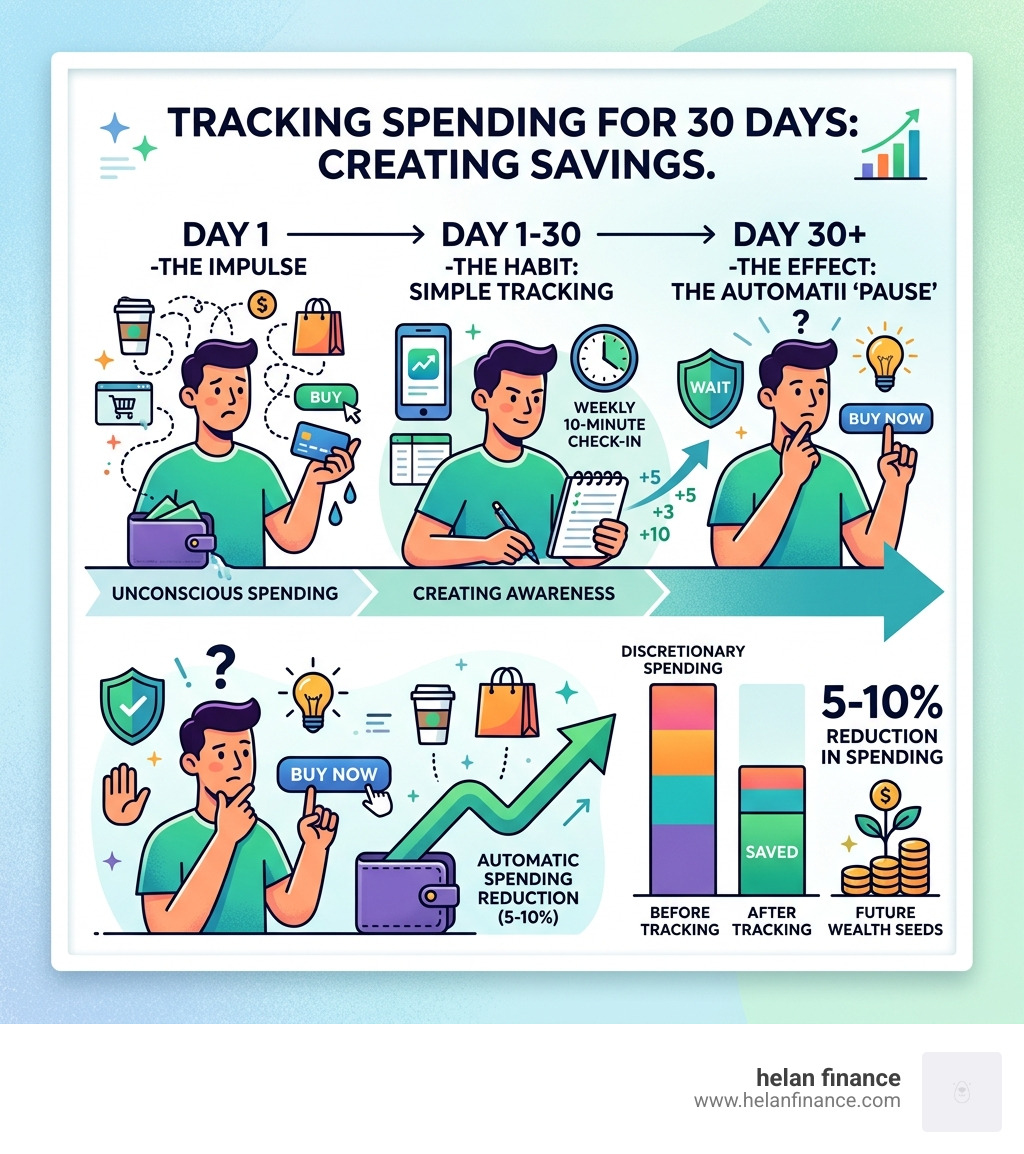
If you want to master your personal money habits, you must become a detective of your own life. We recommend a 30-day tracking exercise. For one month, don’t just write down what you bought, but how you felt when you bought it.
Common emotional spending cues include:
- Stress: “I had a hard day at work, I deserve this treat.”
- Boredom: Scrolling through shopping apps while sitting on the couch.
- Social Comparison: Seeing a friend’s vacation photos and suddenly “needing” a trip.
- Celebration: Using a win as an excuse to overspend.
- Fear of Missing Out (FOMO): Buying because a sale is “ending soon.”
By identifying whether a purchase was intentional (planned) or automatic (reactive), you can begin to add friction between the impulse and the action.
Core Strategies to Transform Your Financial Foundation
Once you understand your triggers, you need a framework to guide your money. Think of a budget not as a cage, but as a map. It doesn’t tell you that you can’t spend; it tells you where your money is most effective.
Two of the most popular methods we see working in 2026 are the 50/30/20 rule and Zero-Based Budgeting.
| Feature | 50/30/20 Rule | Zero-Based Budgeting |
|---|---|---|
| Philosophy | Simple, percentage-based allocation | Every dollar has a specific “job” |
| Structure | 50% Needs, 30% Wants, 20% Savings/Debt | Total Income – Total Expenses = $0 |
| Best For | People who want a low-maintenance system | People who want maximum control and precision |
| Flexibility | High – easy to adjust on the fly | Lower – requires more frequent check-ins |
A strong foundation also requires an emergency fund. We suggest aiming for 3-6 months of essential living expenses. This isn’t just a “rainy day” fund; it’s “sleep at night” insurance. When you have this cushion, a flat tire or a broken appliance is merely an inconvenience, not a financial catastrophe.
Adopting 8 Healthy Financial Habits also involves smart debt management. If you’re carrying high-interest debt, consider the Avalanche Method (paying off the highest interest rate first to save money) or the Snowball Method (paying off the smallest balance first to build psychological momentum).
Practical Exercises for Better Personal Money Habits
Changing your personal money habits is easier when you use “environmental design” — making good habits easy and bad habits hard.
- The Subscription Audit: The average person wastes $540 a year on unused subscriptions. Check your bank statement today and cancel one thing you haven’t used in 30 days.
- The 24-Hour Rule: For any non-essential purchase over $20, wait one full day. Often, the “must-have” feeling fades once the dopamine spike subsides.
- Loud Budgeting: This is a 2026 trend where you’re vocal about your financial goals. Instead of saying “I can’t afford that dinner,” say “I’m focusing on my house down payment goal this month, want to do a potluck instead?”
- The Coffee Infographic Effect: Small daily choices are the seeds of future wealth.

Tracking and Measuring Financial Progress
You cannot manage what you do not measure. In addition to tracking expenses, we recommend monitoring your net worth (Assets minus Liabilities) and your credit score.
Interestingly, the simple act of tracking expenses for 30 days often leads to a 5-10% reduction in spending without any other changes. Why? Because awareness creates an automatic “pause” before we spend. We recommend a weekly 10-minute check-in to review your numbers. It’s a small time investment for a massive financial return.
Adapting Financial Behaviors Across Life Stages
Your personal money habits should evolve as you do. What works for a 22-year-old in their first apartment won’t be enough for a 45-year-old managing a mortgage and college savings.
- Your 20s: The Foundation Stage. The goal here is to avoid “lifestyle inflation” — the tendency to spend more every time you get a raise. This is the best time to leverage compound interest. Even small amounts saved now are worth vastly more than larger amounts saved later.
- Your 30s: The Balancing Act. This is often the “sinking fund” decade. Sinking funds are savings accounts for specific, irregular expenses (like car repairs, weddings, or home maintenance). They prevent “one-time” shocks from ruining your monthly budget.
- Your 40s: The Peak Earning Years. Focus on financial efficiency. Review recurring expenses and maximize retirement contributions. This is the time to ensure you aren’t letting “lifestyle creep” eat your ability to build real wealth.
- Your 50s and Beyond: The Preservation Stage. As you move toward retirement, habits shift toward downsizing and debt elimination. The goal is to enter retirement with as few fixed costs as possible.
For more detailed guidance, check out these Lifelong financial habits for every age.
Advanced Wealth-Building Habits and Avoiding Common Pitfalls
Once your foundation is solid, you can move to advanced strategies. Wealth isn’t just about saving; it’s about optimization.
- Income Diversification: Don’t rely on a single paycheck. Whether it’s dividends, a side project, or rental income, multiple streams create resilience.
- Fee Minimization: High investment fees are silent wealth killers. An expense ratio of 1% might not sound like much, but over 30 years, it can eat up to 25% of your total portfolio value compared to a low-cost index fund (aim for under 0.20%).
- Tax Optimization: Utilize tax-advantaged accounts. Understanding the difference between pre-tax and post-tax (Roth) contributions can save you hundreds of thousands in the long run.
- Selective Generosity: Wealthy mindsets often include “intentional giving.” This isn’t just about charity; it’s about spending money on people and causes that align with your deepest values.
Common Pitfalls to Avoid:
- Market Timing: Trying to “beat the market” usually results in lower returns. Consistency beats intensity every time.
- Keeping Up with the Joneses: Spending money you don’t have to impress people you don’t like.
- Ignoring Small Charges: A $10 “ghost” subscription is $120 a year. Over a decade of investing, that’s thousands of dollars gone.
Frequently Asked Questions about Money Habits
How long does it take to change a spending habit?
While you’ll see immediate benefits from tracking, research suggests it takes between 30 and 66 days for a new behavior to become automatic. The key is neuroplasticity — your brain literally rewires itself through repetition. Start with “micro-habits” (like checking your bank balance every morning) to build momentum.
Why is tracking expenses more effective than just budgeting?
A budget is a plan (what you intend to do), but tracking is the reality (what you actually did). Only 33% of people track their spending regularly, which is why so many budgets fail. Tracking provides real-time data that allows you to identify “leaks” in your finances that a theoretical budget might miss.
How can I handle social pressure to spend with friends?
We recommend “Values Alignment.” If your friends want to go to an expensive brunch, be honest. Try saying: “I’m really focused on hitting my travel savings goal right now, so I’m skipping the big brunch. But I’d love to go for a walk in the park or have coffee afterward!” Most people will respect your discipline, and you might even inspire them to look at their own personal money habits.
Conclusion: Building Your Wealthier Mindset
At Helan Finance, we believe that financial freedom isn’t reserved for the lucky few — it’s built through the consistent application of simple, smart personal money habits.
You don’t need a complex degree to win with money. You need a system that works with your psychology rather than against it. By understanding your spending identity, automating your savings, and staying mindful of your triggers, you can move from financial stress to a wealthier mindset.
Remember: Consistency over perfection. If you slip up and overspend today, don’t throw away the whole plan. Just make the next right decision. Your future self will thank you for the habits you start today.
Ready to take the next step? Start your financial planning journey with us and discover how simplified tools can transform your relationship with money.

