
Simple Budgeting Routines to Keep Your Wallet Happy
Why Most People Struggle with Money (And What Actually Fixes It)
Beginner financial planning routines are the small, repeated money habits that help you spend less than you earn, build savings, and reach your goals — without needing a finance degree or hours of free time.
Here’s a quick-start snapshot of the core routines to build first:
- Track your spending — Review the last 30 days to see where your money actually goes
- Build a simple budget — Use the 50/30/20 rule: 50% needs, 30% wants, 20% savings and debt
- Start an emergency fund — Aim for $500–$1,000 first, then work toward 3–6 months of expenses
- Tackle high-interest debt — Focus extra payments on the highest-rate balances first
- Automate savings — Set up a recurring transfer on payday so saving happens without thinking
- Do a weekly money check-in — Just 10–15 minutes to review spending and stay on track
Most people don’t struggle with money because they’re bad at math. They struggle because no one ever taught them a system.
Schools rarely cover it. The assumption by the time you’re earning a paycheck is that you already know what to do. You probably don’t — and that’s completely normal.
The good news? Managing money is a learnable skill, not a personality trait. And the research is clear: the biggest financial improvements don’t come from one big decision. They come from small, consistent actions repeated over time.
Even saving just $50 a month adds up to $600 a year. That’s a car repair, a medical bill, or the start of a real financial cushion — paid for without reaching for a credit card.
This guide breaks down exactly which routines to build, in what order, so your finances run more smoothly without taking over your life.
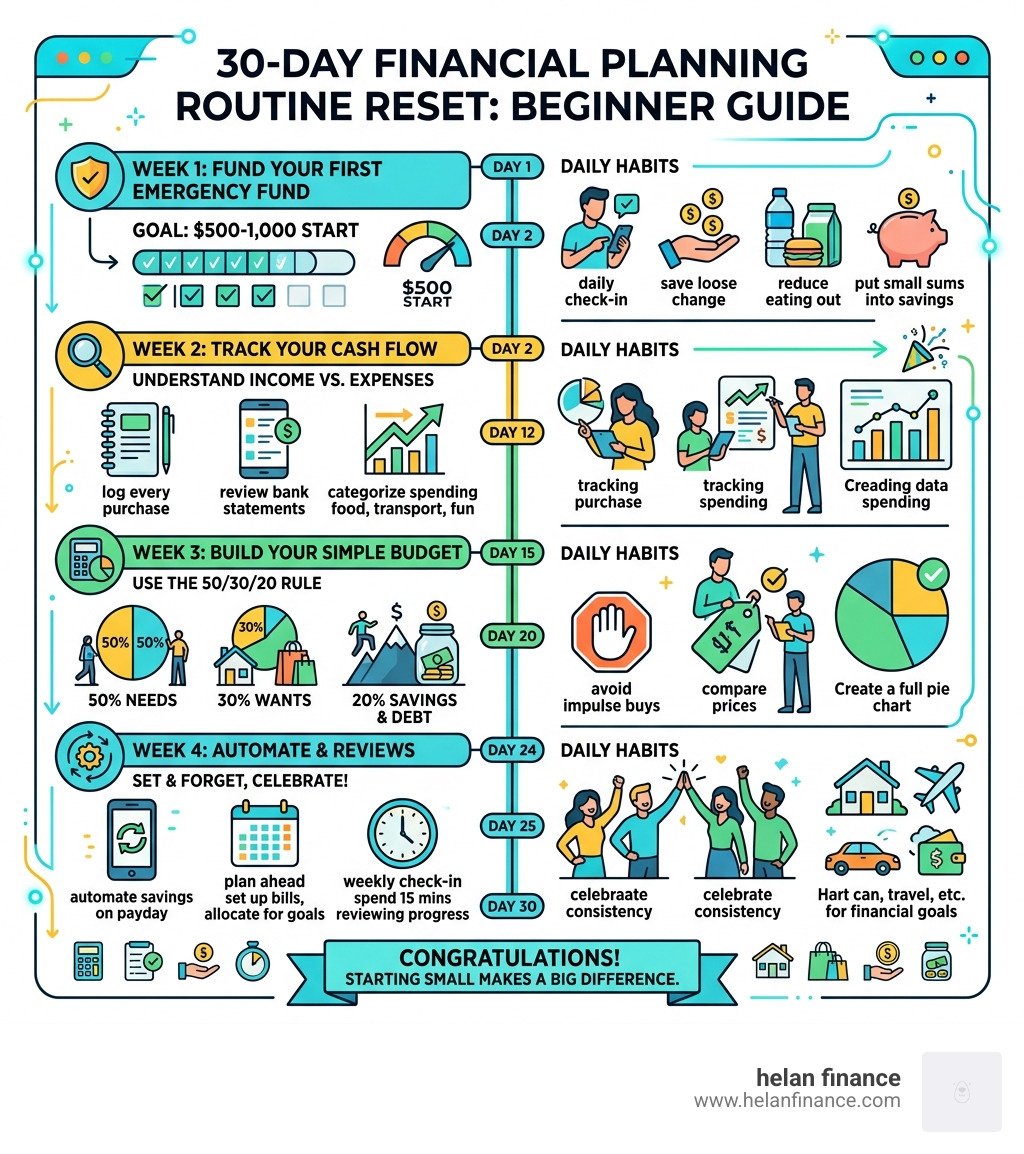
Why Beginner Financial Planning Routines Matter in 2026
As we navigate April 2026, the financial landscape has changed, but the core principles of success remain the same. Financial planning isn’t a one-time event where you sit down, write a 50-page document, and never look at it again. It’s an ongoing process of organizing your income, expenses, and goals to make intentional decisions.
Why do beginner financial planning routines matter so much? Because habits compound. Just as interest grows over time, the “behavioral compounding” of checking your bank account daily or pausing before an impulse purchase creates massive long-term freedom. Without these routines, it is easy to fall into the trap of lifestyle inflation—where your spending rises automatically every time your income does.
Setting SMART Goals
To make our routines effective, we need a destination. We recommend setting SMART goals:
- Specific: “I want to save $3,000 for a house deposit,” not “I want to save money.”
- Measurable: You can track exactly how many dollars you have.
- Achievable: It fits within your current income.
- Relevant: It aligns with what you actually value.
- Time-bound: “I will achieve this by December 2026.”
Tracking Net Worth
One of the most powerful routines we suggest is a quarterly net worth check. Your net worth is simply your assets (what you own, like cash and retirement accounts) minus your liabilities (what you owe, like student loans or credit card debt). According to Financial Planning for Beginners: A Guide | Wall Street Prep, tracking this number provides a baseline to measure your progress. Even if your net worth is currently negative due to student loans, watching that number move closer to zero—and eventually into the positive—is incredibly motivating.
Daily Money Micro-Habits
You don’t need to spend hours on your finances. We love these daily micro-habits:
- The 2-Minute Check-In: Open your banking app every morning to see what cleared. It removes the “fear of the unknown.”
- The 24-Hour Rule: For any non-essential purchase over $50, wait a full day before hitting “buy.”
- The Daily Skill Deposit: Spend 5 minutes reading a financial article or learning one new term.
Mastering Your Cash Flow with Popular Budgeting Strategies
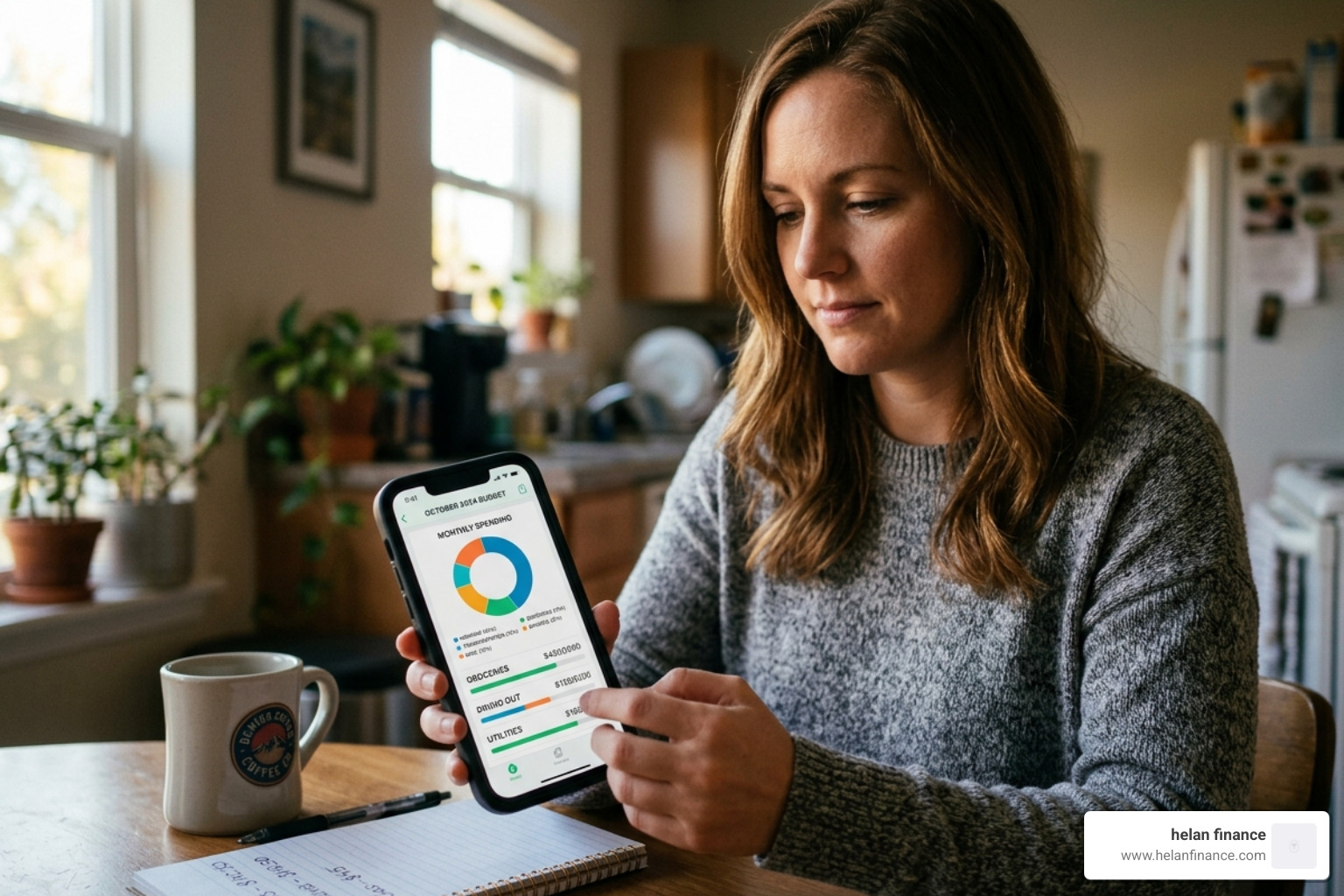
A budget isn’t a straightjacket; it’s a roadmap. It’s about deciding where your money goes before you spend it. If you’ve never budgeted before, the options can feel overwhelming. Let’s break down the most popular strategies to see which fits your life.
The 50/30/20 Rule
This is the “gold standard” for beginners. It splits your after-tax income into three buckets:
- 50% for Needs: Rent/mortgage, utilities, groceries, insurance, and minimum debt payments.
- 30% for Wants: Dining out, Netflix, hobbies, and that extra pair of shoes.
- 20% for Savings and Extra Debt Repayment: This is your “future you” fund.
Zero-Based Budgeting
In this system, every single dollar is assigned a job until you have $0 left at the end of the month. If you earn $4,000, you plan for $4,000. This doesn’t mean you have $0 in your bank account; it means you’ve intentionally sent every dollar to a category (including savings). It’s the ultimate way to catch “leaks” in your spending.
The Envelope System
If you struggle with overspending on “wants,” this is for you. You put a set amount of cash into physical (or digital) envelopes for categories like “Dining Out” or “Clothing.” Once the envelope is empty, you stop spending in that category until next month.
Comparing Budgeting Methods
| Method | Best For | Effort Level |
|---|---|---|
| 50/30/20 | General balance and simplicity | Low |
| Zero-Based | Maximizing every cent; high control | High |
| Envelope | Curbing impulse spending | Medium |
| Pay Yourself First | People who hate tracking but want to save | Very Low |
Needs vs. Wants
The hardest part of budgeting is being honest about what is a “need.” A car is a need if you must drive to work; a brand-new luxury SUV is a want. As noted in A beginner’s guide to personal finance | IESE Insight, distinguishing between these allows you to cut costs without feeling deprived.
Protecting and Growing Your Wealth
Once you have a handle on your cash flow, it’s time to protect what you have. Life in 2026 can throw curveballs—car repairs, medical emergencies, or sudden job changes.
The Emergency Fund
Experts commonly recommend keeping 3–6 months of essential expenses in an emergency fund. However, if your income is variable (like freelance work), you might want to aim for 6–9 months.
- Where to keep it: In a High-Yield Savings Account (HYSA). In 2026, some accounts offer around 5% APY, which is much better than the 0.01% at traditional big banks.
- How to start: Don’t let the “6 months” figure scare you. Start by saving $500. Then $1,000. That covers most small emergencies without you needing to use a credit card with a 21%+ APR.
Insurance: Your Financial Safety Net
We often overlook insurance in beginner financial planning routines, but it’s vital.
- Health Insurance: A single hospital stay can wipe out years of savings.
- Renters Insurance: It’s usually very cheap (often less than $20 a month) and protects your belongings.
- Disability Insurance: Statistics show that 1 in 4 of today’s 20-year-olds will experience a disabling condition that keeps them out of work for at least a year before retirement. If your employer offers this, sign up.
Strategic Debt Repayment
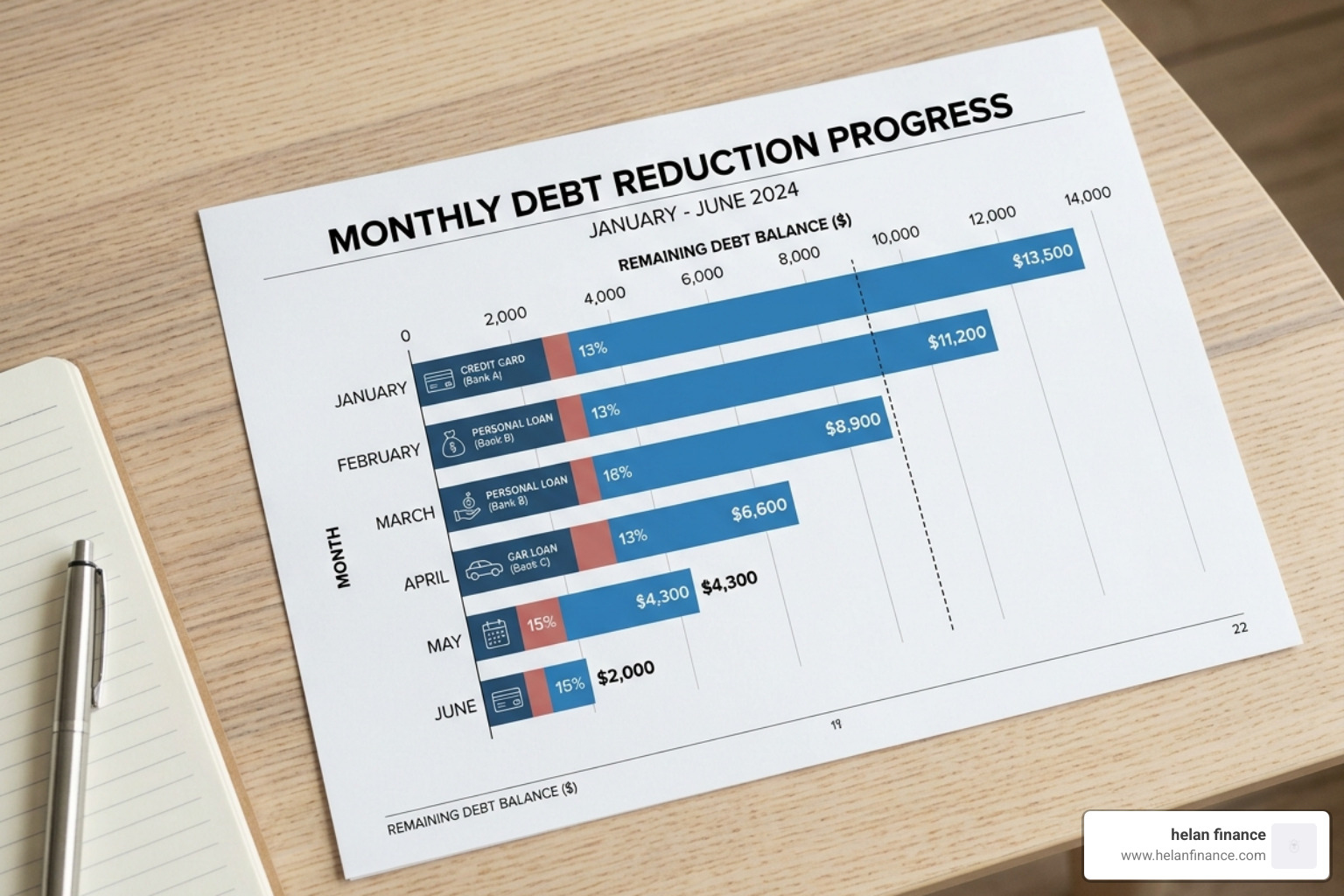
The average American household carries over $104,000 in debt. To get ahead, you need a plan. 9 Steps to a DIY Financial Plan | Charles Schwab highlights two major ways to tackle this:
- Debt Avalanche: You pay the minimum on all debts but put every extra dollar toward the debt with the highest interest rate. This saves you the most money over time.
- Debt Snowball: You pay off the smallest balance first. This gives you a quick psychological win and builds momentum.
Implementing Beginner Financial Planning Routines for Investing
Investing is how you make your money work for you while you sleep. The most powerful force here is compound interest.
- Capture the Match: If your employer offers a 401(k) match, that is a 100% return on your money. It is “free money.” Never leave it on the table.
- Roth IRA: For many beginners, a Roth IRA is a great choice because you contribute after-tax money, and it grows tax-free for retirement.
- Index Funds: You don’t need to pick individual stocks. A low-cost index fund (like one that tracks the S&P 500) allows you to own a small piece of hundreds of top companies.
Automating Your Beginner Financial Planning Routines
The secret to financial success isn’t willpower; it’s automation. We are human, and we get tired. Automation doesn’t.
- Payday Transfers: Set your bank to automatically move $100 (or whatever you can afford) to your savings account the day your paycheck hits.
- Auto-Pay Bills: Set up automatic payments for your fixed costs (rent, utilities, internet) to avoid late fees.
- Subscription Audit: Use an app or your bank statement to find subscriptions you don’t use anymore and cancel them. Those $10-a-month charges add up to $120 a year each!
Frequently Asked Questions about Financial Planning
How much should I save for an emergency fund?
We recommend aiming for 3–6 months of essential living expenses. This includes rent, food, utilities, and insurance—not your “fun” spending. Keep this money liquid in a separate high-yield savings account so you aren’t tempted to spend it on a weekend trip, but can access it quickly if your car breaks down.
Should I pay off debt or invest first?
This depends on the interest rate. If you have high-interest debt (like credit cards at 21%), pay that off first! No investment reliably returns 21% every year. However, if your employer offers a 401(k) match, contribute enough to get the full match before aggressive debt payoff—it’s a guaranteed 100% return. For low-interest debt (like a 4% student loan), you can often invest and pay off the debt simultaneously.
How often should I review my financial plan?
We suggest a “tiered” review routine:
- Weekly: 10 minutes to check your spending against your budget.
- Monthly: 30 minutes to see if you hit your savings goals and adjust for the next month.
- Quarterly: Check your net worth and progress toward SMART goals.
- Annually: Rebalance your investment portfolio and update your insurance coverage.
Conclusion
Building beginner financial planning routines is the single best gift you can give your future self. It’s not about deprivation; it’s about making sure your money is spent on the things that actually matter to you. Whether you start with a simple 50/30/20 budget or just commit to a 2-minute daily check-in, the key is to start today.
Avoid the trap of impulse spending by implementing a “money pause” and keep a close eye on lifestyle inflation as your career grows. By automating your savings and protecting yourself with the right insurance, you create a foundation of peace of mind that allows you to enjoy life without the constant hum of financial stress.
At Helan Finance, we believe that financial planning should be simplified. Through easy routines, exercises, and health tips for your wallet, we help you take control of your journey. The best time to start was yesterday; the second-best time is right now.
More info about financial planning services

