
The Definitive Guide to Spending Tracker
What Is a Spending Tracker (and Which One Should You Use)?
A spending tracker is a tool — app, spreadsheet, or printable sheet — that records where your money goes so you can budget better and save more.
Here are the top spending tracker options to consider in 2026:
| Spending Tracker Type | Best For | Standout Feature | Price Range |
|---|---|---|---|
| Automated Budgeting Apps | Hands-off tracking | Bank & crypto sync, AI categorization | Free to ~$12/mo |
| Envelope System Apps | Disciplined spending | Virtual envelopes, family sharing | Free to ~$10/mo |
| Privacy-Focused Tools | Security-conscious users | No bank links, manual entry | Mostly Free |
| Weekly Budgeting Tools | Short-term planning | 7-day spending cycles | Free to ~$8/mo |
| Family Finance Trackers | Shared households | Multi-user sync, SMS parsing | Free to ~$15/mo |
| All-in-One Finance Portals | Comprehensive overview | Syncs 17,000+ institutions | Free / Premium |
Most people don’t have a spending problem — they have a visibility problem.
You earn money, you spend money, and somewhere in between, it disappears. At the end of the month, you’re not sure where it went. Sound familiar?
That’s exactly what a spending tracker solves. It gives you a clear, honest picture of your finances — without needing a finance degree or hours of work each week.
In this guide, we break down the best spending trackers available right now, what features actually matter, and how to pick the right one for your life.
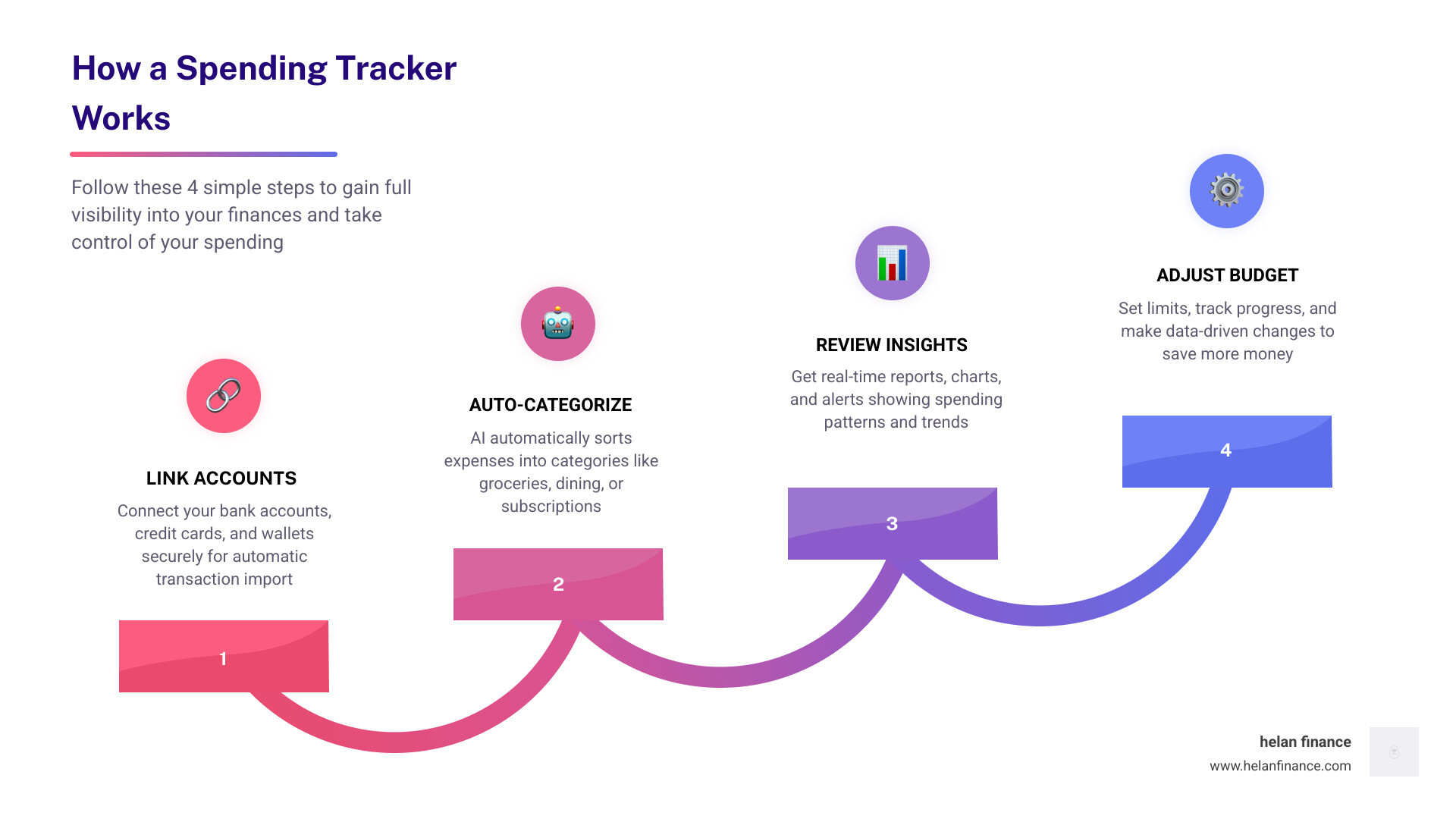
Why a Spending Tracker is Essential for Financial Health

In our experience at Helan Finance, we’ve seen that the simple act of observation changes behavior. When you use a spending tracker, you aren’t just recording numbers; you are building financial awareness. Many people believe they know where their money goes, but research shows a significant gap between perceived and actual spending.
The statistics are compelling. For instance, 94% of users who utilize dedicated budgeting apps report that their finances improved after just two weeks of use. Furthermore, 90% of those using a tracker to save actually do so, with most saving between $50 and $250 every single month. For families, the impact is even more profound; those using dedicated tools often save 10% to 15% of their monthly income.
Beyond just “saving money,” a spending tracker is a critical tool for:
- Expense Management: Identifying “leaks” like forgotten subscriptions or excessive takeout.
- Debt Reduction: Users of debt-focused tracking tools have reported paying off significant debts—sometimes as much as $14,000 in 18 months—simply by having a month-by-month payoff plan integrated into their tracking.
- Improved Habits: Moving from reactive spending (buying what you want until the money is gone) to proactive planning (assigning a purpose to every dollar).
By freeing up an average of $300 to $450 a month—as many premium tracker users do—you aren’t just balancing a checkbook; you’re buying back your future.
Evaluating the Best Spending Tracker Features for 2026
Choosing the right tool requires understanding what is available in the current market. As of April 2026, the landscape of financial tools has shifted toward high automation and deep integration.
| Feature Type | Manual/Paper | Basic Apps | Modern Automated Trackers |
|---|---|---|---|
| Data Entry | Handwriting | Manual Typing | Bank Sync / AI Scanning |
| Categorization | Self-defined | Pre-set lists | AI-driven Smart Categories |
| Institutions | N/A | Limited | 10,000 to 17,000+ supported |
| Insights | Mental Math | Basic Charts | Real-time predictive alerts |
| Collaboration | Hard to share | Login sharing | Multi-user sync / Family Split |
Key Features of a Modern Spending Tracker
When we look for the “perfect” spending tracker, we focus on features that reduce “friction.” If a tool is hard to use, you won’t use it.
- Bank Syncing: The gold standard for modern tracking. High-end tools now connect to over 17,000 financial institutions, pulling in transactions from checking, savings, and even crypto accounts automatically.
- AI Categorization: Gone are the days of manually labeling “Starbucks” as “Coffee.” Modern AI cleans up raw bank codes into readable data and assigns them to categories automatically.
- Receipt Scanning: For those who still deal in cash or need to track business expenses, AI receipt scanning can pull data directly from a photo and log the tax or tip separately.
- Real-time Insights: Instead of waiting until the end of the month, a modern spending tracker gives you a “disposable income” figure—telling you exactly how much you can spend right now after accounting for upcoming bills.
To see how these features integrate into a holistic financial plan, you can Explore Helan Finance Features to find routines that make these tools even more effective.
Choosing the Right Spending Tracker for Your Goals
Not every spending tracker is built for every person. Your choice should align with your specific financial stage:
- For Families: Look for “Family Sharing” or “Expense Splitting.” This allows partners to see a unified household budget while maintaining individual accounts.
- For Travelers: Multi-currency support is essential. Specialized apps allow you to track spending in various currencies, which is a lifesaver for digital nomads or frequent vacationers.
- For Debt Warriors: Some trackers include built-in debt planners that use the “Snowball” or “Avalanche” methods to calculate exactly when you’ll be debt-free.
- For the Privacy-Minded: If you are uncomfortable linking your bank account, choose a tool that allows for manual entry or CSV file imports without ever asking for your bank credentials.
Ready to take the first step? Get Started with Helan Finance to learn how to pair these tools with effective financial routines.
Popular Budgeting Methods Used in Modern Apps
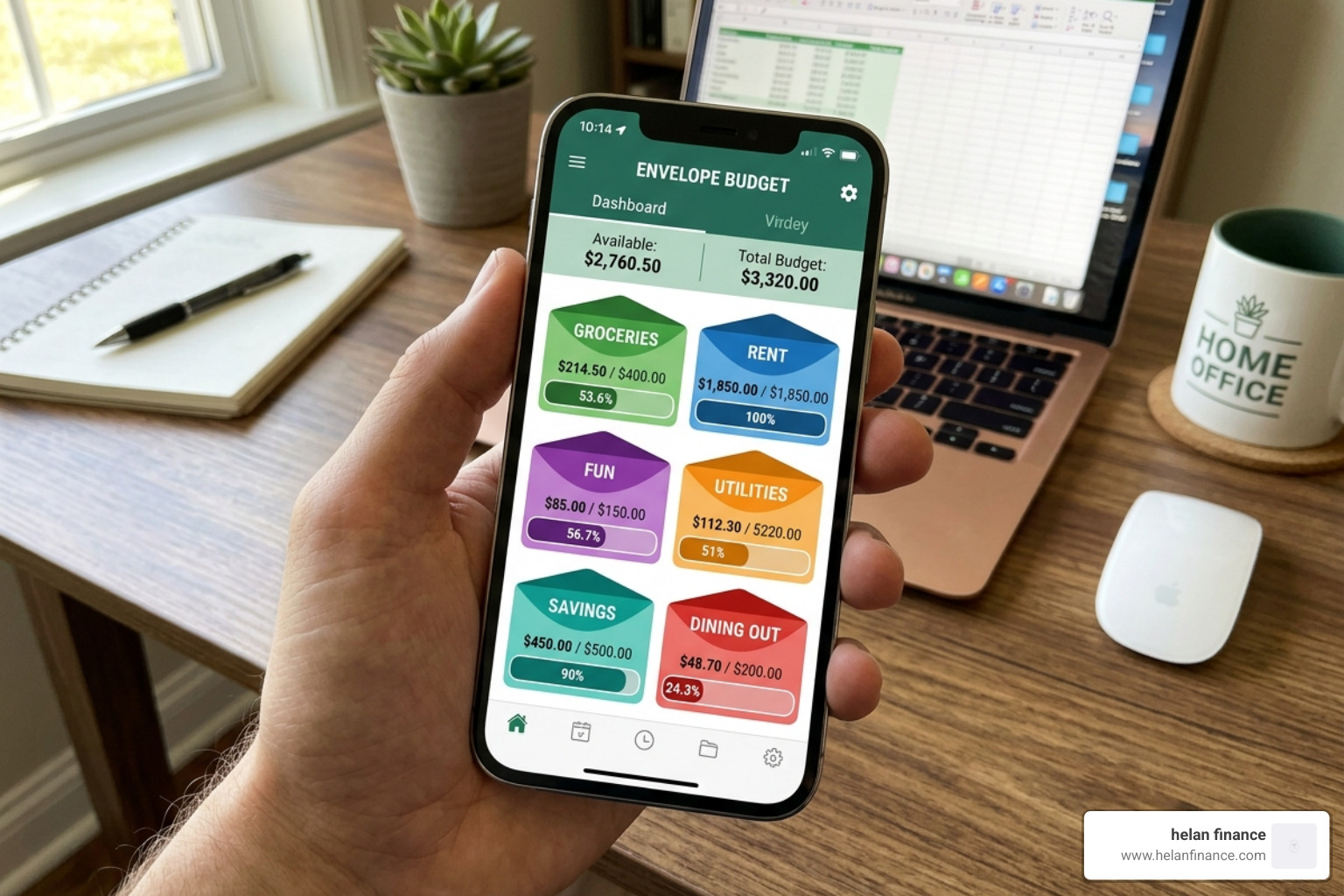
A spending tracker is the “engine,” but the budgeting method is the “driver.” In 2026, most apps support one or more of these proven strategies:
- Envelope Budgeting: Historically done with paper envelopes and cash, digital envelope apps have virtualized this. You “fill” digital envelopes for groceries, rent, and fun. When the envelope is empty, you stop spending in that category. It’s a “hands-on” method trusted by millions.
- Zero-Based Budgeting: This method requires you to “give every dollar a job.” If you earn $5,000, you must assign all $5,000 to expenses, savings, or debt repayment until there is $0 left. This prevents “lazy money” from disappearing into mindless spending.
- The 50/30/20 Rule: A simple, high-level approach where 50% of income goes to Needs, 30% to Wants, and 20% to Savings/Debt.
- Weekly Budgeting: Some people find monthly budgets too long to track. Weekly-focused apps break your “spendable” money into 7-day cycles, making it much easier to stay on track without feeling deprived.
Security and Privacy: Are Digital Trackers Safe?
Security is the number one concern for users considering a digital spending tracker. Fortunately, the industry standard has become incredibly robust.
Most reputable apps use bank-level encryption (256-bit AES). Furthermore, many utilize third-party aggregators like Plaid, which means the app itself never actually sees or stores your bank login credentials; it only receives a secure, read-only “token” of your transaction history. Many tools also rely on secure application programming interfaces to move transaction data safely between financial institutions and budgeting platforms.
For those who want maximum security, look for:
- Multi-Factor Authentication (MFA): Requires a code from your phone to log in.
- Compliance Standards: Look for mentions of PIPEDA (in Canada) or standard US Consumer Data Privacy compliance.
- Manual Options: Privacy-centric tools offer a “middle ground”-you get the benefits of a digital interface but maintain privacy by manually importing CSV files exported from your bank.
Frequently Asked Questions about Personal Finance Tools
Are free spending trackers better than paid versions?
It depends on your needs. Free trackers are excellent for manual logging and basic budgeting. However, paid versions (usually $5–$12/month) often unlock bank syncing, unlimited categories, and advanced AI insights. If the automation saves you two hours a month and identifies $50 in wasted subscriptions, the app pays for itself.
Can I track spending manually without linking a bank account?
Absolutely. Many users prefer this because it forces them to “feel” every purchase. Manual entry apps are a top-rated choice for this, offering a very fast interface so you can log a coffee in under five seconds.
How does automation improve financial habits?
Automation removes “human error” and “laziness.” If you have to manually log every purchase, you might stop doing it after a busy week. An automated spending tracker keeps working even when you aren’t, providing you with a “weekly report” that holds you accountable without the effort of data entry.
Conclusion
At Helan Finance, we believe that managing your money shouldn’t feel like a second job. Whether you choose a high-tech automated app or a simple manual spending tracker, the goal remains the same: clarity.
By choosing a tool that fits your lifestyle—whether that’s a digital envelope system or the “In My Pocket” real-time view of modern trackers—you are taking the first step toward strategic wealth building. The best tracker isn’t the one with the most features; it’s the one you will actually use every day.
We encourage you to pair your tracking with our simplified financial planning tools, including exercises and routines designed to turn those numbers into lasting habits. For More info about simplified planning, visit us today and let’s start making your paycheck go further.

