
10 Saving Challenges to Boost Your Money Habits
Why a Saving Challenge Is the Easiest Way to Start Building Real Savings
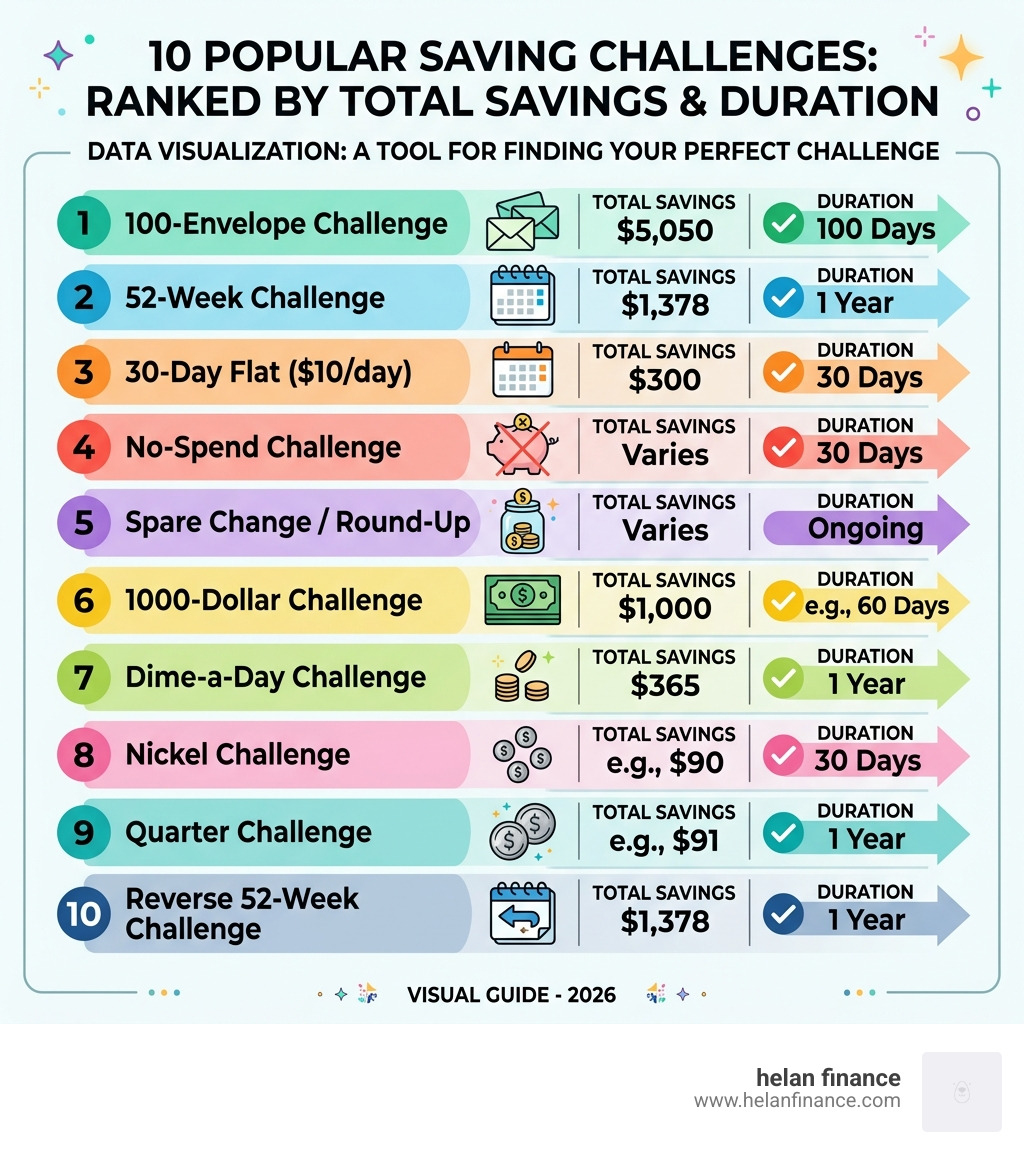
A saving challenge is a structured, short-term method for building a savings habit — and there are many types to choose from. Here are the most popular options at a glance:
| Challenge | Duration | Total Savings |
|---|---|---|
| 100-Envelope Challenge | 100 days | $5,050 |
| 52-Week Challenge | 1 year | $1,378 |
| 30-Day Flat ($10/day) | 30 days | $300 |
| No-Spend Challenge | 30 days | Varies |
| Spare Change / Round-Up | Ongoing | Varies |
Most people don’t struggle with wanting to save. They struggle with staying consistent.
Life gets busy. Motivation fades. And when savings feel like a distant, abstract goal, it’s easy to give up before you see any real progress.
That’s exactly where saving challenges help. Instead of focusing on a big number, they break saving into small, repeatable actions — daily or weekly — that build momentum over time.
Research from behavioral finance backs this up: focusing only on a distant goal can actually reduce your chance of success. But when saving feels like a game you’re winning every day, your brain stays engaged.
Whether you have $1 or $50 to spare this week, there’s a challenge that fits your life.
What is a Saving Challenge and Why Does It Work?
At Helan Finance, we believe that financial wellness starts with a shift in perspective. A saving challenge isn’t just about the money you end up with; it’s about the psychological shift that happens during the process.
Traditional budgeting often feels like a chore—a restrictive list of “don’ts.” In contrast, a saving challenge is process-oriented. It focuses on the “do.” By turning financial goals into a game, you trigger “dopamine hits” every time you check off a day or fill an envelope. This gamification retrains your brain to associate saving with achievement rather than deprivation.
Behavioral finance suggests that we are more likely to stick to habits that provide immediate feedback. When you see a physical binder filling up with cash or a digital tracker climbing higher, you are overcoming the common hurdle of inconsistency. This is one of the best save money habits you probably havent tried yet because it builds financial resilience through repetition.
Instead of an overwhelming goal like “save for a house,” you focus on “save $5 today.” This small, daily action compounds, helping you build the discipline needed for long-term security.
Top 10 Saving Challenges to Try in 2026
As we move through April 2026, there has never been a better time to audit your spending and inject some fun into your finances. Whether you are looking for a quick reset or a year-long transformation, these challenges offer something for everyone.

Before we dive into the specific methods, it is important to remember that the best saving challenge is the one you actually finish. You can customize any of these to fit your income. For example, if a “No-Spend Month” feels too aggressive, try “No-Spend Weekends” to start.
| Challenge Type | Best For | Potential Savings |
|---|---|---|
| Weather Wednesday | Nature lovers | Varies by climate |
| 30-Day Rule | Impulse spenders | Hundreds in avoided costs |
| 1p Challenge | Beginners | $667.95 |
| $10K Challenge | High earners | $10,000 |
The $5,050 100-Envelope Saving Challenge
This is arguably the most viral saving challenge of the last few years. It uses a method called “cash stuffing” and relies on physical trackers to keep you motivated.
How it works: You take 100 envelopes and label them 1 through 100. Every day (or whenever you have extra cash), you pick an envelope and put the dollar amount written on the front inside. If you pick envelope #42, you put in $42. If you pick #7, you put in $7.
The result: Once all 100 envelopes are filled, you will have exactly $5,050.
The beauty of this challenge lies in its tactile nature. Using a dedicated 100-envelope binder allows you to visualize your progress. Many people find that physically tucking cash into a pocket is far more satisfying than watching a number change on a screen. It turns an abstract financial goal into a tangible stack of success.
The Classic 52-Week Saving Challenge
If you prefer a marathon over a sprint, this is the only money-saving plan you need. It is designed to build a habit that lasts an entire year.
How it works: In week one, you save $1. In week two, you save $2. You continue this pattern, increasing the amount by $1 each week until you reach week 52, where you save $52.
The result: By the end of the year, you will have saved $1,378.
One pro tip for 2026: try the “Reverse 52-Week Challenge.” Start with $52 in week one and work your way down to $1. This is often easier because people tend to be more motivated at the start of a challenge, and it prevents the largest savings amounts from hitting during the expensive holiday season in December.
Low-Impact Options: 1p and Spare Change
Not everyone has the budget for a $50 weekly contribution, and that is perfectly okay. Micro-savings challenges focus on daily consistency and financial discipline without straining your wallet.
- The 1p Challenge: You start by saving one penny on day one, two pennies on day two, and so on. By day 365, you are saving only $3.65, but your total will be $667.95.
- The Spare Change Challenge: This is the classic “jar on the counter” method. At the end of every day, empty your pockets or purse of any loose coins.
- Round-Ups: Many modern banking tools allow you to “round up” every purchase to the nearest dollar and move that change into a dedicated savings bucket.
These challenges are excellent for beginners because they prove that you don’t need a high income to start building a safety net.
Essential Tools: Binders, Books, and Digital Trackers
To succeed in a saving challenge, you need the right tools to track your progress. In 2026, the market for these tools has exploded, offering both physical and digital options.
Physical Tools: Binders and Envelopes
Physical tools are incredibly popular for a reason: they make the money feel “real.”
- Savings Binders: These often come with pre-numbered pockets and reusable laminated trackers. You can find them on sites like Amazon or from specialized planners. Top-rated binders often feature 4.7-star ratings and thousands of monthly purchases, proving their effectiveness.
- Acrylic Boxes: Some prefer a “clear” approach where you can see the money piling up. This visual cue acts as a constant reminder of your goal.
- Printable Templates: Pinterest is a goldmine for free printable trackers. From “Christmas Doodles” to “Travel Passports,” these allow you to color in icons as you save, making the process feel like an art project.
Digital Tools and High-Yield Accounts
While cash is great for motivation, we also recommend efficient money-saving strategies for your monthly saving plan that involve digital automation.
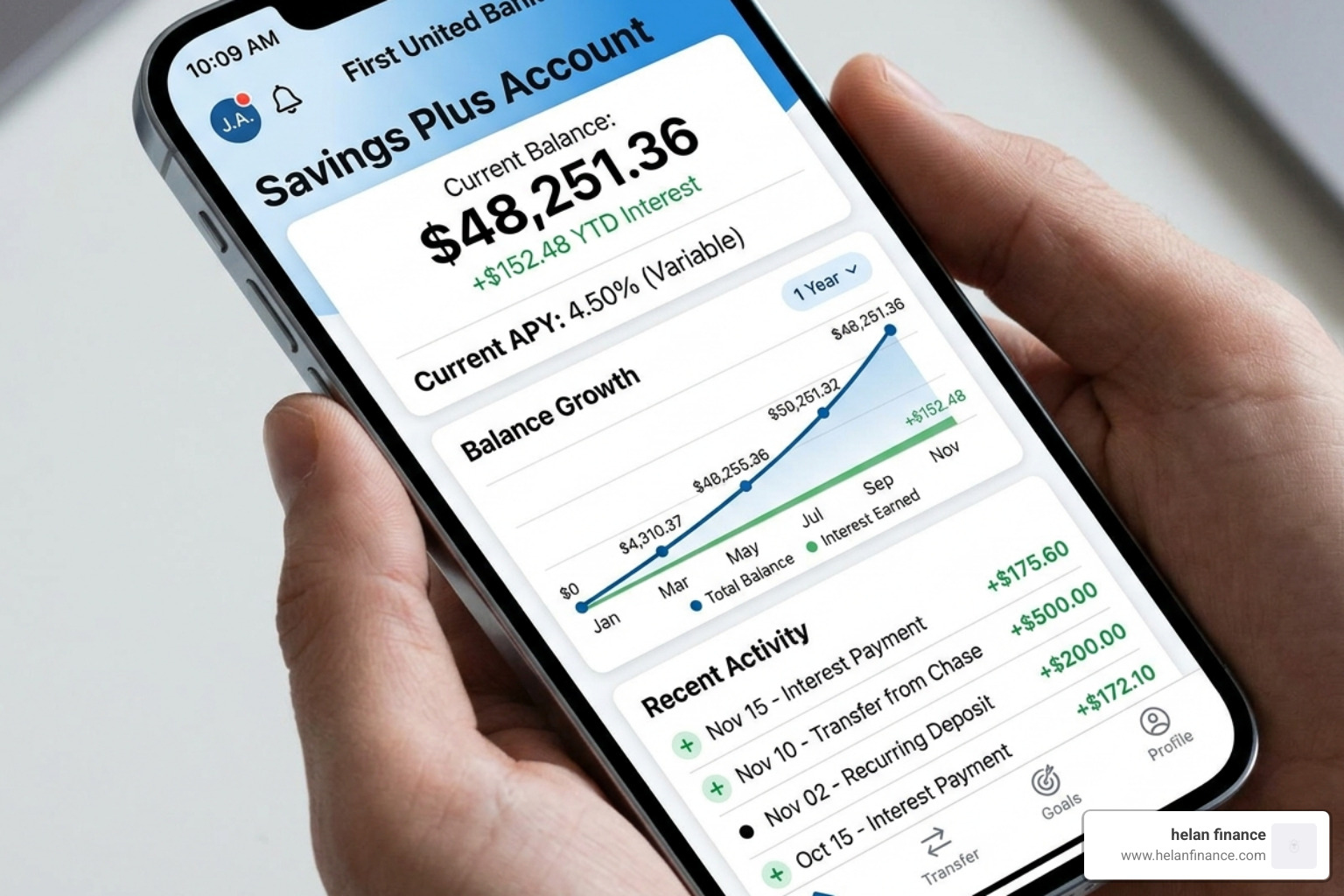
- High-Yield Savings Accounts (HYSA): In the current 2026 economy, HYSAs often offer 4-5% APY. If you are doing a long-term challenge like the 52-week version, keeping that money in an HYSA could earn you an extra $35–$50 in interest.
- Automated Transfers: Setting up a weekly transfer of $26.50 (the average of a 52-week challenge) makes the process hands-off and ensures you never “forget” to save.
How to Choose and Start Your Saving Challenge Today
With so many options, it can be hard to pick just one. Here is our step-by-step guide to choosing the right saving challenge for your lifestyle.
- Align with Your Income: Don’t commit to a $10K challenge if your budget is already tight. Start with a $500 or $1,000 goal to build confidence first.
- Define Your Goal: Are you saving for an emergency fund, a vacation, or a holiday shopping spree? Having a “why” makes it much harder to quit when things get tough.
- Choose Your Timeline: If you need quick results, a 30-day challenge is best. If you want to change your lifestyle, go for the 52-week version.
- Find an Accountability Partner: Challenges are more fun with friends. Invite a partner or family member to do the challenge with you.
To truly master the art of the save, check out our 10 tips and tricks to master money saving. One of the most common mistakes is being too rigid. If you miss a day, don’t give up! Just double up the next day or extend your timeline. The goal is progress, not perfection.
Frequently Asked Questions about Saving Challenges
How much can I realistically save with a 100-envelope challenge?
If you complete the standard 1-100 version, you will save exactly $5,050. However, this can be adapted. Some people use 50 envelopes to save $1,275, while others use higher denominations to reach $10,000. The timeframe is usually 100 days, but many people spread it out over a year to make the larger numbers more manageable.
Are physical binders better than digital apps for saving?
It depends on your personality! Binders provide tactile feedback and visual motivation that apps sometimes lack. They are perfect for “cash stuffing” enthusiasts. Digital apps, however, offer automation and the security of FDIC-insured bank accounts. Many modern savers use a hybrid approach: they use a physical tracker to stay motivated but keep the actual funds in a high-yield digital account.
What is the best saving challenge for low-income earners?
We highly recommend the 1p Challenge or the Spare Change Challenge. Another great option is the $5 Daily Flat Challenge, where you simply commit to saving $5 every single day. If $5 is too much, even $1 a day results in $365 by the end of the year. The key is to choose an increment that doesn’t strain your ability to pay for essentials like rent and groceries.
Conclusion
At Helan Finance, our mission is to provide simplified financial planning tools that actually work for real people. A saving challenge is more than just a way to stack cash—it is a gateway to a healthier relationship with your money. By turning a daunting task into an engaging exercise, you can build the habits necessary for long-term security and financial wellness.
Whether you start with a single penny or a 100-envelope binder, the most important step is the one you take today. Consistency is the secret ingredient to wealth, and these challenges are designed to help you find it.
Ready to take control of your financial future? Start your journey with Helan Finance and discover how easy and efficient financial planning can be.

