
Stop Stressing and Start Tracking with These Net Worth Motivation Hacks
Why Staying Motivated to Track Your Net Worth Actually Changes Everything
Net worth motivation tips are exactly what most busy people need — but rarely get — when they’re trying to build real financial security without burning out.
Here are the most effective ways to stay motivated while tracking your net worth:
- Set a specific number goal — like reaching $50,000 net worth by a set date
- Track monthly, not daily — reduces anxiety and shows meaningful progress
- Celebrate small wins — paying off a card or hitting a savings milestone counts
- Connect your “why” — freedom, security, or options, not just a number
- Automate what you can — less willpower needed, more consistency guaranteed
- Benchmark yourself — compare your progress to age-based averages, not others’ highlight reels
- Shift your mindset — viewing market dips as buying opportunities, not disasters
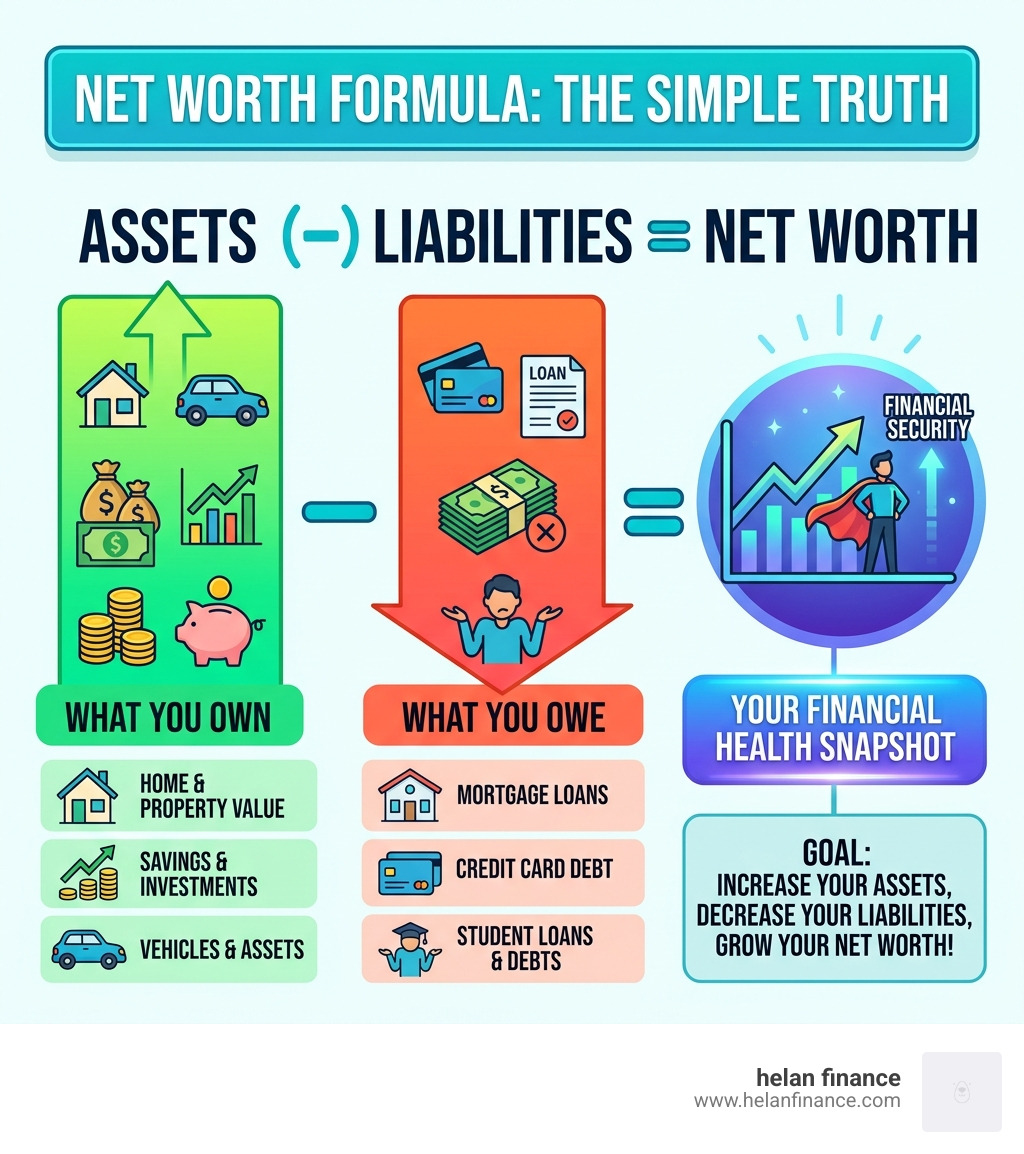
Here’s the simple truth: net worth = what you own minus what you owe. That’s it. Yet most people never track it — and that’s exactly why they feel stuck.
Money is a topic that creates anxiety for a huge number of people. It’s tied up in self-worth, fear, and years of conditioning. Some people have even been laughed at for asking for a higher salary — which says more about cultural attitudes toward money than about their actual value.
But here’s what the data shows: according to a 2022 Charles Schwab survey, feeling financially comfortable starts at around $774,000 in net worth — and feeling wealthy starts at $2.2 million. Meanwhile, the Federal Reserve puts the average net worth for Americans under 35 at just $76,340.
The gap between where most people are and where they want to be is real. But it’s closeable — if you stay motivated enough to keep tracking and taking action.
This article breaks down exactly how to do that.
Why Your Net Worth is the Ultimate Success Metric
When we talk about financial success, we often focus on income—the “top line” number on your paycheck. But income is just a temporary flow of cash. Net worth is your financial foundation. It is the most accurate snapshot of your financial health because it accounts for everything you’ve managed to keep, not just what you’ve earned.
Understanding your net worth is vital because it provides a clear-eyed view of your progress. If your income goes up but your debt increases faster, your net worth actually drops. This is why many people who earn six figures still feel “broke.” By focusing on net worth, we align our actions with long-term stability rather than short-term spending.
To put things in perspective, let’s look at some benchmarks. As of April 2026, we are looking back at data showing that the average American adult under 35 has a net worth of approximately $76,340. However, the Charles Schwab 2022 survey highlighted that it takes about $2.2 million to be considered “wealthy” by modern standards. While that number might seem intimidating, wealth building is a marathon.
Whether you are starting with a negative net worth due to student loans or looking to optimize an existing portfolio, Financial Planning 101 teaches us that the first step is simply knowing where you stand. You can learn more about the deep psychological shifts required for this journey in this guide on How to Build Wealth: From Money Mindset to Financial Dominance | SUCCESS.
Practical Net Worth Motivation Tips to Fuel Your Growth
Building wealth from scratch requires more than just a calculator; it requires a psychological shift. One of the best net worth motivation tips is to connect your financial goals to your personal self-worth. Historically, many of us have been conditioned to stay in our lane or avoid “rocking the boat” when it comes to money. We’ve seen people labeled as “cocky” just for knowing their value and asking for a higher salary.
We need to break that cycle. Increasing your self-worth is often the catalyst for increasing your net worth. When you believe you deserve more, you are more likely to pursue career advancement, negotiate better rates, or start that side hustle you’ve been dreaming about.

To stay motivated, we recommend using “leading indicators.” Instead of just staring at a final goal like “I want $1 million,” focus on the actions that lead there. For example:
- SMART Goals: Instead of “save more,” try “automate $500 into my brokerage account by the 1st of every month.”
- Abundance Mindset: View a market downturn not as a loss of wealth, but as a “sale” on future assets.
- Small Wins: Did you pay off a $500 credit card? Celebrate it! That is a permanent increase in your net worth.
For more on developing these routines, check out Personal Money Habits for a Wealthier Mindset and learn How to Set Financial Goals Without the Headache. If you’re looking for aggressive moves to move the needle, these Ten Moves That Will Skyrocket Your Net Worth are a great place to start.
Using Net Worth Motivation Tips to Overcome Lifestyle Creep
Lifestyle creep is the silent killer of wealth. It happens when your spending rises at the same rate as (or faster than) your income. You get a raise, and suddenly you “need” a more expensive car or a bigger apartment.
To combat this, we advocate for the 50-30-20 rule: 50% of your income goes to needs, 30% to wants, and 20% directly to savings and debt repayment. Living below your means doesn’t mean living a life of deprivation; it means being intentional. For instance, did you know that luxury cars can lose 60% of their value in just five years? Millionaires often drive reliable, used vehicles and invest the difference into appreciating assets.
By establishing Healthy Spending Habits: Stop the Bleeding and Start Building Wealth, you ensure that every pay raise actually boosts your net worth instead of just funding a flashier lifestyle.
Networking and Relationships as Net Worth Motivation Tips
We’ve all heard that “your network is your net worth,” and it’s true. Relationships are a form of “intellectual and social capital.” Surrounding yourself with people who are also focused on growth provides a natural motivational boost.
Focus on “perennial” relationships—those long-term friendships and professional mentorships that provide value over decades, rather than “annual” relationships that fade when the season changes. Seeking professional advice from accountants or financial planners is also a key move; they can often spot tax breaks or investment opportunities you might miss.
Don’t leave your progress to chance. Stop Guessing and Start Tracking Your Wealth-Building Habits to see how your social and professional circles influence your financial trajectory.
The Math of Wealth: Debt Destruction and Asset Building
To skyrocket your net worth, you must attack the “liabilities” side of the equation while feeding the “assets” side. Debt is a weight on your financial wings. According to the CFPB, the average credit card holder paid over $250 in excess interest charges in 2023 alone. That’s money that could have been compounding in an investment account!

We suggest two primary methods for debt destruction:
- The Debt Snowball: Pay off the smallest debts first to gain psychological momentum.
- The Debt Avalanche: Pay off the highest-interest debt first to save the most money mathematically.
As you clear debt, redirect those funds into assets. Maximize your retirement contributions, especially if your employer offers a match—that is essentially a 100% return on your money instantly. Also, don’t overlook the power of an emergency fund. Having 3-6 months of expenses in a high-yield savings account prevents you from falling back into debt when life throws a curveball.
To see these strategies in action, check out Boost Your Net Worth With These 6 Powerful Strategies or watch Every Way To Grow Your Net Worth FAST in 2026 – YouTube. For a deep dive into becoming debt-free, read The Ultimate Guide to Becoming Debt-Free in One Year and The Ultimate Guide to Retirement Planning.
Calculating and Tracking Your Net Worth Motivation Tips Progress
Consistency is the key to motivation. If you don’t track it, you can’t improve it. We recommend a monthly net worth review. This allows you to see the “big picture” and stay motivated even when a single month’s budget goes off the rails.
| Liquid Assets | Common Liabilities |
|---|---|
| Checking/Savings Accounts | Credit Card Balances |
| Brokerage Accounts | Student Loans |
| Retirement Accounts (401k, IRA) | Auto Loans |
| Real Estate Equity | Personal Loans |
| Cash Value Life Insurance | Mortgages |
Automation is your best friend here. Set up automatic transfers so that your “wealth building” happens before you even have a chance to spend the money. You can even Excel Your Way to Wealth with the Savings Plan Formula to visualize your future growth.
Frequently Asked Questions about Net Worth
How do I calculate my current net worth from scratch?
Calculating your net worth is simpler than it sounds. First, list everything you own (assets): the balance in your bank accounts, the value of your car, your retirement accounts, and any home equity. Next, list everything you owe (liabilities): credit card debt, student loans, and mortgages. Subtract your total liabilities from your total assets. The resulting number is your net worth. If it’s negative, don’t panic! Many successful people start in the red. The goal is to move that number upward every single month. Start with these 10 Personal Finance Tips to Start Saving Today.
What are the most common mistakes that derail net worth growth?
The biggest “wealth killers” are lifestyle inflation and high-interest debt. Many Americans also overspend on recurring costs without realizing it—for example, the average family overpays by $417 a year on car insurance simply because they haven’t shopped around. Missing out on an employer’s 401(k) match is another common error; it’s literally leaving free money on the table. Finally, emotional spending can derail even the best plans. Learn How to Build Better Money Habits Without Losing Your Mind to stay on track.
How much should I have in an emergency fund to protect my net worth?
Most experts recommend keeping three to six months of essential living expenses in a liquid, high-yield savings account. This fund acts as insurance for your net worth. Without it, a single medical bill or car repair could force you to take on high-interest credit card debt, which eats away at your assets. Protecting what you’ve built is just as important as growing it. If you’re struggling to find the cash to start, here is How to Find the Motivation to Finally Kill Your Debt.
Conclusion
Building a high net worth isn’t about greed; it’s about freedom. It’s about having the ability to make choices—whether that’s retiring early, starting a business, or supporting a cause you believe in. By using these net worth motivation tips, you can turn a complex financial goal into a series of manageable, even enjoyable, daily habits.
At Helan Finance, we believe that financial planning should be easy and efficient. It’s not about how much you make; it’s about how much you keep and how hard that money works for you. Stay consistent, keep tracking, and remember that every small win is a step toward your ultimate financial dominance.
Start your simplified financial planning journey today

