
Debt-Free Destiny: A Roadmap for Planning to Pay Off Debt
Why Planning to Pay Off Debt Changes Everything
Planning to pay off debt is one of the most impactful financial decisions you can make. Here’s the fastest way to get started:
Quick-Start Debt Payoff Plan:
- List every debt — creditor, balance, interest rate, minimum payment
- Stop adding new debt — freeze or put away credit cards
- Build a small emergency fund — $1,000 to start
- Choose a payoff strategy — snowball (smallest balance first) or avalanche (highest interest first)
- Make minimums on all debts, then throw every extra dollar at your target debt
- Redirect freed-up payments to the next debt as each one is eliminated
Most people know they should pay off their debt. But knowing and doing are two very different things.
The numbers tell a sobering story. Total U.S. household debt hit $17.94 trillion in Q3 2024. The average American carries roughly $21,800 in non-mortgage debt. And 77% of Americans say money is their number one source of stress — with debt sitting at the top of that list.
Here’s what’s striking: it’s rarely about income. People earning $35,000 a year successfully eliminate $25,000 in debt within three years. Meanwhile, people earning $90,000 a year stay trapped in $15,000 of credit card debt for a decade. The difference isn’t how much they earn — it’s whether they have a clear plan.
The math gets brutal without one. A $15,000 credit card balance at 22% APR, paid with minimums only, takes 32 years to clear and costs nearly $25,000 in interest alone. The same balance paid at $400/month? Gone in 4.3 years, with under $6,000 in interest.
That gap — almost $19,000 and 27 years — is what a plan is worth.
This guide walks you through every step: building your debt inventory, picking the right payoff strategy, creating a budget that actually works, and staying on track when motivation fades.
The First Steps in Planning to Pay Off Debt
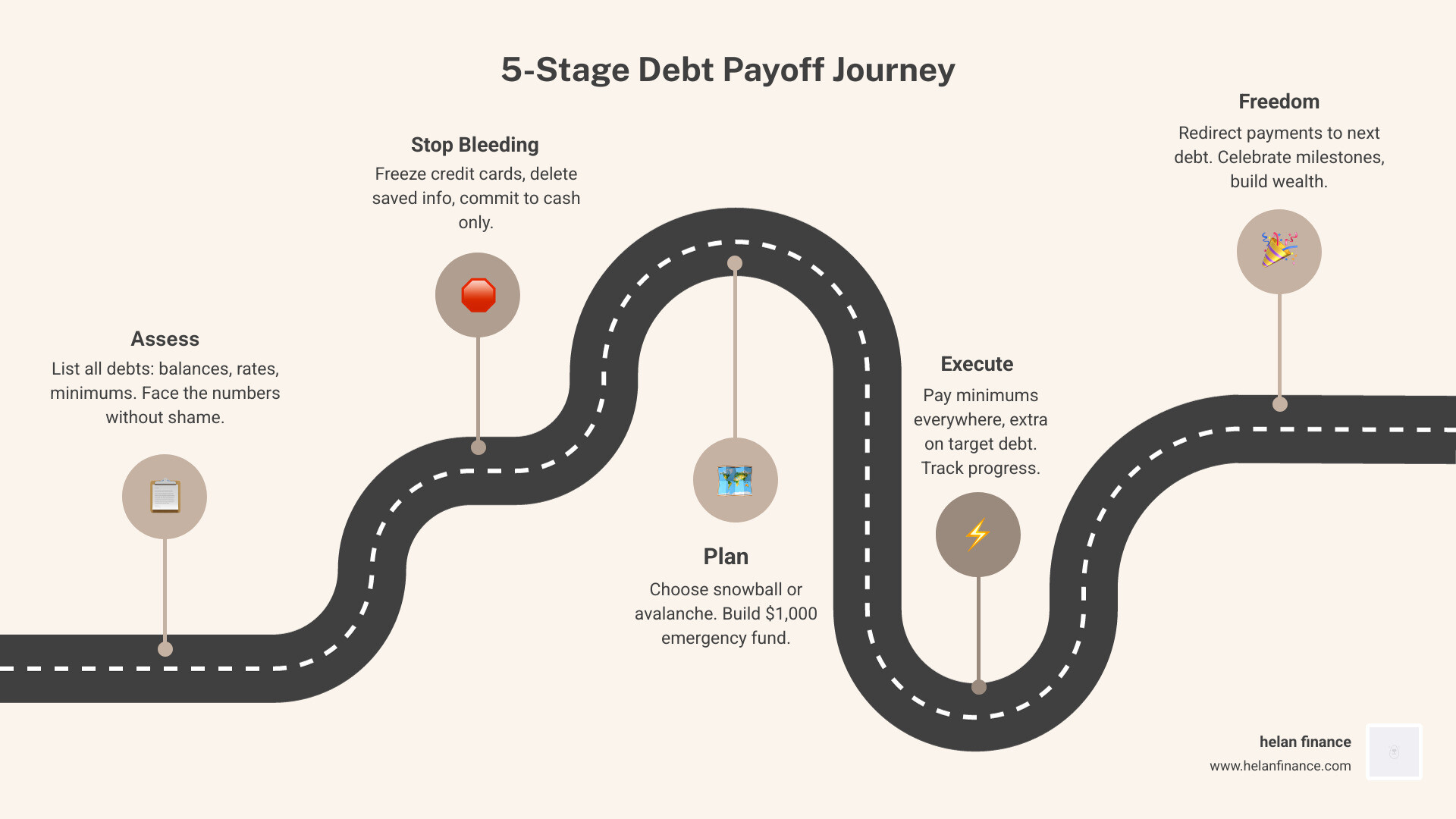
When we decide to face our finances, the first instinct is often to throw money at the biggest bill we see. However, jumping in without a map is how many of us end up back at square one. The very first step when planning to pay off debt is to stop the bleeding. You cannot put out a fire while you’re still pouring gasoline on it. This means you must stop borrowing immediately. Put the credit cards in a drawer, delete saved payment info from your favorite shopping sites, and commit to using only the cash you have on hand.
Next, we need a clear-eyed assessment. This involves gathering every bill, login, and statement you own. We often fall into a “Debt-Shame-Avoidance Cycle”—where the debt causes shame, so we avoid looking at it, which causes it to grow, leading to more shame. Breaking this cycle requires naming your debt without judgment. Debt doesn’t make you irresponsible; it’s simply a financial state that requires a strategy.
According to the Three Steps to Managing and Getting Out of Debt – DFPI, effective management begins with prevention, moves to strategy, and ends with consumer protection. We recommend checking out our Detailed Guide To Debt Management to help you understand the foundational habits needed to keep your plan from crumbling.

Creating a Complete Debt Inventory
You can’t defeat an enemy you haven’t fully scouted. A complete debt inventory is more than just a list of names; it is a spreadsheet of facts. For every single account, you need to record:
- The Creditor Name
- The Total Outstanding Balance
- The Interest Rate (APR)
- The Minimum Monthly Payment
- The Payment Due Date
If you aren’t sure where to find this information, start by pulling your credit report. This will show you accounts you might have forgotten about, such as old medical bills or store cards. To make this process easier, you can use a tool like the Debt Payoff Planner – The #1 App to Plan and Track Your Payoff to keep all your data in one accessible place.
Prioritizing Your Debts: Secured vs. Unsecured
Not all debts are created equal. When planning to pay off debt, we must distinguish between secured and unsecured obligations.
- Secured Debt: These are backed by collateral. If you don’t pay your mortgage, the bank takes the house. If you don’t pay your car loan, the repo man comes for the keys. These are “must-pay” items to keep your life functioning.
- Unsecured Debt: These include credit cards, personal loans, and medical bills. While they can damage your credit and lead to lawsuits, there is no physical asset for the lender to seize immediately.
Special attention should be paid to medical debt, which often has different reporting rules and negotiation potential. For more on this, see A Guide To Reducing Medical Debt And Finding Financial Relief. Generally, we prioritize keeping our secured debts current while aggressively attacking high-interest unsecured debt.
Choosing Your Strategy: Snowball vs. Avalanche
Once you have your inventory, it’s time to pick a “battle formation.” There are two primary schools of thought here, and the “best” one is simply the one you will actually stick with for the next year or two.
| Feature | Debt Snowball | Debt Avalanche |
|---|---|---|
| Primary Focus | Smallest balance first | Highest interest rate first |
| Main Benefit | Psychological wins & motivation | Mathematical interest savings |
| Best For | People who need quick results | People driven by logic and math |
| Speed | Feels faster initially | Is mathematically faster overall |
We’ve seen both work wonders. If you want to dive deeper into the mechanics of the first option, check out Building A Debt Snowball Plan That Actually Works.
The Debt Snowball Method for Quick Wins
The Debt Snowball method is all about behavioral finance. It ignores the interest rates and focuses on the balances. You list your debts from smallest to largest. You pay the minimum on everything except the smallest debt, which you attack with every spare cent you have.
When that $300 store card is gone, you feel a surge of victory. You then take that entire payment and “roll” it into the next smallest debt. This creates momentum. By the time you reach your largest debts, your “snowball” of available cash is massive. This method is perfect if you’ve struggled with staying motivated in the past. If you’re feeling stuck, read How To Find The Motivation To Finally Kill Your Debt.
The Debt Avalanche Method for Interest Savings
If you can’t stand the thought of giving the banks a single extra penny in interest, the Avalanche is for you. Here, you list debts from the highest interest rate to the lowest. By attacking the 29% APR credit card first, you save the most money over the long haul.
Mathematically, this is the superior method. It results in the least amount of total interest paid and a shorter overall payoff time—if you have the discipline to stay the course without the “quick wins” of the snowball. For those aiming for a rapid exit from debt, The Ultimate Guide To Becoming Debt Free In One Year provides an aggressive roadmap using this mathematical approach.
Building a Sustainable Budget and Emergency Buffer
A debt plan without a budget is just a wish. To succeed, we must “force a surplus”—meaning we intentionally create a gap between what we earn and what we spend. Most people find between $300 and $800 in “hidden” spending once they actually track their cash flow for 60 days.
We recommend the 50/30/20 rule as a starting point: 50% of your income for needs, 30% for wants, and 20% for debt and savings. However, when you are in “aggressive payoff mode,” you might want to flip those numbers, shrinking the “wants” to 10% and throwing 40% at your debt. Daily habits, like those found in Accelerate Your Debt Reduction Plan With These Daily Habits, are what keep this budget sustainable over months of effort.
Why an Emergency Fund is Essential for Planning to Pay Off Debt
It might seem counterintuitive to put money into a savings account when you have credit cards charging 20% interest. But an emergency fund is actually a debt-prevention tool. Without a “starter buffer” of $1,000 to $2,000, the first flat tire or broken tooth will go right back onto the credit card, shattering your momentum and morale.
Having this small cushion ensures that when life happens (and it will), you stay in control. It provides the financial stability needed to transition from “survival mode” to “aggressive payoff mode.” For a deeper look at why this safety net is your best friend, see Debt Free Living 101 And Why Your Wallet Will Thank You.
Advanced Tactics: Consolidation, Negotiation, and Relief
If your interest rates are sky-high, you can use advanced tactics to lower the cost of your debt. This doesn’t make the debt go away, but it makes your payments more effective by ensuring more of your money goes toward the principal balance rather than interest.
Understanding Debt Consolidation and Balance Transfers
Debt consolidation involves taking out one new loan to pay off several smaller ones. This simplifies your life into one monthly payment and, ideally, secures a lower interest rate.
- Balance Transfer Cards: These often offer 0% APR for 12 to 21 months. If you have a good credit score, moving high-interest debt here can save you thousands. Just watch out for the 3-5% transfer fees.
- Personal Loans: These can consolidate credit cards into a fixed-rate loan with a clear end date (usually 3 to 5 years).
Be careful: consolidation only works if you stop using the credit cards you just paid off. If you consolidate and then run the balances back up, you’ve doubled your trouble. Learn more about the balance between debt and future planning in How To Refinance Debt And Save For Retirement.
Negotiating with Creditors and Debt Management Plans
You have more power than you think. Many credit card companies have “hardship programs” that can lower your interest rate if you ask.
- Debt Management Plans (DMPs): Offered by nonprofit credit counseling agencies, these programs negotiate lower rates on your behalf. You make one payment to the agency, and they distribute it to your creditors. These typically take 3 to 5 years.
- Debt Settlement: This is more drastic. You (or a company) negotiate to pay a lump sum that is less than what you owe. Warning: This usually requires you to stop making payments, which trashes your credit score and can lead to lawsuits. For-profit debt settlement companies often charge 15-20% of the total debt as a fee.
Staying Motivated and Avoiding Common Pitfalls
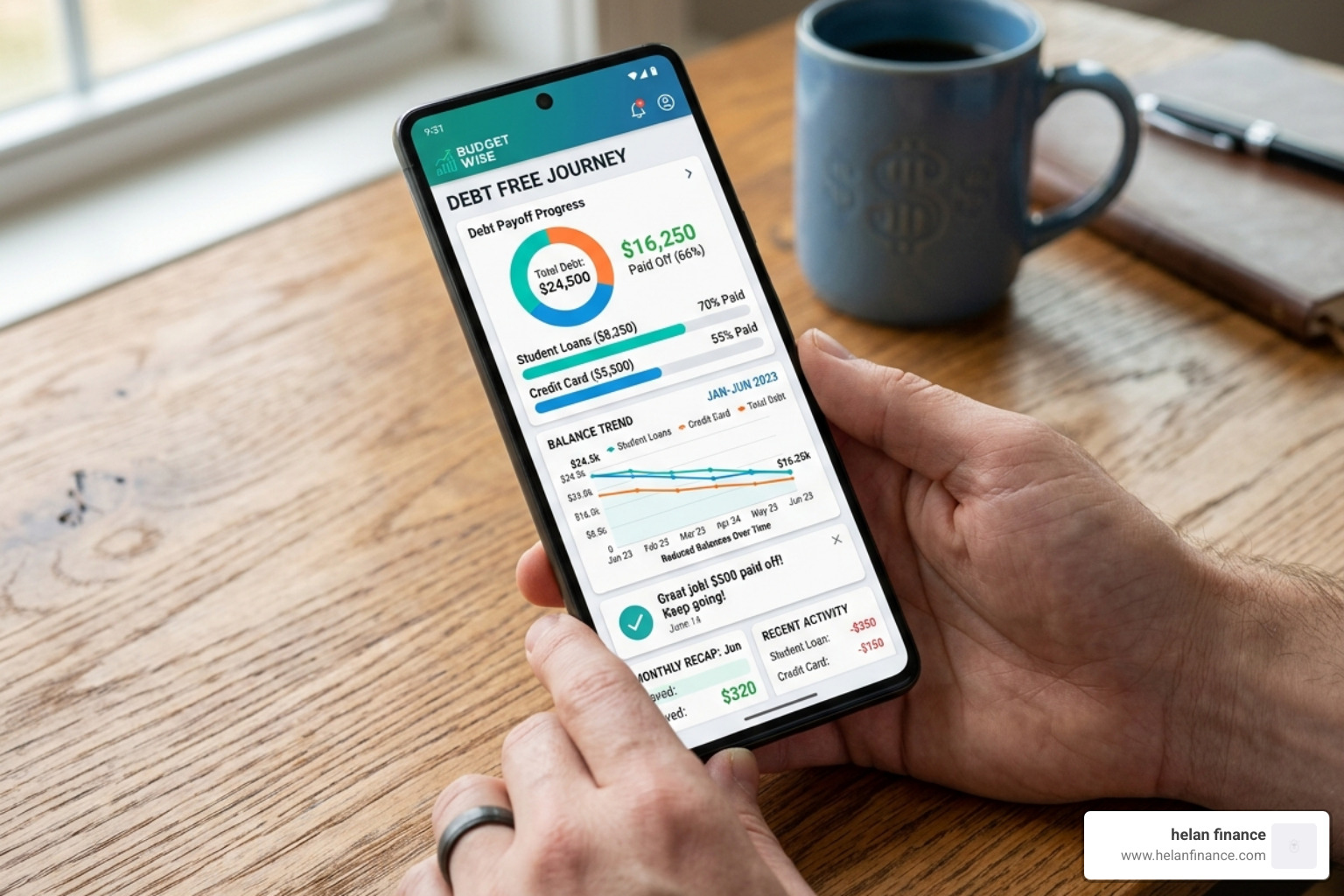
The “long middle” is the hardest part of planning to pay off debt. The initial excitement has worn off, and the finish line is still months away. To stay on track, use visual trackers. Whether it’s a “debt thermometer” on your fridge or a digital chart, seeing the line move downward provides a hit of dopamine that keeps you going.
Don’t forget to celebrate milestones! When you pay off a specific card, treat yourself to a small, budget-friendly reward. This prevents “frugal fatigue” and makes the process feel like a journey rather than a punishment. If you need a boost, our How To Keep Your Eyes On The Prize With This Debt Reduction Motivation Guide is packed with tips to keep your head in the game.
Common Mistakes in Planning to Pay Off Debt
Avoid these traps that keep people stuck in the debt cycle:
- Making Random Payments: Throwing extra money at whatever bill looks the scariest that month. Stick to your snowball or avalanche!
- Ignoring the APR: Paying extra on a 4% car loan while a 24% credit card sits untouched.
- No Budget Surprises: Not accounting for annual expenses (like car registration), which then “forces” you to use credit again.
- Lifestyle Creep: Using a raise or tax refund for a vacation instead of your debt target.
- Decision Fatigue: Trying to decide every month where the extra money goes. Automate your extra payments so the decision is made once and executed forever.
When to Seek Professional Help or Bankruptcy
Sometimes, the math simply doesn’t work. If your total unsecured debt is more than 50% of your gross annual income, or if you couldn’t pay it off within five years even with extreme cuts, it may be time for professional help.
- Credit Counseling: Nonprofits can help you build a budget and see if a DMP is right for you.
- Statute of Limitations: Debt doesn’t usually go away, but collectors have a limited time to sue you. In 2026, it’s vital to know your rights regarding “time-barred” debts.
- Bankruptcy: This is the “nuclear option” and should be a last resort.
- Chapter 7: Liquidates assets to wipe out most unsecured debts. It stays on your credit report for 10 years.
- Chapter 13: A court-mandated 3-to-5-year repayment plan. It stays on your report for 7 years.
Before making a drastic move, use a tool like the Meet a Debt Payoff Goal Calculator – UMCU to see if a simple adjustment to your monthly payment could fix the problem without legal intervention.
Frequently Asked Questions about Debt Payoff
How much extra should I pay monthly to pay off debt faster?
As much as you possibly can. Even a small amount makes a massive difference. For example, adding just $50 to $100 extra per month to a high-interest credit card can cut years off the repayment timeline and save you thousands in interest. We suggest finding $300 to $800 in your monthly budget by cutting non-essential subscriptions and “convenience” spending.
Should I prioritize saving or paying off debt first?
The “starter” emergency fund of $1,000 to $2,000 comes first. Once that is in place, prioritize high-interest debt (anything over 7-8% APR). Once the high-interest debt is gone, you can balance paying off lower-interest debt (like a mortgage) with investing for retirement, especially if your employer offers a 401(k) match.
What are the best resources and calculators to track my progress?
Aside from the calculators mentioned in this guide, look for zero-based budgeting apps and visual debt trackers. The key is to find a tool that makes the “math” visible so you can see your progress in real-time.
Conclusion
At Helan Finance, we believe that planning to pay off debt isn’t just about spreadsheets—it’s about reclaiming your future. Debt is a drain on your mental health and your potential wealth. By following a structured roadmap, you move from the stress of “survival mode” to the freedom of “aggressive wealth building.”
Once the debt is gone, the journey doesn’t end; it simply changes direction. You’ll take those same habits of discipline and budgeting and apply them to building your net worth. To ensure you stay debt-free forever, read our guide on How To Maintain Your Financial Health After Paying Off Debt.
Your debt-free destiny is waiting. It doesn’t require a six-figure salary; it just requires a plan and the courage to take the first step. Start your journey to debt freedom today with Helan Finance.

