
How to Master Your Personal Income Routine Planner
Why You Need a Simplified Income Planning Guide (And Where to Start)
A simplified income planning guide gives you a clear, step-by-step system to manage your money — without needing a finance degree or hours of free time.
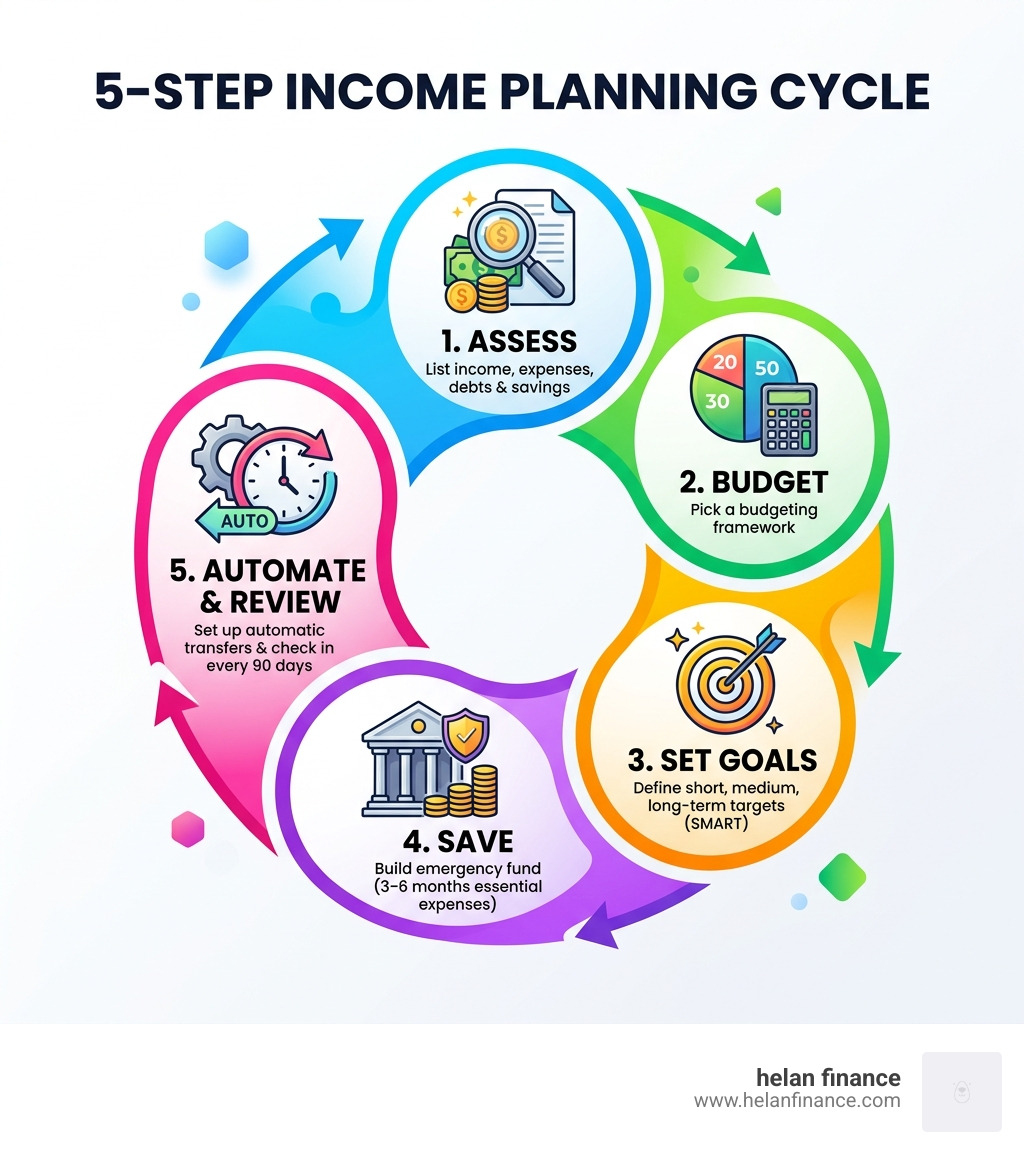
Here’s the core process at a glance:
- Assess your situation — List your income, expenses, debts, and savings
- Pick a budgeting framework — The 50/30/20 rule or Fidelity’s 60/30/10+15 guideline are great starting points
- Set SMART goals — Short-term, medium-term, and long-term targets with real deadlines
- Build your safety net — Aim for 3–6 months of essential expenses in an emergency fund
- Automate and review — Set up automatic transfers, then check in every 90 days
Most people feel like their money disappears before the month ends. Sound familiar?
The problem usually isn’t income. It’s the lack of a system.
Financial planning isn’t just for high earners or retirees. It’s a practical tool for anyone who wants to stop guessing and start making intentional decisions with their money. As one widely shared idea in personal finance puts it: a good plan isn’t about restriction — it’s about freedom.
The good news? You don’t need to overhaul your entire financial life in a weekend. Small, consistent steps — like automating a $25 weekly transfer or categorizing your spending for the first time — build real momentum over time.
This guide walks you through exactly how to do that, one clear step at a time.
Assessing Your Starting Point: The Simplified Income Planning Guide
Before we can map out where you’re going, we need to know exactly where you’re standing. In April 2026, the financial landscape is more digital than ever, but the fundamentals of Financial Planning 101 remain the same: you cannot manage what you do not measure.
Calculate Your Net Worth
Think of your net worth as a “financial health snapshot.” It is the total of everything you own (assets) minus everything you owe (liabilities).
- Assets: Cash in checking/savings, retirement accounts, home value, and vehicles.
- Liabilities: Credit card balances, student loans, mortgages, and car notes.
Subtracting your debts from your assets gives you a baseline. Don’t be discouraged if the number is lower than you’d like; the goal of this simplified income planning guide is to help you grow that number month by month.
Track Your Income and Expenses
We recommend tracking every cent that enters and leaves your accounts for at least 30 days. Most of us have “phantom expenses”—those $5 subscriptions or daily convenience purchases—that quietly drain our progress.
- Income Sources: List your take-home pay (after taxes), side hustle earnings, and any passive income like dividends or rental checks.
- Expense Categorization: Group your spending into “Must-Haves” (rent, groceries, utilities) and “Nice-to-Haves” (dining out, streaming services).
Understanding these habits early is one of the most vital 8 Financial Tips For Young Adults To Start Winning Early because it identifies exactly how much “gap” you have to work with for savings and debt repayment.

Building Your Routine with Proven Budgeting Frameworks
Once you have your data, you need a framework to organize it. At Helan Finance, we believe in using routines that reduce decision fatigue. You don’t need to track every penny to the grave; you just need a system that works on autopilot.
The 50/30/20 Rule
This is the gold standard for beginners. It divides your after-tax income into three simple buckets:
- 50% for Essentials: Housing, food, utilities, and minimum debt payments.
- 30% for Discretionary: Hobbies, travel, and “fun” money.
- 20% for Savings and Extra Debt Repayment: This is where you build wealth.
Fidelity’s 60/30/10+15 Guideline
For those looking for a more nuanced approach in 2026, this framework separates retirement from the daily budget:
- 60% for Essentials: All must-pay bills.
- 30% for Nice-to-Haves: Lifestyle choices.
- 10% for Near-Term Goals: Emergency savings or a down payment.
- +15% Pre-Tax for Retirement: Fidelity recommends saving 15% of your pre-tax income to maintain your lifestyle in the future.
Zero-Based Budgeting
If you want total control, try giving every dollar a job. This is the One Simple Way To Create Monthly Budget where your income minus your expenses equals exactly zero. If you have $100 left at the end of the month, you “spend” it on your savings or debt. You can learn How To Zero Based Budget In 5 Easy Steps to ensure no dollar goes wasted.
Comparison Table: 50/30/20 vs. 60/30/10+15
| Category | 50/30/20 Rule | 60/30/10+15 Framework |
|---|---|---|
| Essentials | 50% of take-home pay | 60% of take-home pay |
| Wants/Lifestyle | 30% of take-home pay | 30% of take-home pay |
| Short-term Savings | Included in 20% bucket | 10% of take-home pay |
| Retirement | Included in 20% bucket | 15% of pre-tax income |
| Best For | Simplicity & beginners | Long-term stability & growth |
Setting SMART Goals for Your Simplified Income Planning Guide
Vague goals like “I want to save money” usually fail. To succeed, your goals must be Specific, Measurable, Achievable, Relevant, and Time-bound (SMART).
- Short-term: “Save $1,200 for a vacation in 6 months.”
- Medium-term: “Build a $10,000 car down payment in 2 years.”
- Long-term: “Invest enough to retire by age 65.”
Learning How To Set Financial Goals Without The Headache involves breaking these big numbers into monthly bite-sized tasks.
Automating Your Simplified Income Planning Guide Routine
Automation is the “secret sauce” of financial peace. If you have to think about saving, you probably won’t do it.
- Split Your Direct Deposit: Send 10-20% of your paycheck directly to a savings account before it ever hits your checking.
- Schedule Payday Transfers: Set up an automatic move from checking to your brokerage or high-yield savings account on the day you get paid.
- Use Tools: Leverage apps or a Budget Planner 101 to track your progress. You can even use 10 Insanely Simple Budget Template Tricks to make your spreadsheets do the heavy lifting for you.
Strengthening Your Foundation: Savings and Debt Strategy
A plan is only as good as its ability to survive a crisis. Without a safety net, one flat tire or medical bill can send you spiraling back into high-interest debt.
The Emergency Fund
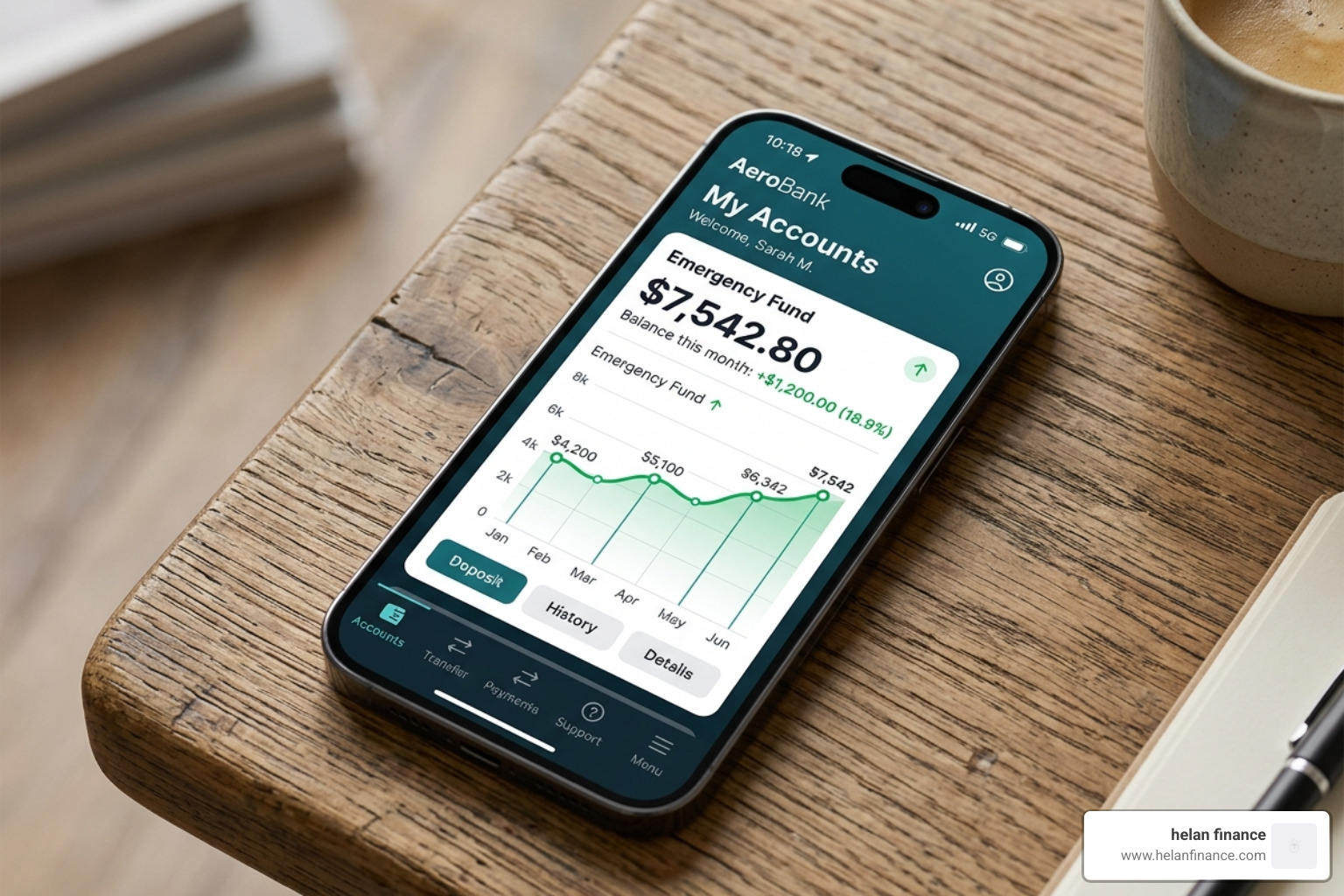
Financial experts recommend keeping 3–6 months of essential living expenses in a liquid, accessible account.
- Where to keep it: A High-Yield Savings Account (HYSA). These accounts currently offer much better rates than standard big-bank checking accounts while keeping your money safe.
- The Mini-Emergency Fund: If 6 months of expenses feels daunting, start with $1,000 or one month of essentials. This “starter fund” prevents you from reaching for a credit card when life happens.
Debt Repayment Strategies
If you are carrying high-interest debt (like credit cards with 20%+ APR), paying it off is often the best “investment” you can make. There are two primary ways to handle this:
- Debt Avalanche: Pay off the debt with the highest interest rate first. This saves you the most money over time.
- Debt Snowball: Pay off the smallest balance first. This provides a psychological “win” that helps you stay motivated.
As noted in this Financial Planning Simplified: A Guide for Beginner Investors, balancing debt and savings is a tightrope walk. Try to build your starter emergency fund first, then aggressively attack high-interest debt while maintaining minimum payments on everything else. For more ideas, check out these 10 Personal Finance Tips To Start Saving Today.
Long-Term Vision: Retirement and Income Layering
Income planning isn’t just about today’s bills; it’s about ensuring you have a “paycheck” for the rest of your life.
Maximize Your 401(k) and IRA
If your employer offers a 401(k) match, that is essentially a 100% return on your money. At a minimum, contribute enough to get the full match. From there, aim for the 15% pre-tax goal using traditional or Roth IRAs. Our Investment Planning Beginners Guide can help you understand the difference between these accounts.
Income Layering and Sequence of Returns
As you approach retirement, the strategy shifts from “growth” to “reliability.” This is where income layering comes in.
- Base Layer: Guaranteed income like Social Security or pensions to cover “must-have” expenses.
- Flexible Layer: Withdrawals from your investment portfolio for “nice-to-have” lifestyle costs.
- Opportunity Layer: Growth-oriented assets for legacy or unexpected windfalls.
A major risk in retirement is the Sequence of Returns Risk. This happens if the market drops significantly right as you start taking withdrawals. To protect yourself, keep a cash reserve of 1-2 years of expenses so you don’t have to sell stocks when they are down.
For a deeper dive, read The Ultimate Guide To Retirement Planning or consult the Department of Labor’s Top 10 Ways to Prepare for Retirement.
Frequently Asked Questions about Income Planning
How often should I review my income plan?
We recommend a deep dive every six months, but a quick “check-in” every 90 days is ideal. Major life events—like getting married, having a child, starting a new job, or moving—should always trigger a plan update. With the April 2026 tax season approaching, it’s also a great time to see if you need to adjust your withholdings or retirement contributions.
What is the best budgeting rule for beginners?
The 50/30/20 rule is widely considered the best for beginners because of its simplicity. It doesn’t require you to track 50 different categories. As long as your “Needs” stay under 50% of your take-home pay, you have a solid foundation for stability.
How much should I save for emergencies in 2026?
The standard is 3–6 months of essential expenses. However, if your income is variable (freelance, commission-based, or business owner), aim for 6–9 months. In 2026, keeping this in a liquid, high-yield account ensures you aren’t losing purchasing power to inflation while keeping the cash ready for any emergency.
Conclusion
Mastering your personal income routine doesn’t happen overnight, but with this simplified income planning guide, you have the roadmap to get there. By assessing your starting point, choosing a framework like the 50/30/20 rule, and automating your savings, you move from financial stress to financial health.
At Helan Finance, we believe that the best plan is the one you actually stick to. Don’t worry about being perfect; focus on being consistent. Use our personalized exercises and health tips to keep your routine fresh and your goals in sight.
Ready to take the first step toward a stress-free financial future?
Start Your Simplified Planning Journey with Helan Finance

