
Build personal budgeting exercises to strengthen your savings
Why Most People Struggle to Save — and How Budgeting Exercises Fix That
Build personal budgeting exercises into your routine and you’ll have a clear, repeatable system for tracking income, cutting waste, and hitting savings goals faster.
Here’s a quick-start overview of what that looks like in practice:
- Record your income — list every source of after-tax pay
- Track your spending — pull three months of bank statements
- Sort expenses into needs vs. wants — aim for needs at 50% or less of take-home pay
- Set a SMART savings goal — specific, measurable, and time-bound
- Pick a budgeting method — 50/30/20, zero-based, or envelope system
- Review and adjust monthly — treat each month as a test run, not a final exam
Most of us think we know where our money goes. We don’t.
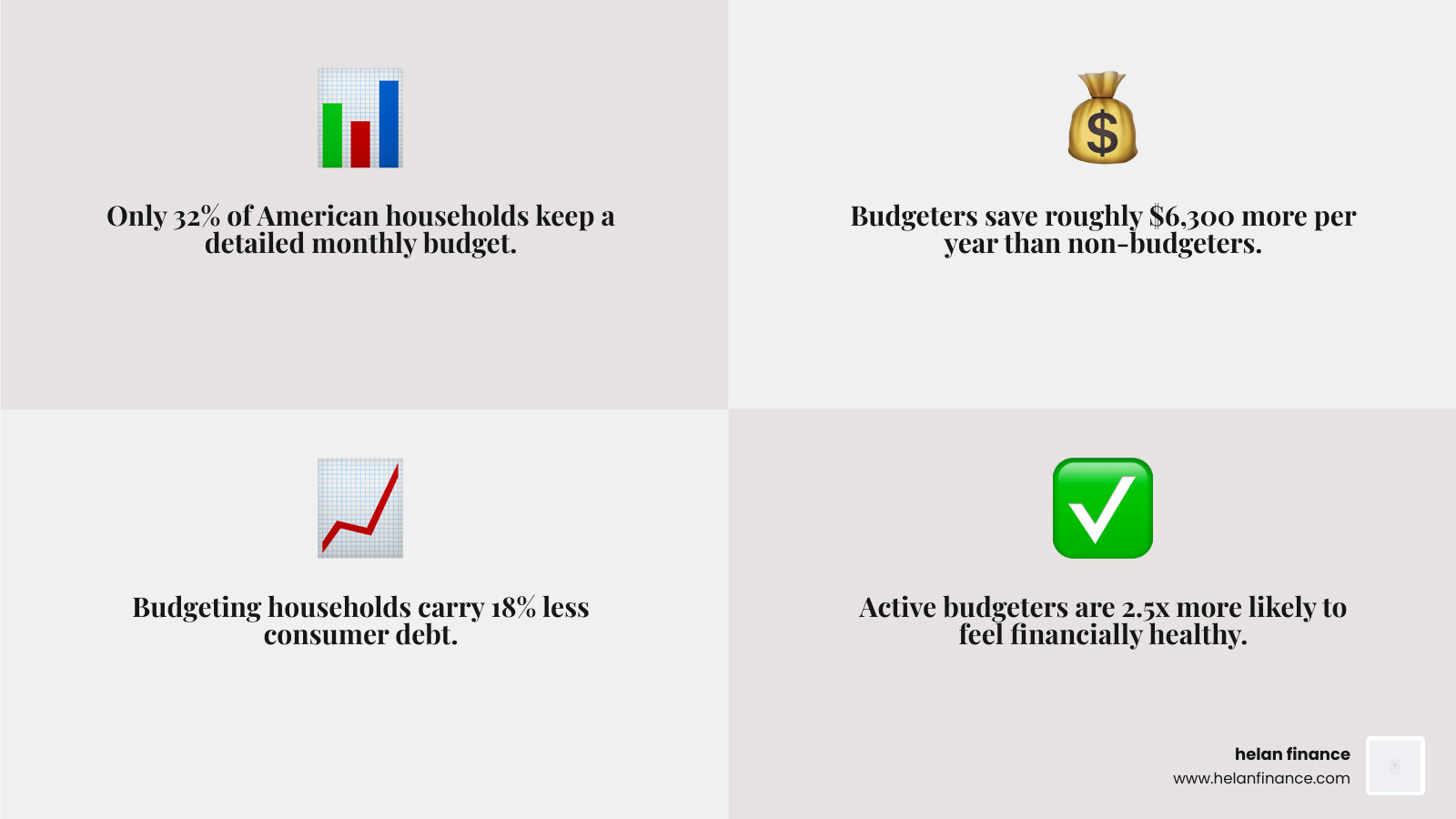
Research shows people routinely underestimate their spending by 20–30% across categories. And yet, only 32% of American households keep a detailed monthly budget — even though those who do save roughly $6,300 more per year than those who don’t.
The gap isn’t knowledge. It’s practice.
Budgeting exercises give you a structured way to close that gap — whether you’re a student learning the basics, or a busy professional trying to stop the month-end money mystery.
The good news? You don’t need a finance degree or hours of free time. A few focused exercises, done consistently, can shift your financial habits faster than any app or spreadsheet alone.
Why You Should Build Personal Budgeting Exercises for Financial Literacy
When we talk about financial literacy, we aren’t just talking about knowing what a “dividend” is. We are talking about the daily, practical ability to manage your cash flow. If you build personal budgeting exercises into your weekly or monthly routine, you are essentially training your “money muscles.”
The purpose of these exercises is to replace “vibe-based budgeting” with data-driven decisions. As of April 2026, the economic landscape requires a sharper eye on where every dollar goes. Statistics show that households that maintain a budget carry 18% less consumer debt and save nearly twice as much for retirement. Beyond the numbers, adults who actively budget are 2.5 times more likely to report feeling financially healthy.
Think of a budget not as a restriction, but as a roadmap. It tells your money where to go instead of you wondering where it went. By practicing with specific exercises, you can prepare for the 37% of unexpected expenses—like a $400 car repair—that usually send unbudgeted households into debt.
For those just starting, we recommend checking out How to Create a Budget for a foundational overview, and exploring our own Budget Planner 101/ to see how simplified tools can remove the intimidation factor.

Financial Health and Credit Scores
Your budget is the engine room of your credit score. While a budget itself isn’t a line item on your credit report, the results of a good budget are. By ensuring you have the funds allocated for bills, you avoid late payments—the single largest factor (35%) in determining your credit score.
Furthermore, budgeting exercises help you visualize your net worth. When you see your debt balances shrinking and your emergency fund growing, your financial health improves holistically. To get a better handle on these physical tracking methods, you might find The Ultimate Guide To Mastering Your Money With Large A4 Budget Planners/ particularly useful for high-level visualization.
Reflection Questions for Long-Term Success
To make these exercises stick, you need to look back as often as you look forward. After completing a monthly exercise, ask yourself:
- Did I stick to the 50/30/20 rule, or did my “wants” creep into the “needs” territory?
- What surprise expenses popped up, and how can I account for them next month?
- Which “money leaks” (like that daily $1.50 snack that adds up to $547.50 a year) can I plug?
Using Simple Budgeting Routines To Keep Your Wallet Happy/ can help you turn these reflections into a sustainable habit.
Core Steps to Build Personal Budgeting Exercises from Scratch
Creating a budget from scratch can feel like staring at a blank canvas. To make it easier, we break it down into five repeatable steps. This is the core of how you build personal budgeting exercises that actually work.
- Calculate Net Income: Don’t use your gross salary. Use your “take-home pay”—the amount that actually hits your bank account after taxes and insurance. If you’re self-employed, remember to set aside roughly 15.3% for self-employment taxes.
- Track Every Penny: For at least 30 days, record every expense. Use bank statements to ensure you aren’t missing those “invisible” subscriptions.
- Categorize Expenses: Group them into Fixed Costs (rent, car payments) and Variable Costs (groceries, entertainment).
- Compare and Adjust: If your expenses exceed your income, it’s time for “the chop.” Start with discretionary spending.
- The Monthly Review: A budget is a living document. Revisit it at least twice a year or whenever a major life change occurs.
For a hands-on start, we suggest using the [PDF] Plan Your Pay Activity Sheet to map out your next paycheck. You can also find a streamlined approach in our guide on One Simple Way To Create Monthly Budget/.
Using SMART Goals to Build Personal Budgeting Exercises
A budget without a goal is just a list of numbers. To stay motivated, your savings targets should follow the S.M.A.R.T. framework:
- Specific: “Save $2,000 for a house down payment” instead of “save more.”
- Measurable: You can track exactly how close you are.
- Attainable: Don’t try to save 50% of your income if your rent is 40%.
- Relevant: Does this goal actually improve your life or align with your values?
- Time-bound: “I will reach this goal by December 2026.”
Students can find tailored advice on setting these milestones in this [PDF] Student Budgeting Worksheet.
Distinguishing Needs vs. Wants
One of the hardest parts of any budgeting exercise is being honest about what is a “need” and what is a “want.”
- Needs: Housing, basic groceries, utilities, insurance, and minimum debt payments.
- Wants: Dining out, streaming services, designer clothes, and that new hobby you just started.
A common rule of thumb is that essential expenses should not exceed 50% of your take-home pay. If yours are higher, you may need to look at downsizing fixed costs or finding ways to increase your income. You can practice this categorization with our Budget Worksheet Free Download Template/.
Advanced Budgeting Simulations: Career Cards and the 12-Month Game
Sometimes, practicing with your own money is too stressful. That’s where simulations come in. Educators and individuals alike use “Career Cards” to simulate real-life financial scenarios.
Imagine drawing a card for a “Human Resource Specialist” with an after-tax income of $44,615 and a student loan debt of $38,400. Suddenly, you have to make tough choices: do you live in a 3-bedroom apartment for $1,379 or find a roommate? Do you pay more than the minimum on your debt?
These simulations, like the [PDF] BUDGET – SIMULATION ACTIVITY – Rogue Credit Union, teach the “pain of paying” and the consequences of financial trade-offs in a safe environment. They are particularly effective for young adults—see our guide on How To Build A Student Budget That Works/ for more student-centric tips.
How to Build Personal Budgeting Exercises for Different Income Levels
Budgeting looks different depending on your paycheck. A low-income household might need a “60/20/20” split to cover high housing costs, while a high-earner might focus on “Reverse Budgeting” to maximize investments.
| Income Level | Monthly Take-Home | Needs (50-60%) | Wants (20-30%) | Savings/Debt (20%) |
|---|---|---|---|---|
| Low Earner | $2,500 | $1,500 (60%) | $500 (20%) | $500 (20%) |
| Middle Earner | $5,000 | $2,500 (50%) | $1,500 (30%) | $1,000 (20%) |
| High Earner | $10,000 | $4,000 (40%) | $3,000 (30%) | $3,000 (30%) |
Whether you are paid weekly or monthly, the goal remains the same: control the flow. If you’re on a shorter cycle, check out Finding The Best Weekly Budget Planner For Your Pay Cycle/.
Group Activities and Classroom Engagement
If you’re teaching budgeting, make it social. Use “Loud Budgeting”—the practice of vocally sharing your financial boundaries with friends. Group activities where participants have to “buy” a lifestyle based on a random salary card can spark deep discussions about “lifestyle creep” and the true cost of childcare or insurance. To keep these simulations organized, tools like The Best Bi Weekly Bill Planner Tools To Sync Your Paycheck/ can help participants visualize their cash flow timing.
Comparing Popular Budgeting Methods for Your Exercises
There is no “perfect” budget, only the one you will stick to. When you build personal budgeting exercises, try testing these popular frameworks to see which fits your brain best:
- The 50/30/20 Rule: 50% for needs, 30% for wants, and 20% for savings or extra debt payments. It’s simple and great for beginners.
- Zero-Based Budgeting: Every single dollar is assigned a job until your income minus your expenses equals zero. This is the “gold standard” for precision. Learn How To Zero Based Budget In 5 Easy Steps/.
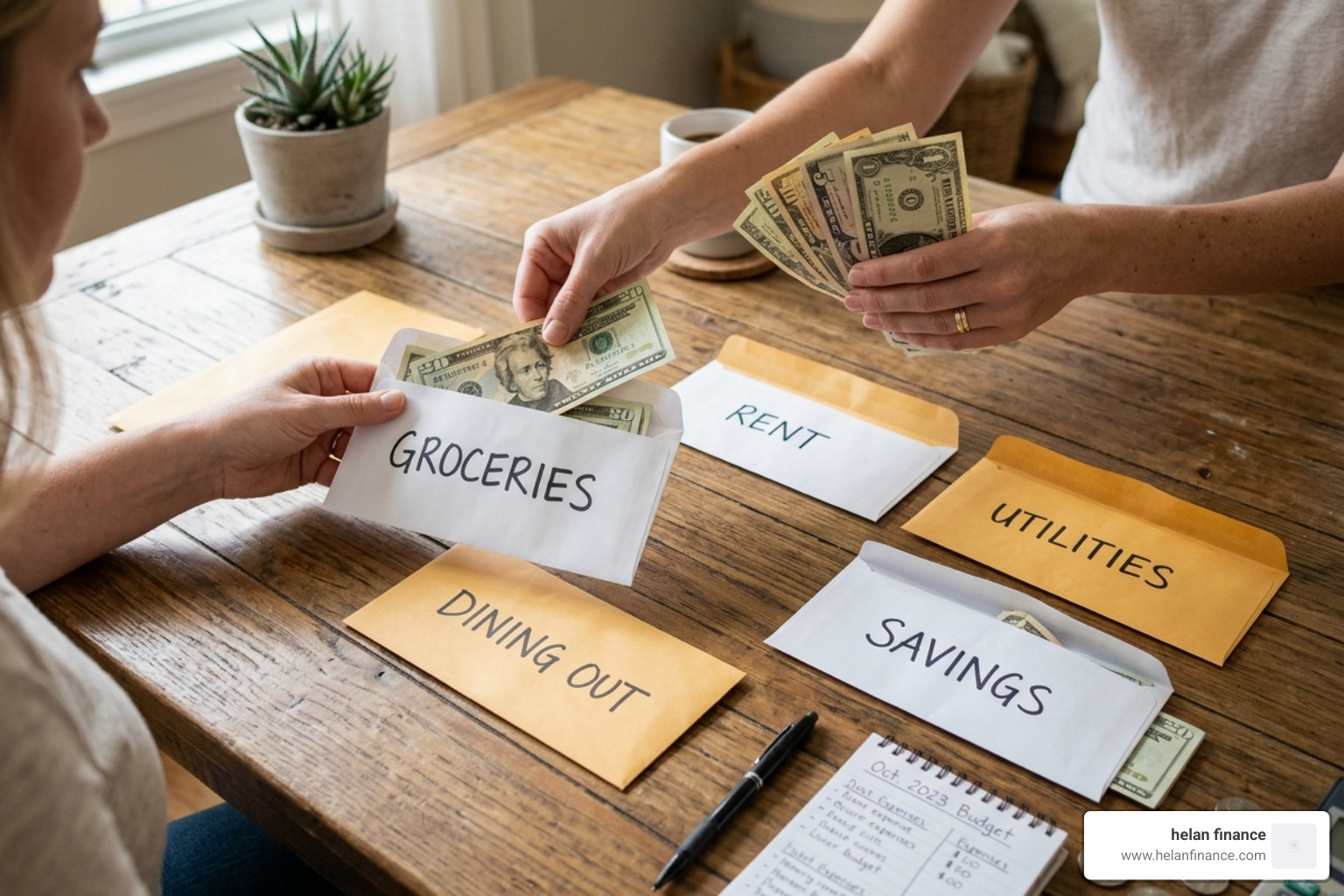
- The Envelope System: You put cash into envelopes for different categories. When the “Dining Out” envelope is empty, you stop eating out. This uses the “pain of paying” to curb overspending.
- Pay-Yourself-First: You automate your savings and debt payments the moment your paycheck hits. Whatever is left is what you have to spend.
Digital Tools and Free Resources
While paper and pen work, technology can make these exercises much more consistent. App users tend to stick with budgeting 78% of the time, compared to just 45% for those using spreadsheets. Look for tools that offer:
- Real-time spending alerts.
- Categorization of transactions.
- Visual progress charts for goals.
If you prefer the customization of a spreadsheet, our 10 Insanely Simple Budget Template Tricks/ can help you build a professional-grade tracker in minutes.
Common Pitfalls and How to Sustain Your Budgeting Habits
Why do 54% of people abandon their budget within three months? Usually, it’s because the budget is too rigid or they forgot to account for “the small stuff.”
Common Mistakes to Avoid:
- Forgetting Irregular Expenses: Annual car registrations, holiday gifts, and quarterly taxes. Solution: Divide the annual cost by 12 and save that amount monthly in a “sinking fund.”
- Lifestyle Creep: As your income rises, so does your spending. Solution: Maintain your current lifestyle for six months after a raise and save the difference.
- Spending Blindness: Underestimating how much “little” purchases cost. Solution: Track your spending in real-time for one full month.
- Lack of a Buffer: Not including a 3-5% “miscellaneous” category for things like a forgotten birthday gift or a price hike in utilities.
Monthly Adjustments and Habit Building
Budgeting is a marathon, not a sprint. To make it sustainable, set up “money dates” with yourself or your partner. Use these 15-minute weekly check-ins to review your progress. Automate whatever you can—bill payments, savings transfers, and even credit card alerts when you reach 80% of your category limit.
By following Simple Budgeting Routines To Keep Your Wallet Happy/, you can turn these exercises into second nature, ensuring your wallet stays full and your stress stays low.
Frequently Asked Questions about Budgeting Exercises
What is the best budgeting method for beginners?
We usually recommend the 50/30/20 rule. It provides a clear structure without requiring you to track every single nickel. It’s balanced, easy to understand, and focuses on the big picture: ensuring your needs are met while still allowing for a little fun and a lot of saving.
How do I handle irregular or unexpected expenses?
The best way is to use “Sinking Funds.” Add up all your non-monthly costs for the year (like car insurance, Amazon Prime, or holiday spending) and divide by 12. Include this amount as a “fixed expense” in your monthly budget and move it to a separate savings account so the money is there when the bill arrives.
Why do most people abandon their budgets within three months?
Most people fail because they try to be too restrictive too fast. It’s like going from no exercise to a three-hour gym session every day—you’ll burn out. Start by simply tracking your spending without judging yourself. Once you have the data, make small, 10% adjustments rather than an entire lifestyle overhaul.
Conclusion
When you build personal budgeting exercises into your life, you are doing more than just moving numbers around a screen. You are taking back control. You are deciding that your future self is worth more than a mindless purchase today.
Whether you choose a zero-based approach, a simple 50/30/20 split, or a gamified simulation, the key is consistency. Those who budget save an average of $6,300 more per year—that’s a vacation, a down payment, or the peace of mind that comes with a fully funded emergency fund.
At Helan Finance, we believe financial planning should be easy and efficient. Start your journey today by picking one exercise from this guide and committing to it for the next 30 days. Your future bank account will thank you.
More info about financial planning services

